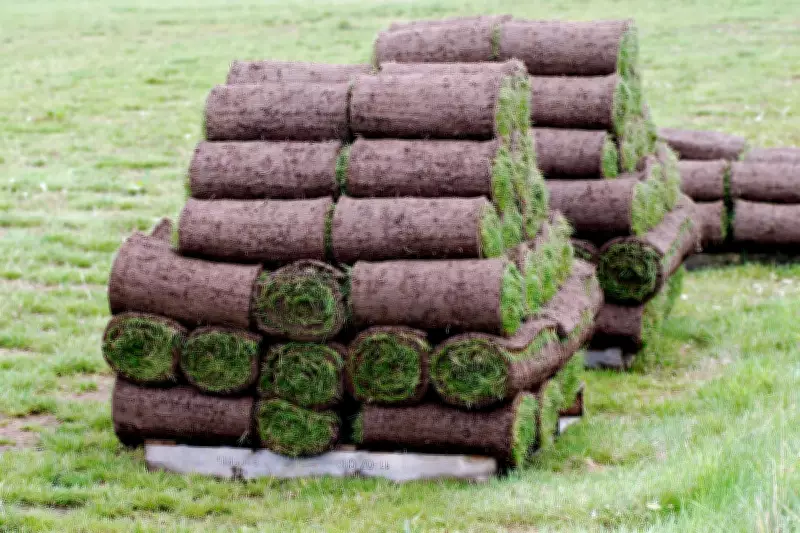
Turf or Seed? The Ultimate Lawn Decision for Gardeners
As spring inspires gardeners to rejuvenate their outdoor spaces, a perennial dilemma surfaces: should you opt for turf or seed to establish a lush lawn? Luke Taylor, a renowned lawn expert and co-author of Lawns: An Uncomplicated Guide with Marc Kerr, founders of So & Mo lawncare, delves into the intricacies of both methods, emphasizing that the choice hinges on individual circumstances and financial considerations.
Budget and Speed: Key Factors in Lawn Creation
Taylor highlights the fundamental trade-offs between turf and seed. "If you can afford to returf, it's going to be the quickest way, whereas if cost is a factor, there's no doubt that seeding is a lot more cost-effective," he states. For those seeking an immediate transformation, turf offers a rapid solution, typically ready for use within a couple of weeks after laying. However, Taylor cautions that gardeners must ensure the turf has developed a robust root system and adequate density before mowing to avoid damage.
Timing is critical when working with turf. Once delivered, it should be laid within 24 to 36 hours to prevent deterioration, especially during warm, dry periods. Prompt installation helps avoid sweating within the roll, which can lead to rotting. In contrast, seeding requires more patience. "If you are seeding it you are probably going to be looking at four to six weeks before you can actually go on it," Taylor explains, noting that while it takes longer, the end result often yields superior quality and customization.

Grass Types and Customization Options
The choice between turf and seed also depends on desired grass species and lawn characteristics. Taylor points out that seeding provides greater control over the mixture, allowing for tailored outcomes. "Some people want a fescue-based lawn. So if you're on the coast and you're based on sand and it's really free-draining and you want a really ornamental, fine-style lawn, you will probably need mostly fescues," he says. Fescues are ideal for ornamental lawns, while rye grasses tend to be broader-leafed and coarser, commonly found in turf.
Turf is predominantly composed of rye grass, with fescues included to enhance binding. However, Taylor warns that turf can be susceptible to bare patches and weeds, whereas seeding allows gardeners to "control that narrative" and achieve a more uniform, high-quality lawn over time.
Preparation and Maintenance Essentials
Proper soil preparation is crucial for both methods. Taylor advises rotavating to aerate the soil, creating air pockets for roots to penetrate. "Rake, compact, rake, compact constantly until you're happy with the levels," he recommends, emphasizing the importance of achieving a level surface before laying turf or sowing seed to avoid bumps and blemishes.
For patching existing lawns, Taylor suggests seeding for small areas, as cutting and fitting turf can be challenging. "Trying to chop it in is a nightmare, trying to get the right height and the right levels. I would rather seed," he notes, highlighting the ease of matching heights with soil when seeding.
Maintenance demands careful attention, particularly with watering. Taylor stresses that turf requires critical watering in the initial days to prevent shrinkage, which can result in gaps resembling a jigsaw puzzle. For mowing, both turf and seeded grass should be well-rooted, with only one or two millimeters removed initially to encourage denser growth through tiller production.
In summary, Taylor's insights underscore that turf offers speed and convenience at a higher cost, while seed is more economical and customizable but requires patience. By considering factors like budget, timeline, and desired lawn type, gardeners can make an informed decision to achieve a vibrant, healthy garden space.