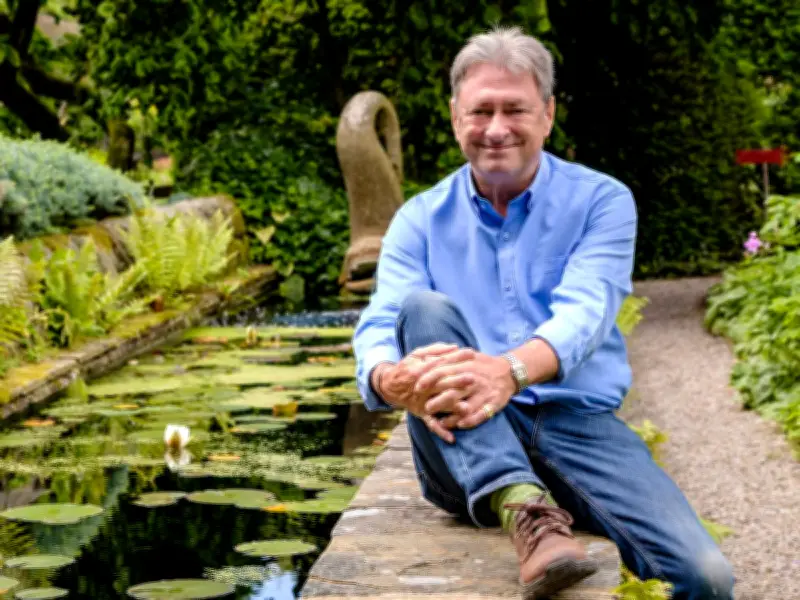
Gardening icon Alan Titchmarsh has issued a stark warning to British gardeners about a common tree planting mistake that he says is 'agonising' to witness and could cost you thousands of pounds.
The 77-year-old, who served as lead presenter on BBC Gardeners' World from 1996 to 2002 and hosted Ground Force, remains one of the country's most beloved gardening experts. He frequently shares valuable advice for green-fingered admirers, and a recent piece highlights an 'easily overlooked factor' that could mean the difference between a beautiful garden and wasting thousands on plants doomed to die.
The Costly Error of Deep Planting
Alan cautioned readers about the dangers of planting too deeply, particularly with trees standing 10ft or taller. These substantial plants can occasionally cost tens of thousands of pounds, yet planting errors mean they can deteriorate and perish just a few years after being positioned in the ground.
Writing in Country Life, he said: 'Touring one such estate a month ago, in the company of Kew's former head of the arboretum, Tony Kirkham, we sighed over tree after tree that was struggling to survive only a few years after planting. Some were already dead, towering specimens devoid of leaf and brittle of wood; swarthy skeletons against a forget-me-not-blue sky. The cause of the problem in each and every case was deep planting.'
How to Plant Correctly
Alan maintains that numerous gardeners commit the same straightforward error. Trees that have been container-grown or transferred into a container later in their development are particularly vulnerable to alterations in planting depth. He advises that the surface of the rootball should sit flush with the ground, 'not 7-11in deeper as was the case with so many of the sad specimens we saw.'
Alan added: 'One can bemoan the waste of money on a tree that cost several thousand pounds, but, more than that, the loss of a formerly healthy specimen is agonising for a gardener to behold. The base of the trunk or stem on any tree is recognisable, as it is generally swollen immediately above the emerging roots. Let that swollen stem base be your guide and your means of ensuring the survival of both the tree and your sanity.'
Additional Advice for Gardeners
The advice comes after Alan previously encouraged gardeners to carry out one crucial task to help keep rats out of the garden this summer. According to the expert, proper lawn maintenance is key. Speaking in a video for BBC Gardeners' World Magazine, he said: 'Of all the garden pests, the one that fills us with most horror and revulsion, generally, is the rat. I mean, you never know where they are, do you?'
He explained that the 'place they love more than anywhere else in the garden' is the compost heap, 'mainly because of the heat generated' by the 'rotting vegetation'. To stop rats treating your compost heap as their personal 'central heated house', the gardening expert recommended ensuring the 'structure is solid'.
When it comes to your lawn, Titchmarsh encouraged homeowners to keep their grass trimmed short, though this might disappoint some as longer grass can be beneficial for wildlife. Explaining why keeping your lawn neatly trimmed is so important, the expert said: 'Rats are furtive. They like cover, they like shelter - they do not like close mown grass where they can be seen. They much prefer it longer.'
Catch Love Your Weekend with Alan Titchmarsh on Sunday mornings from 9.30am to 11.35am on ITV.