Spring Planting Mission for Rare Rock Whitebeam in Teesdale Quarry
My journey through Teesdale is filled with natural wonders that demand attention. I pause twice along the route, first to marvel at a flock of thirty black grouse gathered in a field, then to observe the aerial displays of peewits, their tumbling dives accompanied by sweet, airy calls. This region forms the core of the North Pennines National Landscape, with its visitor centre situated in a historic nineteenth-century Methodist chapel at Bowlees. Nearby, the Bow Lee beck meanders through a wooded dene before cascading down Summerhill Force, a picturesque waterfall that conceals the entrance to Gibson's Cave.
A Limestone Quarry Chosen for Conservation
A compact limestone quarry adjacent to the beck resonates with the cascading songs of chaffinches, its rocky bowl trapping the warmth of spring. The inaccessible ledges of these cliffs, safe from grazing sheep and rabbits, have been selected as the planting site for a rare native tree species: the rock whitebeam, scientifically known as Sorbus rupicola.
This conservation initiative began in autumn 2022 when seeds were collected from a rugged, fast-flowing riverside site along the River Tees. The seeds were meticulously packed and dispatched to the Millennium Seed Bank, which is managed by the renowned Kew Gardens. Additional seeds were germinated at the small wildflower nursery located in Bowlees, ensuring a local supply for the re-establishment of rock whitebeam populations across Teesdale.

The Challenging Process of Seed Collection and Planting
The rock whitebeam is a shrubby tree distinguished by its white-backed leaves and large, rowan-like fruits. It is found in only a handful of locations throughout the United Kingdom. Collecting seeds from the riverside outcrop proved to be a formidable task, with the extraction process from the sticky, jam-like fruit being particularly laborious.
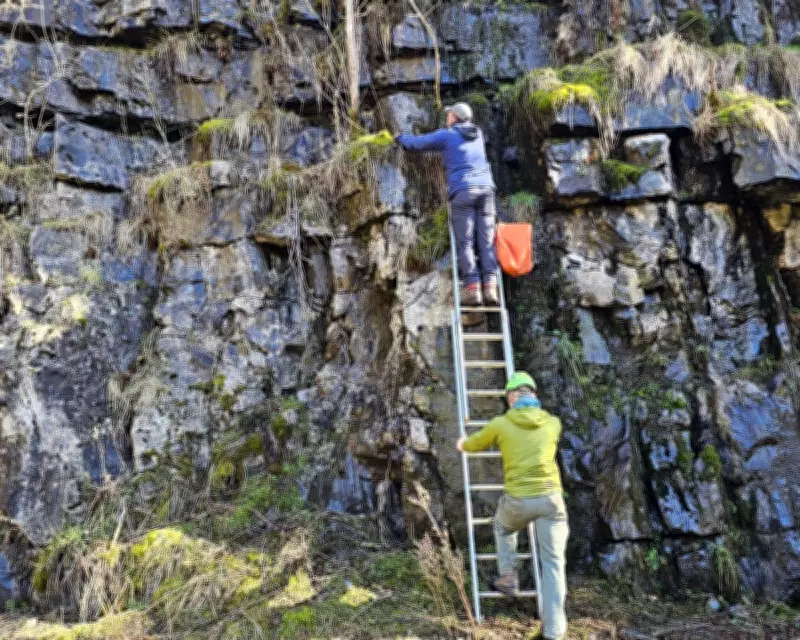
Now, conservationists Will and Adam from the North Pennines National Landscape team transport a ladder and pot-grown trees to the quarry face. They identify a potential planting spot approximately five metres up the vertical wall. After carefully working the compost away from the fine reddish roots, Adam ascends the ladder with the young trees secured in a bag.
He searches for nooks and crevices where the trees might successfully take root, feeling with his hands for sparse pockets of soil and assessing the depth of settled leaf litter. "There's even a worm up here," he calls down to his colleague. Water drips slowly through moss, mingling with herb robert and nettles; the environment is moist but well-draining.
Strategic Planting for Long-Term Survival
Some of the trees are planted in these damp niches, while others are placed on a sunnier ledge for comparative study. This sunny ledge is protected by the thorny arch of a dog rose, which should shield the young trees from rabbit damage. The rock whitebeam is a resilient species that clings to life where other trees would falter, thriving in harsh conditions by sending its roots deep into rock crevices.
Although long-lived, the rock whitebeam remains vulnerable to grazing pressures. This planting effort highlights the tree's remarkable ability to survive on the edge, embodying a true testament to nature's tenacity in challenging environments.