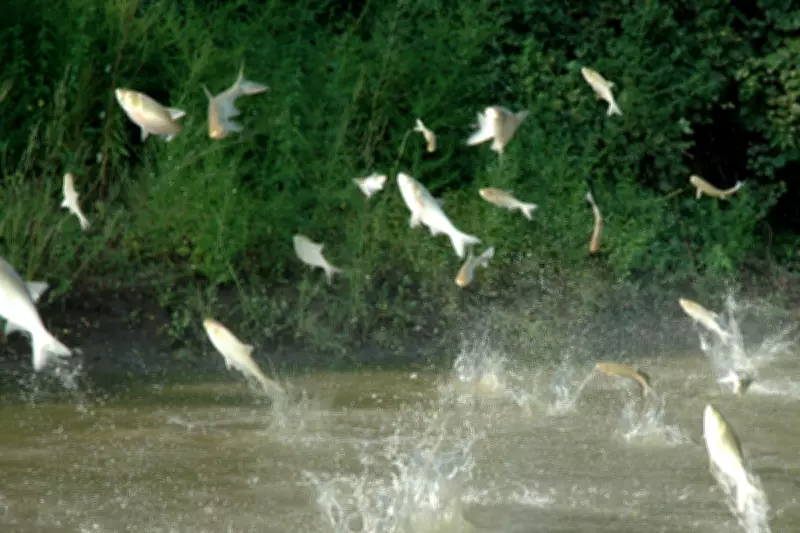
Midwest lakes and rivers are facing an unusual and disruptive invasion, as "flying" fish known as Asian carp are taking over waterways and causing significant havoc for fishermen and recreational boaters alike. These airborne invaders, notorious for their startling leaping behavior, are reshaping ecosystems and posing physical dangers across the region.
Ecosystem Disruption and Safety Risks
Asian carp, originally introduced in the 1970s for aquaculture and algae control, have proliferated in the Mississippi River and its tributaries. By consuming vast quantities of food that native fish species depend on, these invasive silver and bighead carp are throwing local ecosystems off balance, making survival more challenging for indigenous aquatic life and the anglers who rely on them.
According to U.S. Geological Survey researchers, the carp can launch more than 10 feet into the air when startled by boat vibrations or noises. This behavior has led to collisions with unsuspecting skiers, paddlers, and boaters, resulting in injuries that range from bone bruises to more severe impacts. The threat has escalated to the point where political action is being pursued in states like Michigan and Illinois, with lawmakers advocating for measures such as physical barriers and sound devices to contain the carp population.

Creative Safety Precautions by Residents
In response to the danger, many residents have developed their own innovative strategies to stay safe on the water. Peoria firefighter Nate Wallick shared his extreme precautions with the Wall Street Journal, detailing how he outfits his children with football helmets and has constructed a protective cage around their inner tube while tubing on the Illinois River. He also equips everyone on his boat with nets and wears a helmet and cup himself when water skiing, after a previous incident where a carp struck him in the groin.
Wallick recounted, "I took one right in the side of the head. The fish darn near knocked me out." Similarly, Clint Carter described a boating experience where a carp left him with a bone bruise that took weeks to heal, and his friend was hit between the eyes, dropping him to his knees.
Control Efforts and Unconventional Solutions
Efforts to manage the carp invasion have been ongoing for decades, utilizing methods like electric deterrents, bubble curtains, and sound repellents. However, funding delays and logistical challenges have left many waterways vulnerable to the invasive species. In a bid to reduce numbers, communities have embraced unconventional approaches, such as the Redneck Fishing Tournament in Bath, Illinois, which encourages participants to net jumping carp as a recreational challenge.
Additionally, the Illinois Department of Natural Resources launched a marketing campaign to rebrand the fish as "Copi," short for copious, to distinguish them from less desirable common carp and promote consumption. Fishermen and chefs note that the carp are surprisingly tasty, though their bony structure makes them difficult to serve as traditional filets. To overcome this, chefs often grind the fish for use in dishes like fish cakes.
Recommended Safety Measures
Wildlife agencies advise cautionary measures for residents navigating affected waters. Recommendations include slowing down near ramps and docks, maintaining a safe distance from other vessels, and ensuring passengers remain seated in central areas of the boat to minimize the risk of injury from leaping carp. As the invasion continues, these combined efforts aim to mitigate the chaos and protect both people and ecosystems in the Midwest.