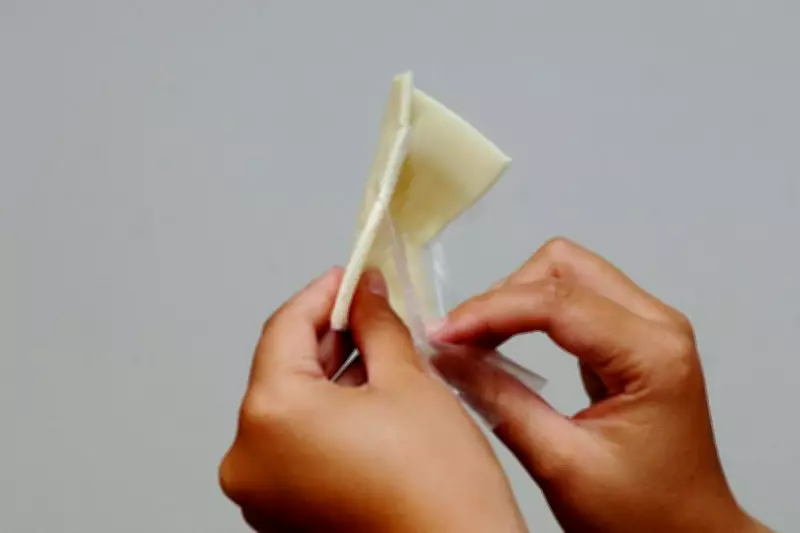
Breakthrough in Vegan Cheese: Healthier and More Sustainable Recipe Unveiled
Scientists have made a significant advancement in plant-based foods by developing a vegan cheese that is not only healthier but also boasts a superior, oozier texture. This innovation addresses common criticisms of vegan cheese, which often contains high levels of saturated fats and lacks the meltability of traditional dairy cheese.
Current Vegan Cheese: A Starch and Fat Combination
Typically, vegan cheese is produced from a blend of starch and solid fats, such as coconut or palm oil. These ingredients provide the sliceable and meltable qualities that consumers expect from cheese. However, this formulation results in a product with a saturated fat content that can reach up to 25%, making it less healthy. Additionally, the use of palm and coconut oils has raised environmental concerns due to deforestation and its impact on wildlife, including orangutans.
Heriot-Watt University's Innovative Approach
A research team at Heriot-Watt University (HWU) has pioneered a new method for crafting vegan cheese slices using vegetable oils like rapeseed and sunflower, which can be sustainably grown in the UK. This shift aims to enhance both the health profile and environmental sustainability of the product. Professor Stephen Euston, leading the project, explained the motivation behind the research.

"When most people try vegan cheese for the first time, they don't wax lyrical," said Prof Euston. "The main reason is the lack of protein. Normal cheese is mostly protein, whereas vegan cheese has none. It's mostly starch, with added colourings, flavourings, and sometimes salt. Its other key ingredient is fat, typically coconut or palm oil, which gives it texture but also high saturated fat."
The Science of Oleogelation
The team achieved this breakthrough through a process called oleogelation. This involves adding special molecules known as oleogelators to liquid vegetable oils. These molecules assemble into microscopic structures that trap the oil within a three-dimensional framework, creating a gel that mimics the behavior of solid fats. This technique allows vegetable oils to replicate the texture of traditional cheese without the associated health and environmental drawbacks.
Prof Euston highlighted the challenge: "Making vegetable oils behave like solid fat is key to achieving a cheese-like texture. We're very mindful of reducing food miles, so we focus on using crops that can be grown sustainably at scale in the UK."
Improved Meltability and Health Benefits
In laboratory tests, the new vegan cheese demonstrated a lower saturated fat content, reduced to as low as 3%, and exhibited better meltability compared to commercially available coconut oil-based alternatives. Prof Euston noted, "Meltability is one of the biggest complaints about vegan cheese—it's not very oozy. Improving that feature is an unintended bonus. We've proved our recipe works theoretically and in the lab, reducing saturated fat significantly."
Next Steps: From Lab to Kitchen
The research is now poised to move beyond the laboratory. With funding from the UK Research and Innovation Engineering and Physical Sciences Research Council (EPSRC), the team plans to bring the cheese into a kitchen setting within the next ten months. It will be presented to a tasting panel for evaluation. Prof Euston assured that while the taste will be comparable to current vegan cheese slices, the new version will be more heart-healthy and environmentally friendly.
"It won't taste any better or worse than current vegan cheese slices on the market, but it will be more heart healthy and greener," he concluded. The peer-reviewed findings have been published in the journal Food Chemistry, marking a step forward in sustainable food technology.