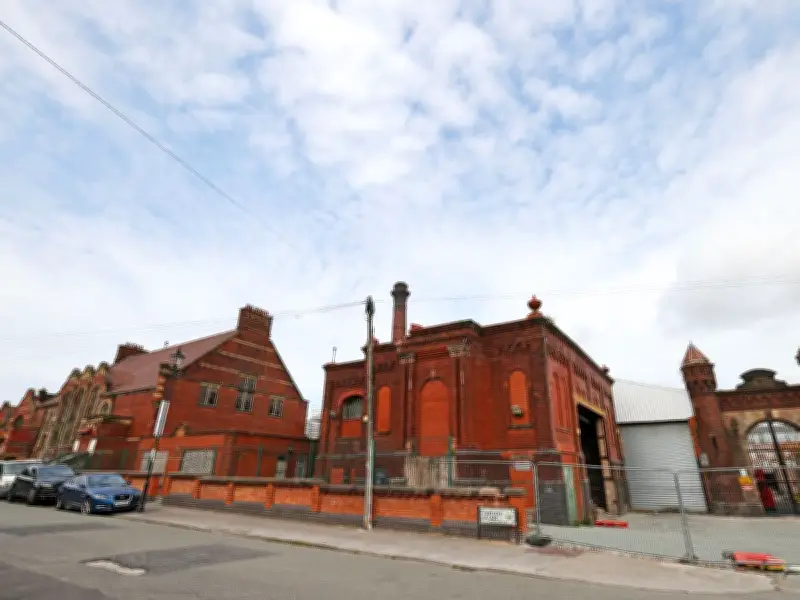
Campaigners are working to restore Hartley's Village to its former glory, warning that without action, the historic site could be lost for good. The regeneration of this model village in the shadow of a famous former Liverpool factory has the potential to inspire other areas across the country, according to those involved.
History of Hartley's Village
More than 100 years ago, William Pickles Hartley moved his jam-making business to Liverpool. A staunch Methodist, Mr Hartley believed in improving the living and working conditions of his workers. He built 49 houses for his employees on streets named after ingredients used in jam making – from Sugar Street to Cherry Avenue and Spice Lane.
Since the Grade II listed factory's closure in the mid-1960s, elements of the village have been lost, including factory roofs and Mr Hartley's own villa on Long Lane. Now members of the village's residents association want to return the area to its Victorian roots.

Conservation Status and Goals
Such is its importance as an example of Victorian manufacturing philanthropy, the entire village was designated as a conservation area. This means planning rules are much tighter on what can and cannot be built. Working with conservation campaigners, the residents association want to preserve Hartley Village as a living, functioning place, not a forgotten piece of history.
Stephen Lancaster-Frankland, chair of the Hartley's Village Residents Association, said: “The residents association have long wanted to see wider infrastructure improvements and restoration of lost Victorian features. When the factory site owners announced their plan for restoration of the factory site we concluded that this would be the perfect catalyst to push for what we would like to see in the wider village.”
This includes six key goals, ranging from resurfacing and restoring highways and pavements, new cast iron planters along Hartley Avenue to recreate the tree-lined avenue, as well as installing traditional Victorian carriage lights in the village. The group also hope to create new green and garden spaces in areas that are currently overgrown and neglected.
Challenges and Funding
This includes a battle to have illegal fencing and equipment removed from a communal square behind the homes. The space once provided a tennis court and bowling green. This was dug up in the 1970s and replaced with hard standing. It was continually used by residents under an agreement with various owners that anything placed on the land can be removed.
As of September 2024, the land was bought by NWMS Property Ltd from previous owners Paul Waite and Gerard Waite. Within the perimeter, the landowners have also left plant equipment and turnstile-like barriers on the land. An enforcement notice issued by Liverpool Council instructed landowners to remove all fence posts, fence panels and gates from the land and restore the ground surface.
As chair of the residents association, Stephen has worked with conservation experts to bring the project together but admitted one major snag. He said: “Now obviously this grand ambition needs money and plenty of it. Due to the unadopted status of the village the council are not obligated to carry out or fund the necessary infrastructure improvements for roads or pavements. Effectively we need to raise the money ourselves.”
Community Support
David Barton, a former Sefton councillor and conservation consultant, is working with the residents on the project. He said: “There were two siloed campaigns that came together for this really. That back road must be dealt with as an absolute priority and this can be a template for other people. We need to fully utilise this now, we’re working at this together and it’s all about making people feel valued and achieving positive change. I happened to pass by here accidentally and was welcomed in by residents. We want to reach out to all the groups possible, we’ve got a lot riding on this.”
This was summed up in a supporting online crowdfunding page set up by the campaigners. It said: “Today, the village and surrounding historic fabric require restoration and protection to prevent further deterioration and loss. Without timely intervention, elements of this heritage risk becoming unsafe, unsustainable, or permanently lost.”