Elderly Farmer Confronts £40,000 Cleanup Bill Following Massive Fly-Tipping Incident
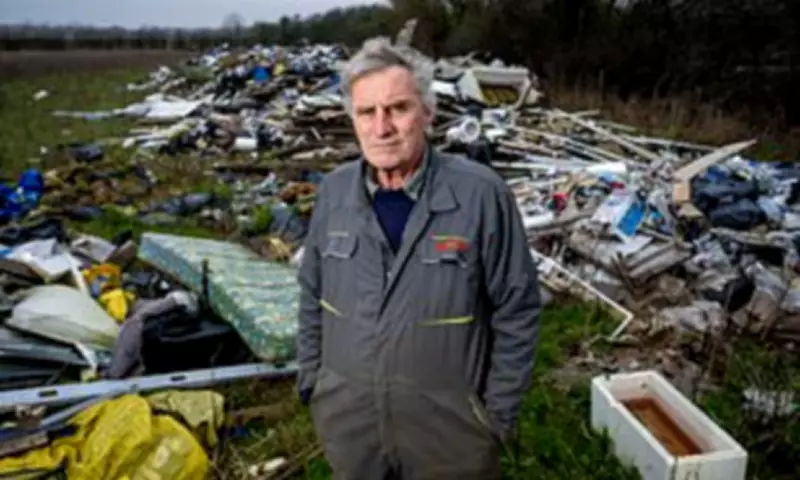
An elderly farmer in his eighties, who wishes to remain anonymous, has been left grappling with an unaffordable £40,000 bill after criminals dumped approximately 200 tonnes of rubbish on his Hertfordshire field last summer. The incident underscores a severe and escalating fly-tipping crisis plaguing the British countryside, with victims often forced to bear the financial brunt.
A Stark Reality for Rural Communities
The farmer's neighbour, Will Dickinson, described the mess as a stark example of the challenges facing the nation's agricultural workers. The waste included roofing materials, bathroom and kitchen fittings, house clearance items, and even suspected asbestos sheets, creating a hazardous environment. Dickinson noted that among the most alarming discoveries were evidence of drugs and clinical waste such as syringes, needles, and swabs, posing serious health risks.
The farmer expressed his frustration, stating: 'It is unjust. The trouble is with these criminals, they're not stupid a lot of the time. They'll normally go through waste with a toothcomb to remove anything identifying.' He highlighted how fly-tipping exacerbates the financial strain on farmers, with operational costs soaring while crop prices decline.

Systemic Failures and Regulatory Gaps
The case reveals significant gaps in enforcement and coordination among authorities. Despite the massive scale of 200 tonnes, the Environment Agency deemed it insufficiently large or dangerous to intervene, leaving the farmer to navigate a fragmented system. He explained: 'There's no cross-authority knowledge. If it's hazardous, you go to the Environment Agency. If it's not, then it's your council. If it's in a dangerous place, you tell the police but if it's a few bin bags, then it won't get reported.'
This lack of cohesive action has led to calls for stronger judicial measures. The farmer argued: 'The judiciary need to stand up. They need to enforce fines and prison sentences on people. It worked with hare coursing, another issue which impacts farmers.' He also advocated for making waste disposal more accessible to households to discourage illegal dumping.
Financial and Environmental Toll
The £40,000 quote for removal stems from fears of contamination by toxic substances, a cost not covered by insurance. In a statement to the National Farmers Union (NFU), the farmer wrote: 'It is just devastating. This is not covered by insurance and there is just no way that I am going to be able to pay this - I don't know what I am going to do.' He added that fly-tipping occurs weekly on his land, but never on such a scale, disrupting food production and countryside care.
Will Dickinson shared further details, recounting how the farmer discovered the dump after a large concrete block securing the gateway was moved. They counted 40 loads of rubbish, and Dickinson himself has lost five acres to similar contamination, rendering crops unharvestable due to glass and asbestos.
National Crisis and Calls for Action
Government data estimates that waste criminals cost the UK economy £1 billion annually, with enough waste collected each year to fill Wembley Stadium 30 times over. In a House of Lords debate in January, Baroness Hayman of Ullock acknowledged the issue, stating: 'It is important to say quite clearly that the government do not believe that the status quo is working. We need to make changes because it is getting out of control.'
The NFU is urging all responsible authorities to collaborate more effectively to secure arrests and convictions. They also advocate for a simplified reporting mechanism and government-led education for householders on waste responsibilities. NFU Hertfordshire Chair Robert Law, based in Royston, remarked: 'I think fly-tipping is out of control. This shocking incident in St Albans, where 200 tonnes of rubbish has been left rotting in a field for more than six months, is a clear example of that.' He warned that organised criminal gangs are increasingly carrying out industrial-scale fly-tips, devastating the environment and costing the industry tens of millions.

The Environment Agency has been contacted for comment, but as of now, the farmer remains burdened by the cleanup costs, highlighting the urgent need for systemic reform to protect rural communities from such crimes.