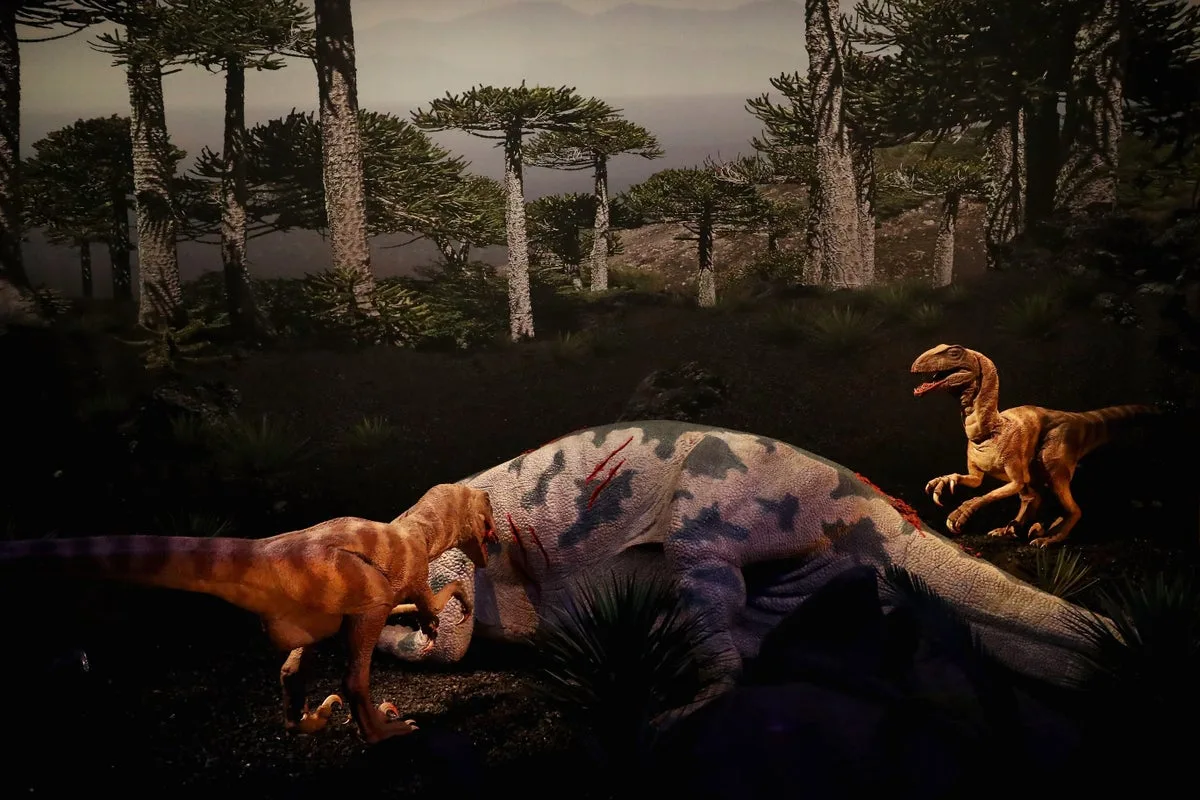
Dinosaurs Fed Young Special Diet for Faster Growth, Study Finds
Dinosaurs Fed Young Special Diet for Faster Growth

A new study of fossilised teeth suggests that some dinosaurs fed their young a softer, more nutritious diet compared to adults, enabling faster growth. This finding sheds light on advanced parental care among prehistoric reptiles.

Study Reveals Dietary Differences

Until now, juvenile dinosaurs were thought to have eaten smaller prey or fruits and shoots. However, the exact nutritional variation between young and adult dinosaurs remained unclear. Researchers analysed the fossilised teeth of the duck-billed dinosaur Maiasaura peeblesorum, which lived about 75 to 80 million years ago, to uncover what juvenile plant-eaters consumed.

These large herbivorous dinosaurs lived in herds and were highly social. Dental wear patterns showed that juvenile Maiasaura teeth exhibited significantly more crushing wear, while adults had more shearing wear. This indicates that adults brought softer, higher-protein food to their young.

Wide Pickt banner — collaborative shopping lists app for Telegram, phone mockup with grocery list

Evidence of Advanced Parental Care

John Hunter, an author of the study published in Palaeogeography Palaeoclimatology Palaeoecology, stated: “What we’re providing is evidence that that behaviour probably goes much further than the origin of birds, perhaps to the origin of dinosaurs.” The findings suggest that the urge to feed offspring, seen in birds today, is a very old behaviour.

Researchers believe juvenile Maiasaura likely ate more nutritious low-fibre foods like fruit, while adults consumed tougher, high-fibre plant parts. This diet may have caused young dinosaurs to grow particularly fast in their first year.

Comparisons to Modern Animals

The tooth marks in adult Maiasaura were similar to those in modern grazers like horses and cows, while low-fibre eaters like tapirs had dental marks similar to those of young dinosaurs. The study also suggests that dinosaurs may have fed their young partially regurgitated food, a behaviour common in birds today.

Juveniles may have also foraged independently for smaller prey and fruits, similar to modern herbivorous lizards. However, they were likely dependent on parents for food during the first weeks after hatching.

Dr. Hunter added: “Even among closely related dinosaurs, there is probably still quite a bit to learn about them.” The researchers concluded that Maiasaura likely had a reproductive strategy analogous to present-day birds, where fast growth is supported by adults bringing high-protein food to the nest.

Pickt after-article banner — collaborative shopping lists app with family illustration