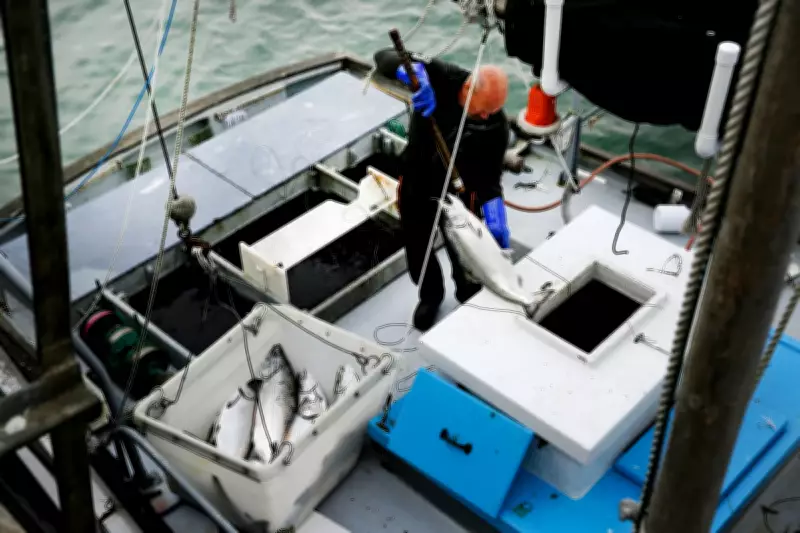
Federal fishery managers have voted to reopen waters off the coast of California to commercial salmon fishing for the first time since 2022, marking a significant milestone as fish populations rebound after years of drought. The Pacific Fishery Management Council, which oversees fisheries along the West Coast, made the decision on Sunday, ending a three-year closure that had severely impacted the state's salmon industry.
A Win for Industry and Environment
The council's vote allows for limited commercial and recreational salmon fishing, with restrictions in place to ensure sustainable practices. This move is celebrated as a victory for California's salmon fishing sector, which has faced prolonged season closures due to dwindling stocks. California Natural Resources Secretary Wade Crowfoot hailed the decision, stating, "It is great news for everyone — for the fishermen, for seafood lovers and the environment because it means that salmon populations are back to a much healthier state."
Forecasts and Restrictions
Forecasts for Chinook and coho salmon off the West Coast appear promising this year, though the season will open with specific limitations. Commercial fishing along the coast is set to begin in May, but will be restricted to only a few days with quotas on catch numbers. Recreational fishing has already commenced this month along a stretch of about 50 miles south of San Francisco to the Mexican border, according to the Golden State Salmon Association, with sportfishing to the north, including off San Francisco, starting in June.

Population Decline and Recovery
Biologists attribute the dramatic decline in Chinook salmon populations to years of drought, which disrupted their migration upstream to spawn. Additionally, many in the fishing industry point to policies from the first Trump administration that allowed more water diversion from the Sacramento River Basin to agriculture, exacerbating the crisis by raising river temperatures and lowering water levels during critical periods for young salmon.
However, recent wet winters have brought colder water, essential for spawning, leading to a notable rebound. Crowfoot highlighted that salmon populations have also recovered in areas where they were long absent, thanks to river restoration efforts. For instance, after the removal of four hydroelectric dams on the Klamath River in 2024, salmon returned to spawn in waters along the Oregon-California border for the first time in decades. The state has since removed barriers in other waterways, such as Alameda Creek in the San Francisco Bay Area, further aiding salmon passage.
Lifecycle and Economic Impact
Salmon caught in the ocean primarily originate from California's Klamath and Sacramento rivers. After hatching in freshwater, they spend an average of three years maturing in the Pacific Ocean, where commercial fishermen often catch them, before returning to their spawning grounds to lay eggs and die. Preserving a healthy salmon population is crucial not only for the environment but also for California's economy. Crowfoot emphasized, "Salmon are an iconic species in California and critically important to our tribal communities and our fishing sector."
Industry Perspectives and Challenges
Vance Staplin, executive director of the Golden State Salmon Association, largely blamed state and federal water management policies for the low salmon stocks in recent years. He noted that the fishing season closures had a profound impact on fishermen, bait shops, and companies manufacturing fishing equipment. "People don't understand how big of an industry salmon is to California," he said, underscoring the economic significance of this revival.
The council's decision is advisory to the U.S. Secretary of Commerce, who makes the final ruling but historically follows the council's recommendations. The secretary's decision is expected to be posted in the Federal Register within days, formalizing the reopening and setting the stage for a hopeful season ahead.