
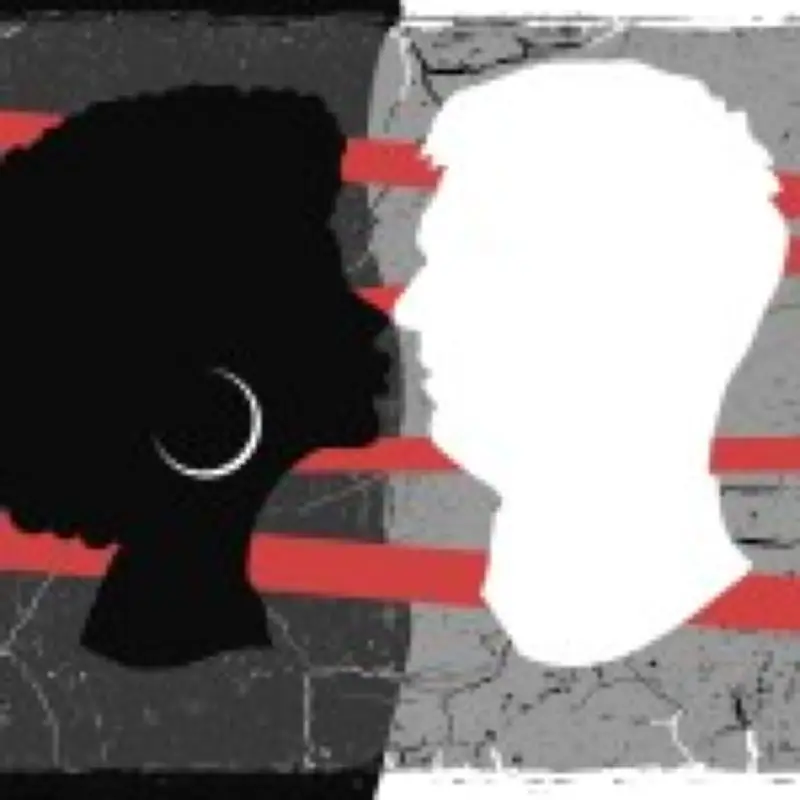
Race play, a BDSM practice that involves explicit references to race and racial power dynamics, has seen a surge in popularity in recent years, with sex workers reporting it as one of their most-requested services. This controversial niche includes scenarios such as slave trade re-enactments or Holocaust depictions, and has sparked intense debate within and outside the kink community.
First Encounters and Internal Conflict
Mollena Lee Williams-Haas, a 57-year-old African American BDSM practitioner, first encountered race play in 1994 after a white British partner suggested re-enacting a slave girl fantasy. She recalled feeling 'simultaneously horrified, angry and really turned on.' The experience led to years of self-recrimination, with Williams-Haas describing an internal conflict: 'I was waiting for the ghost of Martin Luther King Jr to appear and be like, “We did not march on Washington so you can fantasise about getting beat up by some white Guy.”'
She did not enter the BDSM scene until 1996, when race play was largely taboo. Today, despite ongoing controversy, online forums dedicated to the practice have proliferated.
What Race Play Involves
Race play typically involves a consensual power exchange between a dominant and a submissive partner. Submissives may seek racial abuse or degradation based on skin colour, or act out historical oppressor-versus-oppressed narratives. Williams-Haas's first scene, however, went awry when a friend deviated from the agreed script, leading to a traumatic dissociative episode. 'Someone screaming at you over and over again for two hours has a different psychological impact,' she said.
Why People Seek Race Play
Jesús Gregorio Smith, associate professor of Ethnic Studies at Lawrence University, links the rising popularity of race play to the current political climate. After George Floyd's murder in 2020, he observed a surge in interest in a gay website eroticising police brutality. 'It feels like at certain times there is an increase of interest in issues when they become politically and culturally taboo,' he told Metro.
Psychosexual therapist Jodie Slee explains that taboo and novelty can spike dopamine, making forbidden activities feel more exciting. 'Our nervous system turns fear into excitement as a defence, and for some people that can happen with sexual fantasies too,' she said.
Practitioners' Perspectives
White BDSM practitioner Ariel Anderssen, 49, receives race play requests multiple times a year but refuses to participate. 'I don't have the stomach to say racist words,' she said. She believes content platform bans on racial slurs have driven customers to order custom content. Melissa Todd, another white practitioner, also declines such requests, fearing videos could be taken out of context. She noted an uptick over the last 18 months: 'Maybe because we live in a more racist world, it's something that people are trying to deal with more and more.'
Mixed-race dominatrix Goddess Luna Law initially avoided race play but now incorporates it. She often encounters men who fetishise her skin tone. 'Just because you enjoy something in your kinky life, that doesn't mean that you enjoy that in everyday life,' she stressed.
Psychological Impact and Risks
Clinical sexologist Ness Cooper warns that race play can trigger 'moral injury,' a psychological distress that challenges one's worldview. She also notes that it affects 'sexual citizenship,' acknowledging that identity plays a role in power balances. While some find race play liberating, others find it dysregulating. Williams-Haas, however, describes it as a spiritual ordeal that led to 'true freedom and release from shame.'




