Indigenous Leaders Rally in Brasilia Amid Growing Land Disputes and Mining Pressures
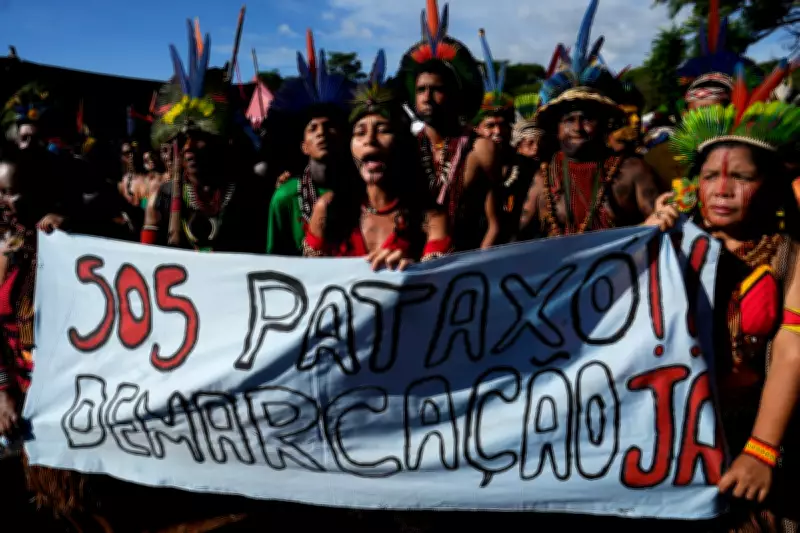
Thousands of Indigenous people marched through Brazil's capital, Brasilia, on Tuesday to protest what they describe as escalating violations of their land rights by large corporations involved in farming, logging, and mining projects. The demonstration, part of the 22nd annual Free Land Encampment, saw protesters walk along the Esplanade of the Ministries toward Three Powers Square, home to the presidential palace, Congress, and the Supreme Court.
Pressure on President Lula and Unified Demands
Indigenous leaders aimed to apply pressure on President Luiz Inácio Lula da Silva, who has championed Indigenous rights and environmental stewardship in Latin America's largest nation while simultaneously advancing oil and other projects that appear to contradict these goals. The leftist leader, expected to run for reelection in October, faces criticism for balancing development with conservation.
The Free Land Encampment is Brazil's largest Indigenous mobilization, bringing together approximately 7,000 Indigenous people from 200 groups across the country. Participants camp in Brasilia for a week to advocate for unified demands, with this year's gathering occurring amid rising reports of violent attacks against the Pataxo people in Bahia state due to land disputes with farmers, as well as significant protests in the Amazon region in recent months.

Voices from the March
Alessandra Korap, an Indigenous leader and winner of the 2023 Goldman Environmental Prize, spoke with The Associated Press during the march. Representing the Munduruku people, she emphasized the lack of consultation in government decisions. "The Congress, the Supreme Court, and the president make decisions for us without hearing us. They often pick one or a dozen Indigenous individuals and claim we all agree with a waterway, a rail, or a mining project," Korap stated.
She added, "In an assembly like this, when Indigenous peoples from across Brazil stand united, no one dares to approach us, even as they make decisions about our lives. But we are here to send a message." Protesters, including people from different generations and communities, marched while chanting and wearing traditional headdresses and body paint, creating a vibrant mosaic of Indigenous cultures.
Environmental and Political Context
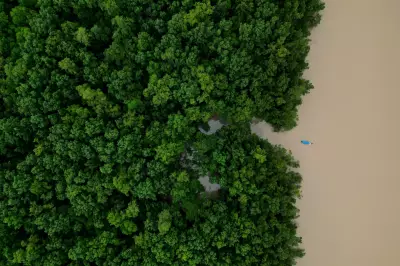
Protecting Indigenous territories is widely recognized as one of the most effective strategies to curb deforestation in the Amazon, the world's largest rainforest and a critical regulator of global climate. Researchers warn that continued forest loss could accelerate global warming. A 2022 analysis by MapBiomas, a network of nongovernmental groups tracking land use, revealed that Indigenous territories in Brazil had lost only 1% of native vegetation over three decades, compared to 20% on private land nationwide.
Dinamam Tuxá, head of the Articulation of Indigenous Peoples of Brazil, told the AP, "Brazil's current political environment is forcing us to remain increasingly mobilized, unified, and visible." While acknowledging advances under Lula's administration, Tuxá noted that Indigenous rights remain under pressure from Congress, sectors of the executive branch, and economic interests driven by growing global demand for oil, gas, and critical minerals.
Contested Projects and Legislative Threats
Lawmakers have advanced bills that weaken constitutional protections or seek to reinterpret Indigenous land rights, and the long-standing debate over allowing mining in Indigenous territories persists. In February, Brazilian Supreme Court Justice Flávio Dino ordered Congress to pass legislation regulating mining on Indigenous lands within two years. In the same ruling, Dino affirmed the rights of the Cinta Larga people to mine within their territory, provided they comply with environmental requirements and secure community approval.
Dino highlighted that illegal mining already occurs in Indigenous areas, often disregarding environmental rules and involving violence. Under Brazilian law, any mineral research or mining activity on Indigenous territories requires congressional approval and consultation with local communities.

Renata Vieira, a lawyer with the non-profit organization Instituto Socioambiental, expressed concern, stating, "Any legislation on mining in Indigenous lands will be very harmful. I believe the push to authorize mining on Indigenous territories represents one of the most serious threats to Indigenous rights." She noted that Brazil's Congress, dominated by representatives of the agribusiness sector, is generally hostile to the Indigenous agenda.
Recent Protests and Victories
The encampment follows recent protests across the Amazon, including Indigenous women protesting since February in Altamira, Para state, after a court approved a licensing process for a massive gold mine operated by Canadian company Belo Sun. Environmental groups and Indigenous leaders oppose the project, alleging serious irregularities in the licensing process.
In a victory for the Indigenous movement, Lula revoked a decree in February that allowed private concessions for waterways. This decision came after 33 days of protests involving thousands of demonstrators at a Cargill facility in Santarem, Para state, including Korap.
As Indigenous people arrived in Brasilia over the weekend and set up tents in an open-air cultural space, leaders organized assemblies. One leader questioned the crowd via microphone, asking if they were satisfied with the government's actions on land demarcation, Congress, and the Supreme Court, to which the response was a resounding "no" each time.
Political Engagement and Future Outlook
Lula was invited to the encampment but had not confirmed his attendance as of Monday afternoon, according to Kleber Karipuna, a leader of the Articulation of Indigenous Peoples of Brazil. Members of the administration, including Eloy Terena, the minister of Indigenous Peoples, indicated they would participate in hearings at Free Land during the week.
Tuxá emphasized the election year context, stating, "We are also in an election year. That is why Free Land has adopted the theme: Our future is not for sale, and the answer is us." Lula, a prominent leftist icon, has pledged to protect the environment and Indigenous peoples while defending projects vital to agribusiness, mining, and energy sectors, arguing that development and conservation can coexist.
The Associated Press' climate and environmental coverage receives financial support from multiple private foundations. AP is solely responsible for all content.