
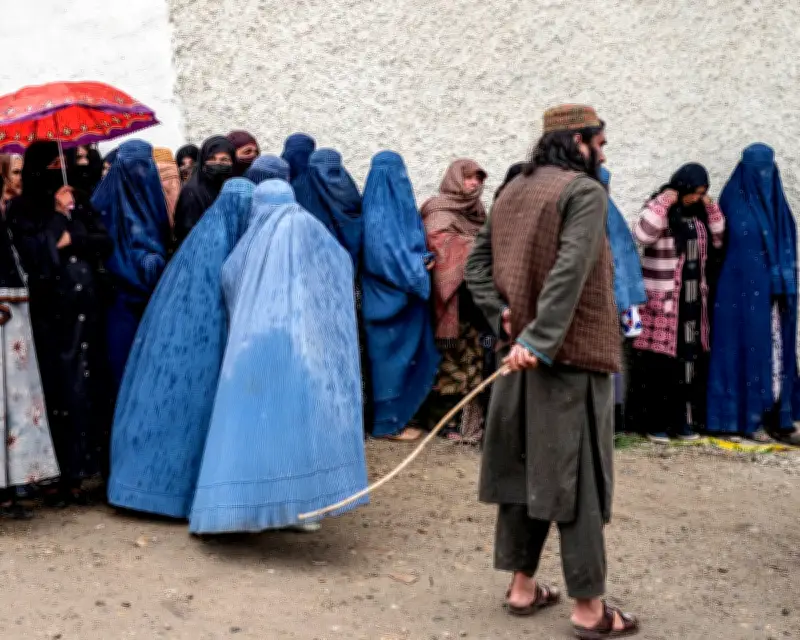
The European Union's decision to open talks with the Taliban without insisting on preconditions regarding the rights of women and girls represents a profound betrayal of Afghan women and a dangerous abandonment of the principles the EU claims to uphold. The Guardian believes this so-called pragmatism is nothing less than a sellout.
What Happened: EU Opens Engagement Without Conditions
EU officials have initiated formal discussions with the Taliban, aiming to address issues such as migration, security, and humanitarian aid. Crucially, these talks have not been made conditional on the Taliban reversing their oppressive policies towards women and girls. Since seizing power in August 2021, the Taliban have systematically erased women from public life, banning them from secondary education, most employment, and public spaces. The EU's engagement, without demanding an end to these abuses, legitimizes the Taliban's gender apartheid.
Details: The Cost of Pragmatism
The EU's approach is framed as a necessary engagement with the de facto authorities to prevent a humanitarian catastrophe and manage migration flows. However, this overlooks that the Taliban's policies themselves are a primary driver of the crisis. By engaging without preconditions, the EU signals that women's rights are negotiable and secondary to geopolitical interests. The Taliban have shown no willingness to compromise on their interpretation of Sharia law, which they use to justify the systematic subjugation of women. According to a UN report, girls remain banned from secondary schools, and women are effectively confined to their homes. The EU's talks risk normalizing this reality.
Impact: Undermining Afghan Women and Global Norms
The immediate impact is on the ground in Afghanistan: women and girls see the international community once again prioritizing stability over their rights. This emboldens the Taliban to continue their repression. In the long term, the EU's stance weakens the global consensus on women's rights as non-negotiable. The Guardian argues that by engaging without preconditions, the EU is complicit in the erasure of Afghan women from public life. The EU must demand that any engagement with the Taliban be contingent on the restoration of women's rights, including access to education, employment, and freedom of movement. Without this, the talks are not pragmatism but a betrayal.




