
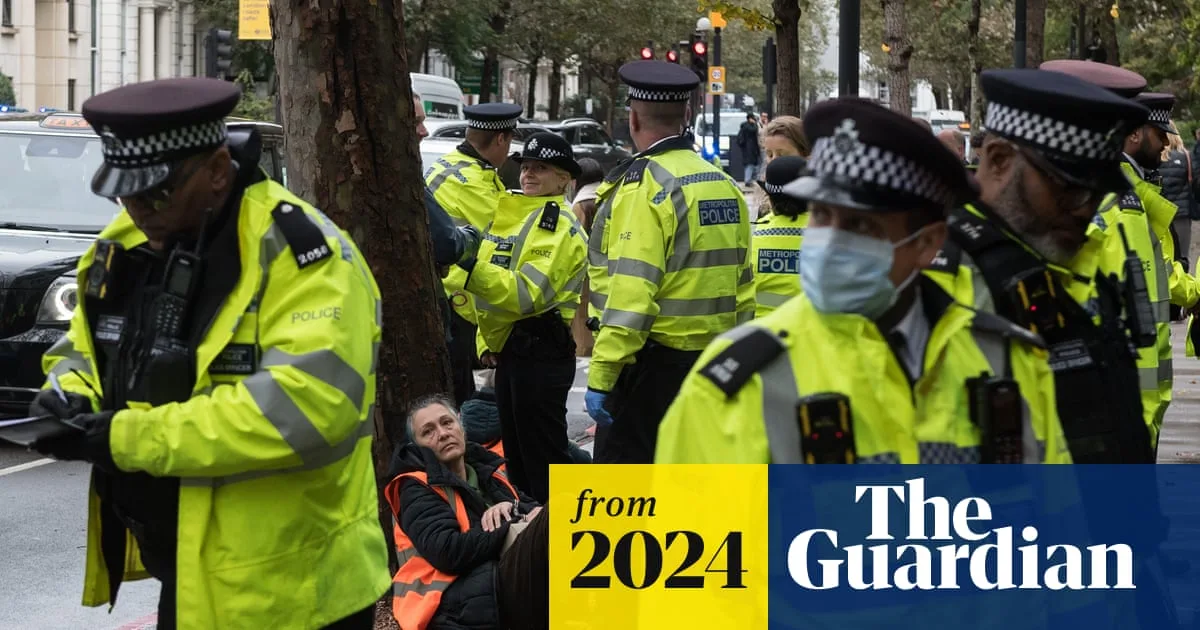
British police arrest environmental protesters at nearly three times the global average rate, according to new research that identifies the UK as a world leader in legal crackdowns on climate activism. The study, led by Oscar Berglund of the University of Bristol, found that about 17% of eco-protests in the UK result in arrests, compared with a global average of 6.7%. Only Australia had a higher rate, at one in five protests.
The research, which analysed data from the Armed Conflict Location and Event Database between 2012 and 2023, found an increase in both environmental and climate protests over the past decade. Climate protests, in particular, rose sharply towards the end of the 2010s, coinciding with movements such as Fridays for Future and Extinction Rebellion. However, the authors argue that states are focusing on punishing dissent rather than addressing the underlying issues.
Michel Forst, the UN special rapporteur for environmental defenders, said earlier this year: “In many countries, the state response to peaceful environmental protest is increasingly to repress rather than to enable and protect those seeking to speak up for the environment.” The study noted that new laws in the UK, US, Australia and elsewhere have created new offences, increased sentence lengths for non-violent protest, and given police new powers to stop protests.
The UK’s Police, Crime, Sentencing and Courts Act 2021 and the Public Order Act 2022 have been particularly influential, handing police extensive powers to curtail protests and criminalising a range of activities. Berglund said these moves have been followed by many other countries. The research also highlighted the use of organised crime legislation against activists, citing the case of Futuro Vegetal in Spain.
While arrest rates were highest in the global north, countries with the lowest arrest rates—Brazil (0.6%), Peru (2%) and Uganda (2.2%)—experienced the highest levels of police violence. The study also reported more than 2,000 killings of environmental defenders during the period studied, according to figures from the NGO Global Witness.




