
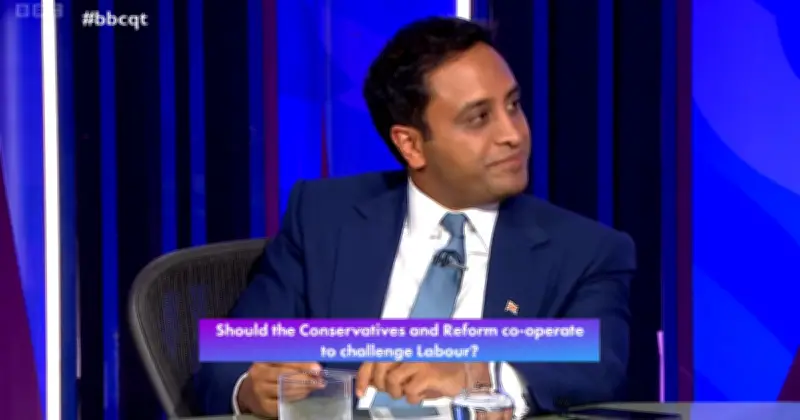
Reform UK Home Affairs spokesperson Zia Yusuf sparked a heated exchange on BBC Question Time, accusing the programme of bias after a show of hands revealed only four audience members openly supported his party, despite Reform UK polling at 28 percent nationally. The incident occurred during a special edition following the Prime Minister's resignation, with Yusuf appearing alongside Labour's Emily Thornberry, Conservative Kevin Hollinrake, and journalist Stephanie Flanders.
Yusuf challenges audience representation
When host Fiona Bruce asked for a show of hands among Reform UK supporters, only a few raised their hands. Yusuf immediately questioned the audience's composition, stating: "You did ask earlier who here supports Reform and I make out four people in the audience who put their hand up which is interesting given Reform is at 28% in the polls. So genuine question, can we get a show of hands of people who actually support Reform?"
After a second show of hands, Yusuf counted eight supporters, still far from proportional representation. Bruce countered: "I think you will see that is a bit more than four," but Yusuf insisted: "I make that eight, it is certainly no where close to representative."
Bruce defends BBC impartiality
Bruce defended the BBC's rigorous audience selection process, saying: "Zia, can I just point out there are more people than that in the audience, they are just not putting their hands up. We are scrupulous about making sure that our audience is politically representative and I just want to point that out."
Yusuf retorted: "And we all just have to take the BBC’s word for that." Bruce explained that producers screen audience members in advance, including checks of social media accounts, but noted that some viewers may be reluctant to publicly declare their political allegiance on national television.
Impartiality under scrutiny
As the national broadcaster, the BBC is bound by strict impartiality rules and faces intense scrutiny over perceived bias in its news and current affairs output. Yusuf's demand for evidence—"Where is the evidence for it?"—highlighted ongoing tensions between Reform UK and the BBC over representation.
The BBC has been approached for comment. The row underscores broader debates about media fairness, particularly for smaller or insurgent parties that claim their support is underrepresented in broadcast audiences.




