
Andy Burnham has a body of work that speaks volumes about how he gets football, and picking up the country when it is in a slump of self-doubt is perhaps within his reach. Football, close to his heart, may provide the template for his approach to governance.
Key Interventions in English Football
There have been several occasions in the past 20 years when English football has been in a state of anguish, but a nadir came in 2007 – when Burnham made one of his most significant interventions to the national game. If England win the World Cup, expect the prime-minister-in-waiting to take at least a slice of the credit.
England had just lost 3-2 against Croatia at Wembley and failed to qualify for Euro 2008, the game where Steve McClaren was dubbed “the wally with the brolly”, the pouring rain adding to the sense of despair. At Wembley that night Burnham was with James Purnell, now poised to become his chief of staff at No 10, as guests of the Premier League’s then chief executive Richard Scudamore. Burnham was the minister for culture, media and sport, having succeeded Purnell, who had been moved to the Department for Work and Pensions, this being the early days of Gordon Brown’s Labour premiership.
As McClaren prepared his resignation and English football went into one of its periodic moments of self‑loathing, Burnham, Purnell and Scudamore used the anguish to plot a way out of the wilderness. “Previously, Richard had been of the mindset that youth development was down to the clubs and it wasn’t for the Premier League to intervene,” said another guest in the box. “But that game was a genuine Damascus moment for Richard and Andy Burnham and James Purnell were a big part of that post-match discussion. There was a lot of chat about what needed to be done and how to do it.”
The Elite Player Performance Plan (EPPP)
Out of that discussion came the wholesale reform of the academy structure of English football, with the Premier League leading the way to create the elite player performance plan. Although far from perfect, it was a step change in English football, allowing clubs more time with younger players on the pitch and the ability to recruit from a wider area. It has created the gold standard of English players coming through.
Not just England players, either: Germany’s Jamal Musiala and France’s Michael Olise were among the leading beneficiaries of a system redesigned to produce more creative players. Even if Thomas Tuchel has eschewed them, Phil Foden and Cole Palmer are academy poster boys, coming through at Manchester City, as is Morgan Rogers, who was at West Brom. Jude Bellingham came through Birmingham’s Category B status academy and Harry Kane came through at Tottenham.
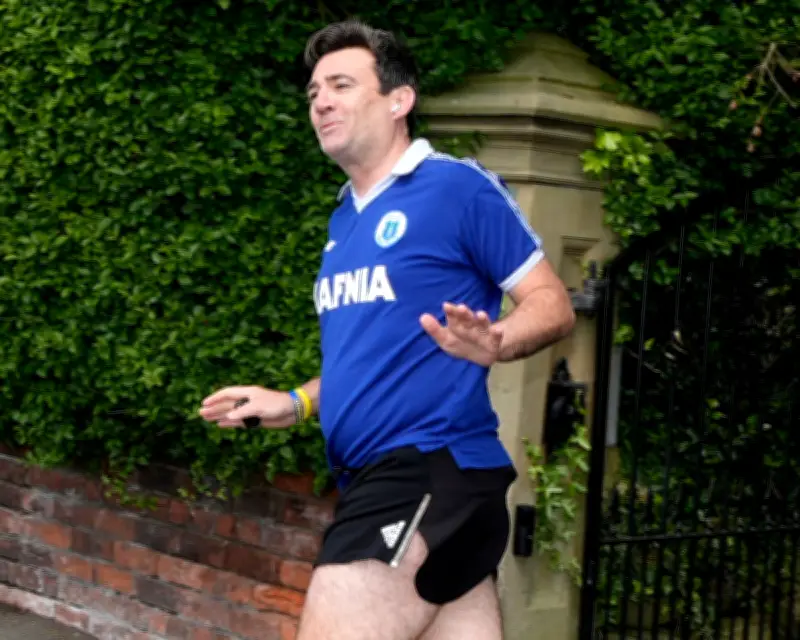
That Burnham was there at its birth – though clearly it was Scudamore, the Football Association and the Premier League’s Ged Roddy who pushed the revolution through – speaks volumes about the depth to which Burnham gets football, even if his Everton top has become the equivalent of Keir Starmer’s “my dad was a toolmaker” trope.
Hillsborough and the Independent Panel
Burnham was at the Villa Park FA Cup semi-final between Everton and Norwich in 1989 when news filtered through of the Hillsborough tragedy at the other tie between Liverpool and Nottingham Forest. That event has marked his life, from his teenager’s perspective at the time to the occasion when he was repeatedly heckled and booed at Anfield at the 20th anniversary service and interrupted by chants of “Justice for the 96”, because of perceived prevarication from the Labour government.
It was an extremely uncomfortable moment, though he recovered well, a skill set now evident in his communications. He has since said he has never felt more nervous than when addressing the crowd that day and the raw emotion he encountered there led to Burnham helping to create the Hillsborough Independent Panel. That excoriated several authorities and led to several apologies for the disaster from the government, South Yorkshire police and the Sun editor Kelvin MacKenzie, whose apology was rejected by survivors’ families.
The Football Independent Regulator
It is also partly down to Burnham that football has ended up with an independent regulator. The genesis of that goes back to the botched attempt by major Premier League clubs to form a breakaway European Super League in April 2021 and the then prime minister Boris Johnson’s threat to drop a “legislative bomb” on the idea. Johnson appointed Dame Tracey Crouch to investigate football in the aftermath and she handily had all the detail prepared on how a regulator could work because, in October 2020, the former FA chair David Bernstein, along with Burnham and Gary Neville, had produced a report, Saving Our Beautiful Game, which called for a regulator and showed how it could work.
After the Super League fiasco, we have one last chance to reclaim English football, Burnham wrote. Those familiar with the talking shop that preceded its publication say Burnham was initially more radical than most, wanting the report to examine how fans could take a stake in clubs, but was talked round to a more moderate position. The football regulator and the EPPP intervention are perhaps signifiers of what may be in store on a national scale. “EPPP was the most interventionist thing the Premier League ever did, but it was intervention in the market for a reason and with purpose,” said a source close to the discussions. “Ultimately, it was about showing the market, in this case the clubs, that it was in their own interest to do the right thing.”
Economic Adviser and Football Connections
That is also very much the mindset of Jim O’Neill, Lord O’Neill of Gatley, Burnham’s economics adviser and very much a football connection. O’Neill led the fans’ failed buyout of the Glazer family, dubbed the Red Knights, and railed against the leveraged buyout mechanism that had put United in debt. A former chair of Goldman Sachs, a friend of Sir Alex Ferguson and a United season-ticket holder, he was a big supporter of the football regulator, believing capitalism could thrive for all with judicious controls.
Now Burnham has a taller task, convincing everyone from bond markets to utility markets that, like football, they can benefit from enlightened self-interest.




