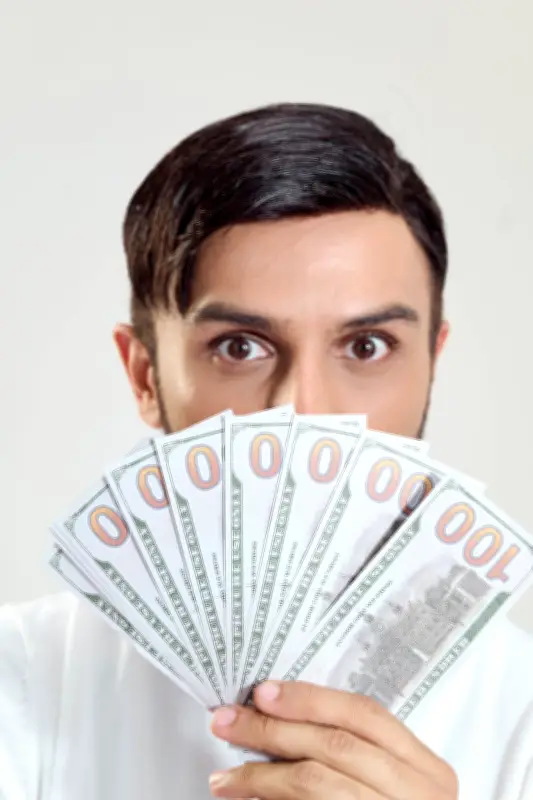
It was ice cubes that tipped Shabaz Ali over the edge. “A woman online spent her entire day making content about ‘designer ice cubes’,” he recalls. “She’d freeze flavoured waters or fruit juices and show the whole process in tedious detail. I was like, ‘There’s no way she’s got a proper job or has ever struggled for money. Only someone wealthy would have the time to do this.’ It vexed me, so on a whim, I made a reaction video saying ‘On today’s episode of I’m Rich, You’re Poor …’ Soon my TikToks were getting 30m views and thousands of comments. It blew my mind.”
Ali, AKA @ShabazSays, has since become a cult celebrity for his sarcastic commentary on how the other half live. His scathing takedowns of the “rich and ridiculous” have won him more than 4 million followers. Now he’s transferring his viral fame to our TV screens.
From classroom to TikTok fame
It all began when former chemistry teacher Ali, 32, took to his bedroom in Blackburn during lockdown and amused himself by mocking the smugly privileged. In his crosshairs were those who humblebrag about their perfect lives and woo-woo habits. Tongue firmly in cheek, he styled himself as “King of the Povvos” and leader of the “#PovvoGang”.
“It was reclaiming an insult,” he says. “I grew up working class and heard ‘povvo’ so much. The community we’ve built is warm, honest and self-deprecating. They’re saying, ‘We don’t have much but at least we’re here’. Povvo is a badge of honour now.”
The disconnect between influencers and their audience is increasingly jarring. “They post about bespoke Bentleys and private jets. Who are you making this for? [US socialite] Becca Bloom really bothers me. Millions of people watch her cats eating out of £20,000 bowls. She has a £100k Louis Vuitton trunk full of Hermès bags. Yet her followers genuinely think they’re friends.”
A backlash against wealth influencers
In Ali’s corner of the internet, a backlash was brewing: “People were tagging me in dozens of videos per day, pointing out tone-deaf displays of wealth.” He calls it “a movement” that is helping to move the dial on unrealistic standards. “There’s been a massive shift in the last few years,” says Ali. “The Kardashian era is over. We don’t want airbrushed reality any more. We want it raw, authentic and unfiltered.”
In these days of doomscrolling, aspirational figures fill a void. “As a teacher, I saw how social media warped teenagers’ perception of the world. Wealth influencers, trad wives and Andrew Tate provide something that’s missing from their lives. The illusion of working hard and getting your reward has been shattered. They’re seeing their parents and teachers struggle. Young people dream of opulence but can’t have it. They’d say, ‘I don’t need to study, I’m going into business. Richard Branson didn’t do his GCSEs.’ I was like, ‘He’s one person!’ There are 3,400 billionaires in a global population of 8.3 billion. That’s a lot of disappointed people.”
Amid the cost-of-living crisis, his videos provided a reality check. “I was telling my students, ‘This lavish stuff online isn’t right. It’s not real’. That’s why I started taking the mickey. It snowballed.”
Investigating billionaires in BBC documentary
His BBC documentary, Shabaz Asks: Are Billionaires Bad?, finds Ali investigating extreme wealth and its real-world impact. With his trademark playful wit, he asks whether the mega-rich are a symptom of a broken culture or if they can be a force for good.
Wealth hoarding gives him “the ick”. “What annoys me most is that the gap is widening,” he says. “We’re getting more billionaires, who are finding more tax loopholes and ways to hoard assets. I genuinely think 90% of them don’t care. You can’t be a billionaire and be a good person.”
In a bid to understand more, he attempts to meet a billionaire in person. Ali approaches the Kardashians, Beckhams, Trumps, Elon Musk, Jeff Bezos and Beyoncé for an interview. “Kim K definitely saw my message. She didn’t reply, though. A couple of people hearted it. That was it.”
Instead he meets a range of people who are both pro and anti-billionaire. These include the Green party’s Zack Polanski. “He’s the only person on the party political spectrum who’s speaking out about billionaires,” says Ali. “Everybody else is too busy trying to protect their donors. Many of his arguments resonated. I’m a lifelong Labour voter but might I vote Green now? Possibly.”
He spends time with Apprentice winner turned “eight-figure entrepreneur” Joseph Valente (“fascinating character but he uses a lot of hairspray”). He flies to the Colorado ski resort of Vail to stay with Phones 4U founder John Caudwell. “I hate billionaires but I liked John, which was hard,” admits Ali. “I just think he’s unaware of his own power and privilege. He told me, ‘You can’t whisper in the ears of governments. I had a meeting with Keir Starmer and he didn’t take my advice.’ The fact that he even said that sentence! You got into that room because of money. The prime minister might not have taken your advice but there’s someone whose advice he did take. I admire John’s philanthropy but fundamentally we still disagree. Your rich friends are still wankers, mate!”
Ali takes the opportunity to poke around inside Caudwell’s kitchen, hoping to find one of the vast “curated” fridges he satirises online. “I genuinely thought I was going to get the internet lifestyle with everything neat and labelled but it was like a normal person’s fridge. It was dirtier than mine!” Did making the film challenge Ali’s views? “It didn’t alter my beliefs, it cemented them. I still think we don’t need billionaires and they should be doing more for the rest of us.”
Tax the rich, says Ali
He’s told that if we make billionaires pay more tax, they will leave the UK and take their wealth with him. “Let them go!” he says. “Let’s look over the hill and see if the grass is greener. It’s just scare tactics. They ain’t going anywhere. They’ve benefited too much from this country and have too much of a stake here to suddenly leave. Tax them, I say. Tax diamonds. Tax yachts.” He laughs. “If they don’t pay up, move them all to the Isle of Wight and turn it into a giant prison for rich people.”
This future star’s debut documentary ends with a shameless appeal for a full series. “We’ve already started talking about the next film,” he says. “Skincare, cosmetics and plastic surgery is the route I’m keen to go down. Shabaz asks: can I turn back time? That’s the question I want to pose. Watch this space.”
In the meantime, he believes society is approaching tipping point. “I think we’re on the brink of something big,” says Ali with a twinkle of zeal in his eyes. “People are so sick of wealth inequality. We’re French Revolution era, ready to overthrow Marie Antoinette.” Shabaz Asks: Are Billionaires Bad? airs on BBC Three at 9pm on Tuesday 28 July and will be available on iPlayer.