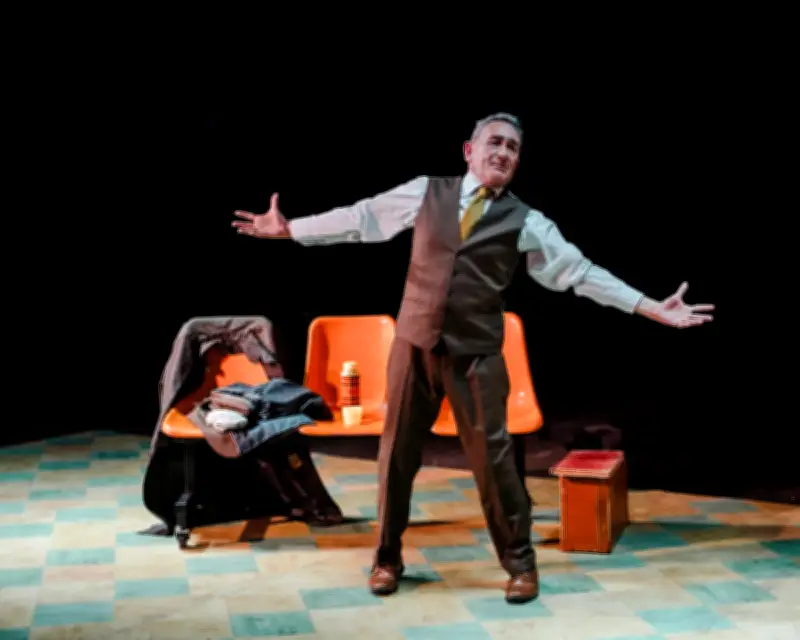
A ferry terminal in steely morning light sets the stage for Deirdre Kinahan's poignant drama of return. Joseph Grace, played by Michael Glenn Murphy, clutches a suitcase in overcoat, suit, and hat, pondering his next move. After 50 years away, he has finally come back to Ireland.
As a bus arrives, he hesitates and turns away, overwhelmed by memories. Louise Lowe's atmospheric staging for Once Off Productions presents a reckoning with Joseph's past: a life swept up in 20th-century Europe's upheavals, from the Western Front to Roger Casement's Irish Brigade in 1915 Germany, to the rise of Hitler.
Historical Context and Character Depth
Kinahan, who has previously dramatised the Irish revolutionary years using archival sources, writes acutely about complex loyalties among Irishmen serving in the British army during World War I. However, the historical research is less well absorbed overall.
Joseph's years in Weimar Berlin lack full conviction, despite Murphy's gleeful performance as he finds sexual freedom in the gaudy cabarets. His later joining of the proto-fascist Freikorps seems improbable for a man who has had enough violence. While Joseph is depicted as a survivor who can change his name and allegiances, he appears too gentle and sensitive to be an ironic anti-hero, though that might have been an interesting twist.
A Life Unmoored
Instead, Joseph is an accidental soldier and a reluctant, failed revolutionary. His happiest years were in 1950s London with his English lover, whom he still grieves. Now unmoored, his permanent exile calls to mind Sebastian Barry's lost souls and Beckett's ruminators: belonging nowhere, a lonely figure hovering on a threshold.
The production runs at Marina Market, Cork, until 20 June, then at the Pavilion, Dún Laoghaire, from 16-19 July. Cork Midsummer Festival continues until 21 June.