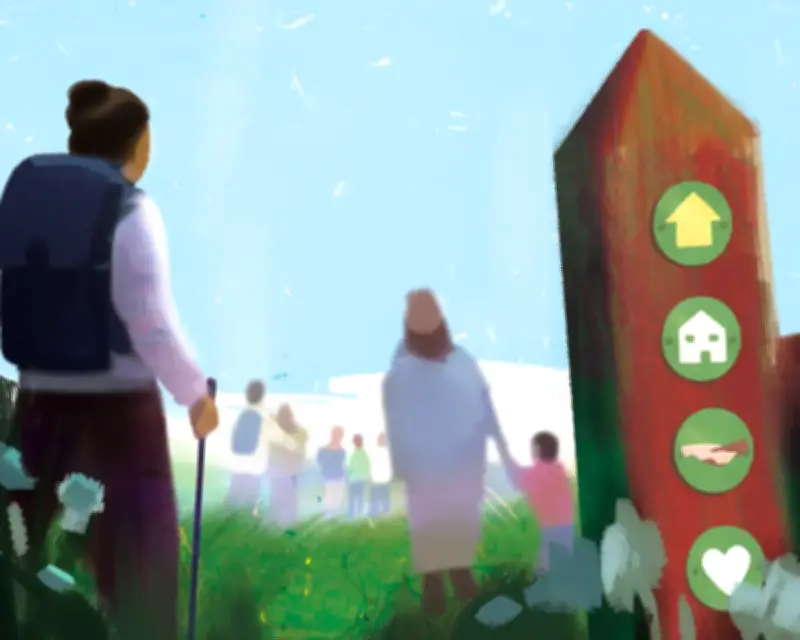
In a recent column, John Harris describes a three-night visit to the Peak District with his two teenage children, where temperatures hovered at a comparatively tepid 28C. The trip began with a 20-minute ascent of Mam Tor, a modest peak attracting both dedicated ramblers and newcomers eager for the view. Harris notes that the most striking sight was the diversity of the people walking up, down, and along the mountain.
A Diverse Scene on Mam Tor
Women in their 20s wearing hijabs picnicked on giant rocks, while multiracial groups of young men raced to the top. Solo and shirtless fitness enthusiasts and retirement-age dog walkers took their places alongside them. Harris acknowledges that country walking has long been typified as one of the most monoculturally white pursuits, but here, due to the proximity of Manchester and Sheffield, things looked different.
The scenes didn't quite suggest Britain in microcosm, but they weren't far off. Harris wondered if he was witnessing the belated next emancipatory phase of a story that began with the mass trespass at Kinder Scout in 1932, led by the Jewish anti-fascist Benny Rothman. In that protest, hundreds defied the law to walk on privately owned Derbyshire hills and moorland. Five received prison sentences, but the way was opened to the creation of the UK's first national parks.

Organisations Promoting Inclusive Walking
Harris praises organisations working to make walking more inclusive, in response to national statistics that remain depressing. Black Girls Hike was founded in 2019 by Rhiane Fatinikun, aiming to create "a safe space for Black women to explore the outdoors … challenging the status quo." Haroon Mota started Muslim Hikers, and Cherelle Harding created Steppers UK, intended to "normalise black and brown faces in outdoor spaces and create a community of outdoor enthusiasts."
Harris contrasts this with the vision of Nigel Farage, whose outfit of flat cap, Barbour jacket, wellies, fag and pint symbolises a bucolic England. He also mentions the far-right Woodlander Initiative, led by Simon Birkett, which bought two wooded stretches of land in mid-Wales. The countryside, to the fascist mind, represents notions of racial purity and noble simplicity, and Harris argues that the UK's rural expanses can be as contested as any other aspect of national life.
The Threat to Youth Hostels
Harris highlights the obstacle of boutique hotels and sky-high prices, and points to the Youth Hostels Association (YHA) of England and Wales as part of the answer. The pandemic caused the YHA an income loss of £40m in the first year alone, and energy costs quadrupled by March last year. In 2023, it had about 150 hostels; to date, it has announced the sale or closure of 29. Eight are now run as hostels thanks to a franchising scheme.
The YHA runs a programme providing fully or partly funded stays for young people and families facing significant challenges, and a scheme called No Child Left Behind that helps ensure financial hardship does not stop kids going on residential school trips. Harris argues the organisation should be expanding, not shrinking.
A Call for Support
At Hartington Hall, a 17th-century manor house owned and run by the YHA, Harris noticed a plaque stating: "This youth hostel is one of many, both in this country and abroad, where young people, regardless of race or creed, may spend the night." He asks how to preserve as many hostels as possible and bring in more young people, suggesting an injection of cash from philanthropists, a tourist tax on hotels and short-let accommodation, or funding from government departments.
Some parts of the British landscape are starting to undergo a welcome social change, but it needs support in the form of bunk-beds and brickwork. In a country whose divisions are constantly inflamed by demagogic chancers, that challenge is a lot more urgent than it might seem.