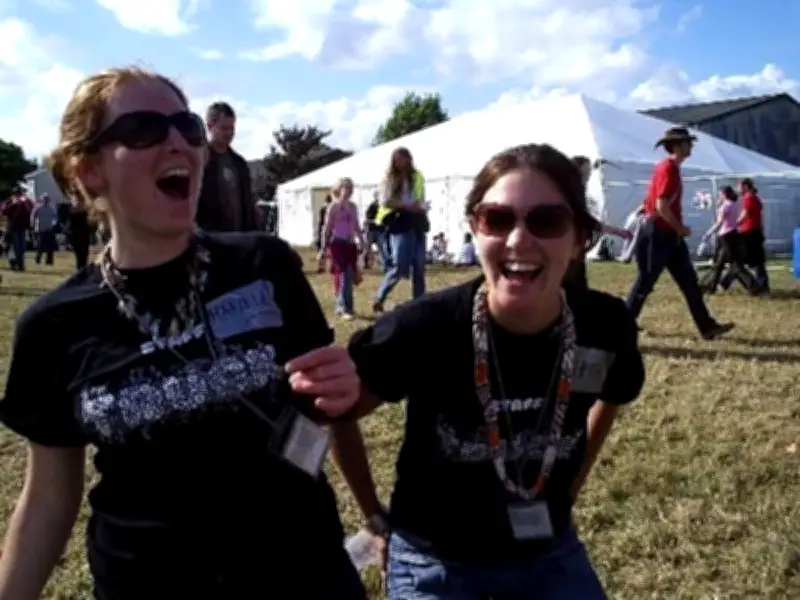
In 2004, my friend Hannah and I secured jobs in the artist liaison team at a music festival in the United Kingdom. As Australians living in a share house in London, our role was to manage backstage dressing rooms and keep the artists both happy and under control. I was 22 years old, equipped with a walkie-talkie in one hand and keys to a sea container full of alcohol in the other, and I have never felt more powerful.
Weaponised Cheer and Long Hours
Our work blended the roles of party host and bouncer, where charm was a key technique for maintaining order backstage. This was a form of weaponised cheer, a work ethic that saw us smiling through 14-hour shifts on low pay. Our primary task was to interpret the spreadsheet of rider requests and prepare dressing rooms with the bands' alcohol. I once remarked on the large quantity of alcohol the band Contingency had requested, only to realise later that contingency was not a band but the booze allocated for staff consumption.
Dealing with Musicians and Managers
Band members tended to be gentle and kooky, but their managers were often pushy. One manager insisted that the lead singer of a pop group, due to headline the stage, could not walk the short distance from her tent to the backstage area. He asked if I could get her a golf buggy. When I said no, he explained: 'But she's done mushrooms and doesn't think she can walk.'
Camaraderie and Tradition
Some festival crew were professional roadies year-round, while others took annual leave from day jobs to work the summer festival season. Hannah and I were working hard in graduate jobs and trying to build our careers, so summer festivals became a cost-neutral way to have fun and meet new people. The camaraderie was addictive, and we kept it up for years, building our own annual tradition. At midnight, we would knock off and prowl the festival for a couple of hours before crawling through the flap of our tiny tent for a short, cold sleep. The first acts of the day were usually quirky or local, so we would wake up, mask our hangovers, and warmly greet the members of the district kazoo orchestra due to play a 10am slot.
Memorable Acts and Backstage Insights
The bands grew bigger as the day wore on, and it was exciting when the festival buzzed about an artist due on 'your' stage later that day. I have fond memories of mingling with the kind, polite members of Bonobo, Fat Freddy's Drop, Hot Chip, and Four Tet. By sundown, anticipation, exhausted delirium, and golden light would combine to render their sets unforgettable. The backstage area is the festival's hypocentre, and it was a privilege to see geeky musicians transform into stars as they walked on stage. The country's hottest electronic musician might be unrecognisable eating a chocolate bar in the corner of their dressing room. Famous artists would bring their families, and their children would muck around nonchalantly backstage.
A Star in the Making
Sia performed on my stage when she was 'just' a jazz singer. She went on to become a multimillionaire by writing songs for Rihanna, Beyoncé, and Katy Perry. Whenever I see her name, I remember the relaxed chats we had backstage about being two Australian women in the UK. I tried flirting with the artists, but they were never interested in me. I had more success with the crew. Over 20 years later, I am still with the production manager I met backstage, a relationship forged by our mutual love of walkie-talkies and live music.
Life After Festivals
These days, Hannah and I are mothers with busy lives and careers. But last year, we found babysitters for our kids and went to a music festival together. We no longer share a tent, but we share memories and a capacity to smile our way through life's longer shifts.