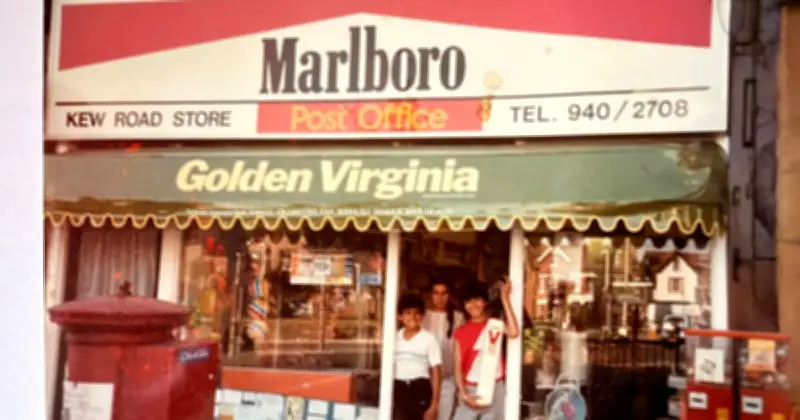
Amman Brar's debut novel, Mr Sidhu's Post Office, draws directly from his childhood experiences helping his father, Gurdev Singh Brar, run a sub post office in Richmond during the 1980s and 1990s. The story explores the central role such community spaces once played and mourns their disappearance today.
Father's Post Office Became a Community Hub
When Brar's father bought the business, called The Penny Black, from a retiring Mr Hodges in the 1980s, it was a simple post office with a small shop selling envelopes and cards. Brar was eight years old. His father shrewdly kept on three local women—Rose, Min, and Judith—who knew everything happening in the neighbourhood. They were older working-class women supplementing their pensions, but they loved the job because it kept them informed about local gossip.
Customers ranged from elegant ladies in hats and gloves collecting pensions to solicitors buying stamps, families receiving housing benefit, a charity refuge for single older men, and a tramp who sat on the bench outside. Everyone came to the Post Office. Brar's father always reminded him that the Post Office was government business—the place where ordinary people met the government for pensions, child allowance, stamps, bank accounts, passports, TV stamps, and traveller cheques.
Building Trust and a Thriving Business
The local women advised Brar's father on which customers were trustworthy. Brar later wondered if their presence helped reassure customers that his father was a good person. The business flourished. There were no big supermarkets then, and Asians had taken over grocery sales in many communities, working longer hours and pleasing customers to earn their spending money. Customers would stand around for hours chatting with each other.
The shop had credit books for locals who bought cigarettes and milk on account. Pensioners carefully spent their money on groceries, always a week behind in repaying. Brar would naively tally the debits and tell his father they were owed hundreds of pounds, but his father understood that customers would cash their pensions, giros, or child benefit at the post office and pay what they owed. Rarely did anyone run off without paying, as that would mean being ostracised from the one place everyone visited.
Hard Work and Financial Struggles
By the end of the 1980s, Brar's father had created a thriving mini-mart and post office. He worked hard as a sub-postmaster, also visiting cash-and-carries in the mornings and evenings to stock goods. Brar worked as his lackey after school and at weekends. He watched his father pore over accounts, read handwritten lists of goods to buy, check locks, clean the floor, and turn out the lights at night, shutting the shutters around 8:30 pm—only to start again the next day except Sunday.
As the 1990s began, Margaret Thatcher's influence waned, and the UK crashed out of the European Exchange Rate Mechanism (ERM), sending interest rates to 17%. People Brar knew handed back keys to properties now worth less than half what they had paid. His father stuck firm, refusing to let his beloved post office go, even if it meant working until 9 or 10 pm. Every extra pound went toward the mortgage. The property itself held its value, but the eye-watering mortgage hovered like a dark cloud.
Impact of the Horizon Scandal and Decline
By the time Tony Blair took office and optimism returned, the hard work had taken a toll on Brar's father. He still loved serving customers, but the shop was hard work. Brar believes the stress of the financial situation led his father to develop Parkinson's disease. His body betrayed him; he began having small prangs in his van. Eventually, he decided to sell up without telling any customers, simply training the new man and leaving.
Brar, then living in a flat above the post office, would be asked by customers, “Where’s your dad?” He could not bring himself to say his father had Parkinson’s. He told them his father was retired and happy. Brar is glad his father retired before the Horizon scandal, which also features in the novel. His father was fastidious about accounts; money going missing—now known to be a computer hallucination in over 900 cases—would have destroyed him. Like many sub-postmasters, his aim was to serve the community, not to get rich.
Loss of the Post Office and Community
Today, the post office is gone. The man who took over found it difficult to run as big supermarkets undercut small Indian-run shops. He gave up, and all that remains is a red pillar post box outside the premises once called The Penny Black. Modern post offices run on commission without a proper wage, often serving delivery retailers for returns. Benefits are paid into online bank accounts. There are no longer women like Rose, Min, or Judith who know the goings-on of the locality. Richmond is now a place where many ordinary people cannot afford to live. Brar will always remember what it was like when his father ran his beloved Post Office.
Mr Sidhu’s Post Office by Amman Brar (Juniper, £16.99) is out now.