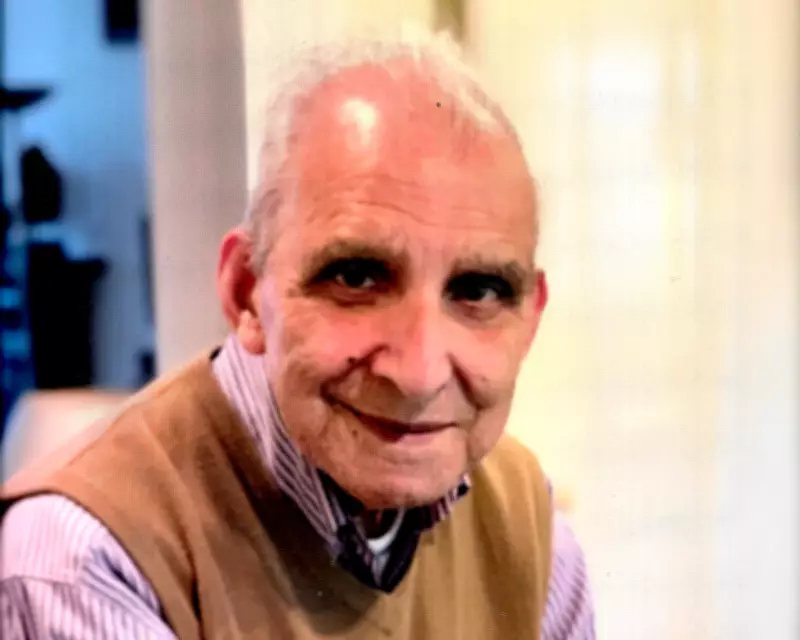
Amrit Lal, a pivotal figure in the establishment of the Edinburgh Hindu Mandir, has passed away at the age of 93. He moved to Britain from India in 1952 to begin an apprenticeship at Albion Motors in Glasgow.
Early life and journey to Britain
Born in Jandali Kalan, near Ahmedgarh in Punjab, Amrit Lal experienced significant disruption and hardship during his early years. Two brothers and a sister died in infancy; his father, Lachman Dass Tangri, served as a vet in the Remount Veterinary Corps of the British Indian army and was frequently transferred. His mother, Parvati Devi Dhand, had no formal education. The family had limited means, and Amrit often attended school barefoot.
Stability came in 1945 when a maternal uncle, Jagiri Mal Dhand, a teacher, enrolled him at Khalsa High School in Kila Raipur. Despite the turmoil of Partition in August 1947, Amrit passed his matriculation exam the following year. He then studied at DAV Post Graduate College, Dehradun, completing his final exams in 1952.

Shortly after, an introduction in Delhi led to an apprenticeship with Albion Motors in Glasgow. Arriving in Britain in November 1952 with little money and limited English, Amrit spent a challenging decade combining work and part-time study. He gained various qualifications in mechanical and production engineering at Stow College.
Marriage and career
In 1962, he returned to India and married Saroj Chanana, an economics graduate. The couple initially lived in Madras (now Chennai). Their first child, a daughter named Pansy, was born in 1963 but sadly died before she was three months old. In 1964, they moved to Singapore when Amrit became a lecturer in production engineering at Singapore Polytechnic. Their second child was born there in 1965.
He returned to the UK in 1967 to study for an MSc at the University of Birmingham. In 1968, he was offered a lectureship at Napier College of Science and Technology in Edinburgh. The family settled in the city, where their daughter Kavita was born in 1969.
Business and community work
Pressures from teaching, raising a family, and workplace prejudice led both Amrit and Saroj to leave education. They opened a grocery business, Lal's Store, in 1973, which provided financial security. In the mid-1980s, they established Fabina, a shop offering Asian fabrics, Indian musical instruments, and Bollywood film rentals, which became a cultural hub for south-Asian people.
In 1981, an organisation to create a permanent Hindu temple in Edinburgh was formed, and Amrit later became its president. After Saroj secured a disused church in Leith, Amrit played a leading role in its renovation. He also supported her in setting up Ganga Ghat on the River Almond at Cramond, a multifaith site for the immersion of ashes, where both his and Saroj's ashes were eventually placed.
Saroj died in 2020. Amrit is survived by his children Kavita and the author, and his granddaughter Isha.