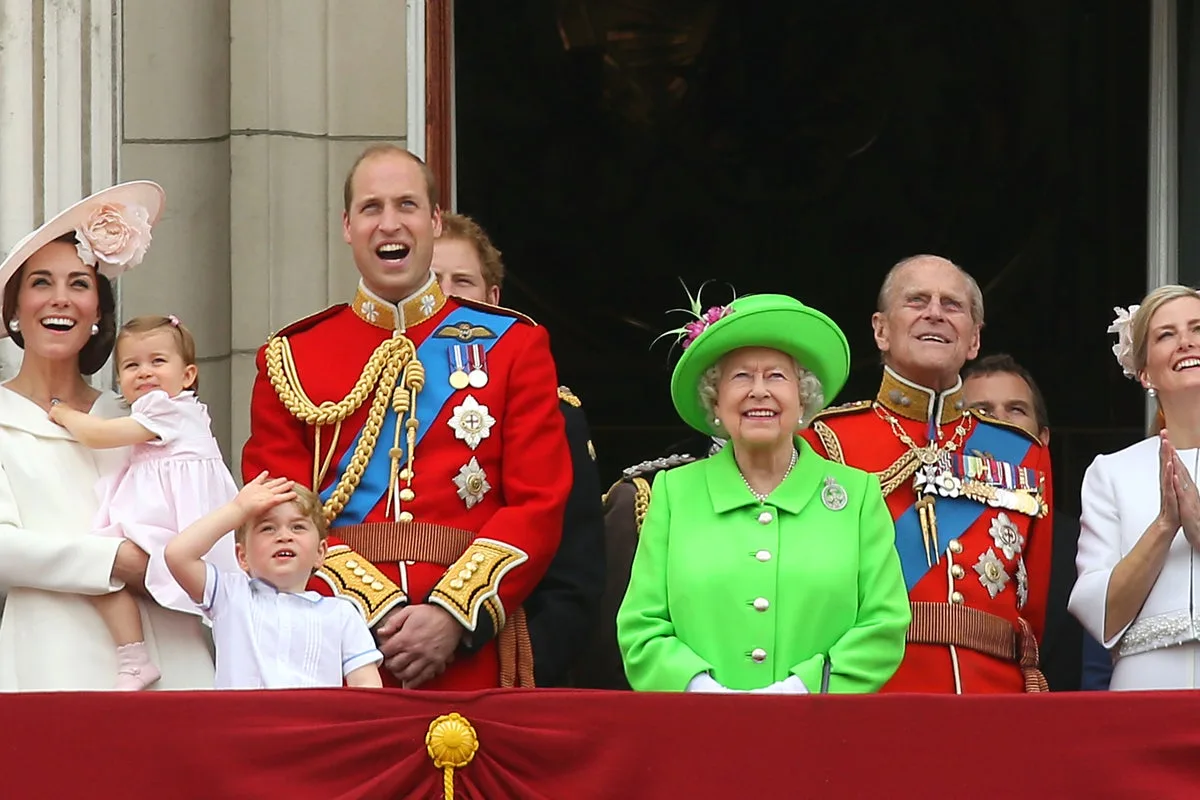
Queen Elizabeth II's distinctive 'rainbow strategy' for dressing was a deliberate choice to ensure her visibility at major public events, including the annual Trooping the Colour parade, which traditionally marks the monarch's official birthday in June. This sartorial approach saw the late monarch favour bold, monochromatic colours, allowing her to stand out clearly within large crowds and remain easily identifiable to onlookers.
The refinement of this instantly recognisable style is widely attributed to Angela Kelly, her long-time dresser and confidante, who joined the royal household in 1994. Together, they crafted a signature uniform comprising tailored coats, a Launer London handbag, sensible footwear, and a coordinating hat. 'I have to be seen to be believed,' was the famous motto attributed to her, according to biographer Robert Hardman, a simple line that underpinned a lifetime of sartorial strategy.
When Princess Elizabeth married Prince Philip Mountbatten in 1947, Britain was still emerging from the austerity of war. Rationing remained in place and optimism was tentative. Her wedding dress, designed by Norman Hartnell, became an emblem of hope. Inspired by Botticelli's Primavera, the gown featured intricate embroidery of flowers, trailing vines and blossoms – a symbol of renewal. It took 350 dressmakers seven weeks to complete, a feat of craftsmanship that stood in defiance of post-war scarcity.

If her wedding dress symbolised hope, the Queen's 1953 coronation gown emphasised her approach to symbolism for the rest of her reign. Also designed by Hartnell, the gown was made from silk produced in Kent and adorned with gold bugle beads, pearls and diamantés. Yet its true significance lay in its embroidery. At the Queen's request, the dress incorporated not only the floral emblems of the United Kingdom – the Tudor rose, Scottish thistle, Welsh leek and Irish shamrock – but also those of the Commonwealth. Canada's maple leaf, India's lotus and others were stitched into the design.
Nowhere was the Queen's sartorial diplomacy more evident than on overseas tours. Her wardrobe became a carefully curated tribute to the nations she visited, incorporating their symbols, colours and cultural motifs. In Japan in 1975, she wore a 'Cherry Blossom' dress that referenced the nation's sakura – a powerful emblem of beauty and transience. Similarly, during her historic 2011 state visit to Ireland, a white silk crepe gown by Angela Kelly featured more than 2,000 hand-sewn shamrocks, accompanied by a harp brooch – a gesture widely interpreted as one of reconciliation and goodwill.
Not all of the Queen's most symbolic outfits were ceremonial; some were powerful purely because they were unintentional. In November 1992, following a devastating fire at Windsor Castle, the Queen wore a somber outfit that reflected the nation's mood. The article also highlights her outfit for Princess Margaret's wedding in 1960, which marked the beginning of her lifelong affinity for the colour blue, now adopted by the Prince and Princess of Wales.