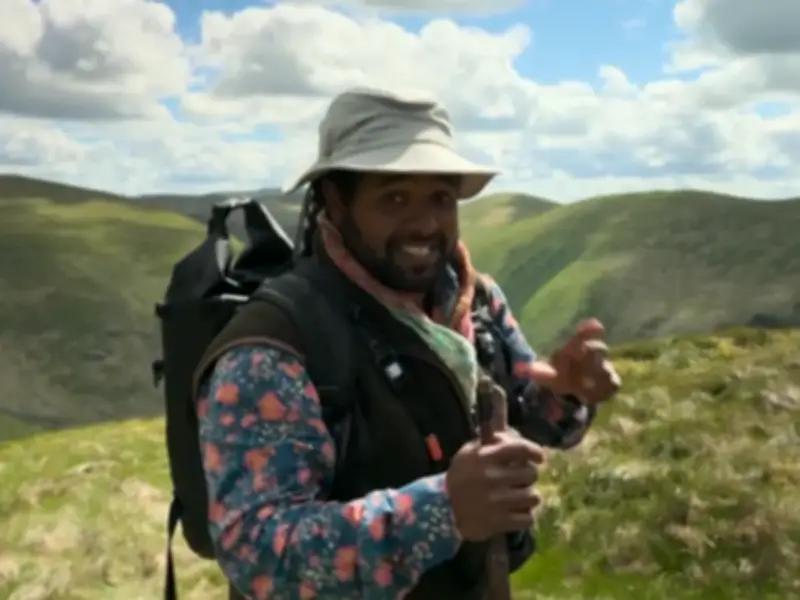
Countryfile presenter Hamza Yassin returned to the show on Sunday, November 15, from a secret location in Scotland, where he joined a team on a mission to help protect peregrine falcons and golden eagles.
Opening the programme, Hamza explained that he was heading to meet a dedicated team and was "racing against time" to help protect the fastest animal in the world. He told viewers: "Because of poaching activity in the area my exact location is a secret but my mission starts somewhere near the Moffat Hills in the Southern Uplands of Scotland."
A Secret Mission in the Southern Uplands
Describing the landscape, Hamza noted that the area is full of steep crags, sheltered glens and plenty of prey, making it an ideal home for special birds. The hills were chosen for a reintroduction project bringing golden eagles back to the lowlands of Scotland.
He added: "I'm about to get up close and personal with one of the most epic hunters in the world - the Peregrine Falcon. But that will mean scaling cliffs and racing against time to help give them the best chance of survival."
Monitoring and Protecting the Birds
Hamza met volunteers George Smith and Rebecca Dickson from the Scottish Raptor Study Group, who monitor and help protect the birds. Rebecca advised people wanting to spot the birds to go out with someone experienced and not disturb the nests, noting that peregrines are "quite vocal" and would "shout" right away if disturbed.
She said: "And then you know just to take a pause and analyse the situation. Sometimes they maybe shouting at another predator so you have to look at the environment and see is it actually me disturbing them or something else." George added that the birds are specially protected and people are not allowed to go near them, noting that some sites are kept secret due to potential persecution.
Collecting DNA Samples
Part of Hamza's mission involved collecting DNA samples from the chicks. George explained that in the past some nests had been targeted by gamekeepers, while recently people had been collecting chicks for falconry. He said in one incident a collection of chicks were taken and sold to the Middle East.
Hamza said: "As a nature lover I don't understand how someone can go up to a nest and go 'beautiful chicks, I'll take all of these'. I can't comprehend that." George, who said he lost about six nests a year, said it was for financial reasons, with on average a bird being sold for £5,000, although he'd heard some sold for £250,000.
Hamza admitted: "That frustrates me." Rebecca added: "It's extremely hard-hitting to be honest when you've been to a nest and start monitoring of the parents, then the laying of the eggs and then you come back and there's footprints and someone's climbed down there and it's not us. It's horrendous."
George added that from DNA sampling, they could track the lineage of the chicks and know which ones in captivity had been stolen from the wild. "Absolutely amazing," added Hamza. "Just wonderful to think that all this work here is actually amounting towards something and the protection of all of these raptors. Beautiful."
Countryfile airs on BBC One and BBC iPlayer.