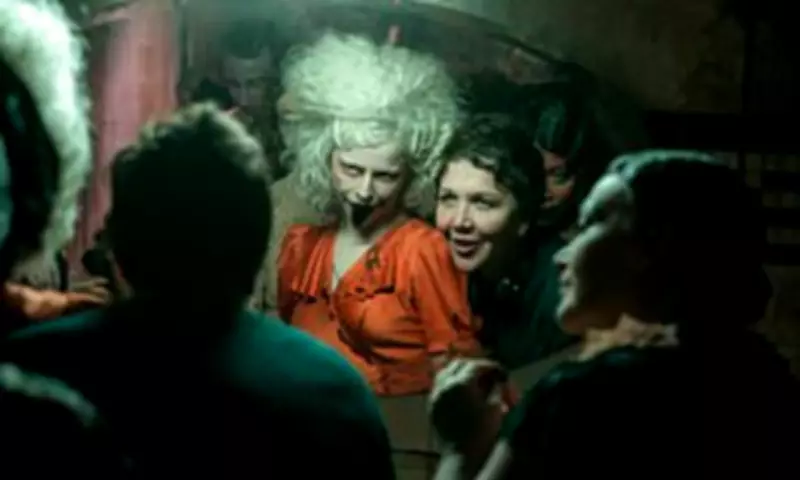
Maggie Gyllenhaal has disclosed that Warner Bros compelled her to trim several sexually violent scenes from her latest film, The Bride!, after the movie faced severe critical backlash. The 48-year-old filmmaker explained that the final edit presents a somewhat restrained version compared to her original vision, following intense scrutiny during test screenings.
Studio Intervention Following Viewer Complaints
Gyllenhaal described how female viewers particularly objected to depictions of sexual violence, with some explicitly stating they "didn't want to see a woman being violated." Despite this feedback, the director maintained that such violence represents "a major reality" in contemporary society and argued against sanitizing these difficult subjects on screen. She emphasized the importance of portraying such brutality in a manner that remains "very hard to watch" to reflect its true awfulness.
Gender Dynamics in Filmmaking
The conversation around these edits raised questions about gender bias in the industry. Gyllenhaal recalled a friend questioning whether a male director would have faced similar criticism for identical content. This perspective highlighted potential double standards in how filmmakers are judged based on their gender when tackling sensitive subject matter.

The Bride!'s Controversial Content
Starring Jessie Buckley as the Bride of Frankenstein and Christian Bale as the Monster, The Bride! contains numerous graphic scenes of violence and sexual assault. Gyllenhaal connected these depictions to broader cultural issues, noting the disturbing prevalence of brutality against women during the film's production period. She referenced her own experience with challenging material in 2002's Secretary, asserting her thoughtful approach to such themes while acknowledging their difficulty for audiences.
Consent as Central Theme
At the London premiere, Gyllenhaal identified consent as the film's "major issue," explaining that the Bride of Frankenstein narrative inherently involves questions of autonomy and forced creation. She elaborated on how the film explores what happens when a woman is literally manufactured for another's purposes without any say in her own existence.
Critical Reception: From Scathing to Supportive
The Bride! has generated polarized reactions from critics ahead of its theatrical release. Numerous reviews have been devastatingly negative, with some publications awarding zero or one-star ratings. Critics have described the film as a "catastrophically poor misfire," a "divisive fever dream," and "one of the absolute worst movies" they've reviewed.
Specific criticisms have targeted Buckley's performance, which some found "astonishingly poor" and "shouty," while others lamented wasted talent and chaotic editing. The Hollywood Reporter called it a "wretched mess," and The New York Post's zero-star review claimed viewers would struggle to believe in or sympathize with the characters.
Positive Perspectives Amid the Criticism
Despite the overwhelming negativity, several respected outlets offered more favorable assessments. The Guardian, BBC, and The Standard each awarded the film four stars, praising its bold vision and Buckley's "ferocious performance." These reviews highlighted the film's exhilarating scale and its relevance to women confronting "unrelenting monstrousness" in society.
The BBC described the film as "gigantic in scale" with a "bold vision" that proves "exhilarating," while The Standard appreciated its "whacky retro rollercoaster ride" quality that delivers regular shocks to keep audiences engaged.
Broader Implications for Filmmaking
This controversy raises significant questions about artistic freedom, studio intervention, and audience sensitivity regarding violent content. Gyllenhaal's experience demonstrates the complex balance filmmakers must strike between authentic representation and viewer comfort, particularly when addressing traumatic real-world issues through cinematic storytelling.
The divided critical response further illustrates how polarizing such material can be, with some seeing profound artistic failure where others find meaningful commentary on gender, autonomy, and violence in contemporary culture.