Gone Review: David Morrissey Unravels in Nuanced ITV Murder Mystery Drama
Gone Review: David Morrissey in ITV's Nuanced Murder Mystery

Gone Review: Did He Do It? David Morrissey Unravels in Clever, Nuanced Drama

George Kay, the acclaimed writer behind 2023's outstanding 'The Long Shadow', returns with a slow-burn murder mystery that shows tremendous promise. 'Gone', ITV's new six-part crime thriller, premieres with David Morrissey delivering a painfully compelling performance as Michael Polly, a headteacher whose world unravels when a body is discovered near his home.

A Funny Fish in Troubled Waters

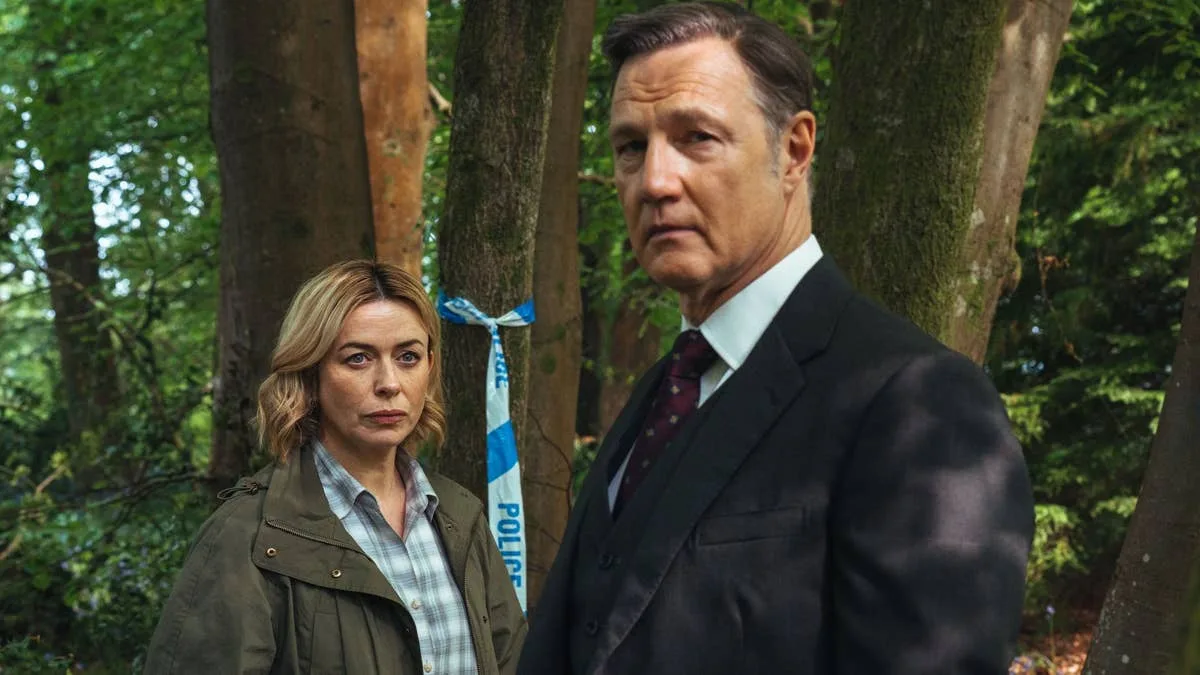
None of us can truly predict how we would react upon learning that a loved one's body has been found in woodland near our residence. For David Morrissey's painfully uptight headteacher Michael Polly, his immediate response is to furiously reprimand Detective Annie Cassidy, portrayed by Eve Myles, for tracking mud into his immaculate home after delivering this devastating news. This reaction, as viewers quickly learn, is entirely characteristic of Polly's behavior. As Cassidy astutely observes, he is "a funny fish" – but could he also be a murderer? Based on early impressions, this disturbing possibility cannot be dismissed.

Inspired by Real-Life Investigation

While 'Gone' is a fictional drama, it draws inspiration from real-life detective Julie Mackay and crime journalist Robert Murphy's 2024 book 'To Hunt a Killer'. This foundation lends the series both practical and narrative authenticity that grounds its unfolding mystery. Michael Polly lives entirely for his work at the plush private school on Bristol's outskirts where he presides. The institution appears meticulously organized in his own image – starchy, strict, terribly proper, and seemingly seething with unresolved darkness.

Wide Pickt banner — collaborative shopping lists app for Telegram, phone mockup with grocery list

His unfortunate daughter Alana, portrayed excellently by Emma Appleton, and his evidently even more unfortunate wife Sarah both teach at the same school, creating a horribly cosy and cosily horrible family dynamic. Mr. Polly concludes nearly every conversation with his family with the words "I'll see you in assembly" – a phrase that gradually transforms from routine statement to ominous threat as the series progresses.

Exploring Masculinity and Institutions

Writer George Kay, who demonstrated remarkable sensitivity in 'The Long Shadow's exploration of the Yorkshire Ripper case, brings similar depth to 'Gone'. That earlier drama distinguished itself by pulling back from the crimes themselves to examine the troubled internality of those most affected – particularly the women who endured the era's pervasive misogyny. 'Gone' continues this thematic exploration as another story about masculinity and institutions; about powerful men and gamely struggling women; about individuals defined by their identities yet stifled by their environments.

The series finds its considerable dramatic tension in nuance rather than crass obviousness, confident enough to eschew predictable tropes in favor of psychological complexity. David Morrissey manifests a stoical but gradually unraveling, deeply repressed middle-aged man with unnerving skill, while Eve Myles delivers a compelling performance as a likeable antagonist expressing a convincing blend of compassion, irritation, and wary midlife disappointment.

Beyond Domestic Drama

'Gone' expands beyond domestic confines as a missing persons enquiry transforms inexorably into a murder investigation. Detective Cassidy finds herself sidelined from the chief investigating role, with implications about whether this might be "man's work" left deliberately ambiguous. Instead, she becomes the police's family liaison officer – a downgrade that clearly irritates her, though dealing with the Polly family provides more than enough challenge.

The Pollys inhabit a large, creaky old house perfect for sneaking around, maintain an instinct for omerta worthy of organized crime families, and harbor enough pregnant, guilty secrets to occupy a detective for a lifetime. Meanwhile, Cassidy's own backstory unfolds, featuring a slightly boilerplate troubled romantic relationship and, more intriguingly, repercussions from an unsolved case eight years earlier.

Pickt after-article banner — collaborative shopping lists app with family illustration

Questioning Our Judgments

The true cleverness of 'Gone' lies in its establishment of a deliberately obvious premise that constantly invites viewers to question their own judgments. Are we all predisposed to jump to predictable conclusions about Michael Polly? A six-part drama focusing on a single murder must reveal its truths gradually, and 'Gone' embraces this slow-burn approach with meticulous attention to detail that ensures few moments feel wasted.

Everyone in this world appears slightly haunted – even the school's teenagers – creating an atmosphere thick with unspoken tension. Towards the end of the second episode, Polly stumbles to a shed on school grounds and finally breaks down in tears. Are these tears of trauma? Of stress? Of guilt? Or perhaps a mixture of all three? The ambiguity feels perfectly representative of a drama that consistently proves less straightforward than initial appearances suggest.

With only two episodes available pre-transmission, whether 'Gone' will stick its landing remains uncertain. The series will likely be best served by maintaining a tight focus and developing as a series of acute character studies rather than attempting too many narrative threads. Remarkably, at this early stage, the question of whether Michael Polly actually killed his wife feels almost incidental. There's already a deadness about him – a toxicity born of suffocating masculinity, an institutionalized existence, and an inability to perceive other humans as anything beyond potential recruits for his beloved school rugby team.

Might Michael Polly be innocent after all? Based on the nuanced storytelling established in these early episodes, that possibility doesn't seem impossible either. 'Gone' promises to be a thoughtful addition to British crime drama that prioritizes psychological complexity over procedural simplicity.