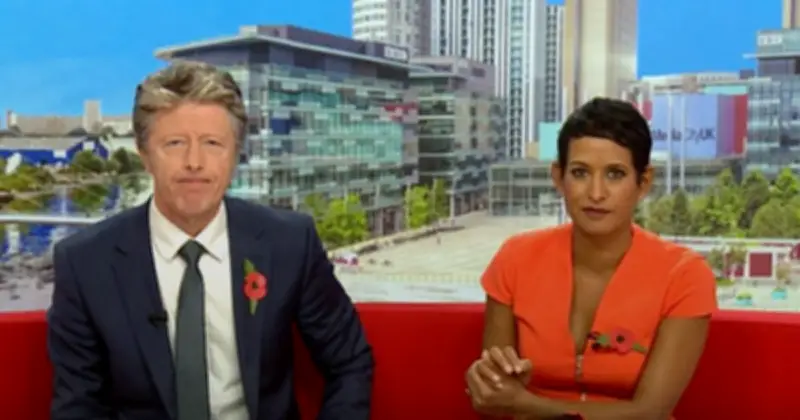
The BBC does not force its presenters to wear a poppy on air, and its guidance allows poppies "of any colour" between October 30 and November 14, an annual debate over the symbol continues to erupt each Remembrance Day.
Several celebrities have refused to wear a red poppy while live on air. ITV newsreader Charlene White, former Channel 4 News anchor Jon Snow, and singer Jamelia have all said they will not wear poppies because they are not allowed to wear symbols of other charities they support.
Others, including Westlife and Paul Mescal, have refused to wear poppies due to their Irish background, with the poppy also representing British conflicts with Ireland.
Forgetting, wardrobe mishaps and recorded shows
Sometimes stars simply forget to wear a poppy. Others, like Sienna Miller, have last-minute wardrobe mishaps that mean they take off their poppy before going on air.
Programmes recorded in advance also create complications, making it harder for stars to access poppies or to know when certain episodes will air.
The leaf-facing debate and BBC policy
Arguments have also erupted over the right way to wear a poppy. Each year there is a debate on the correct way the leaf should face, with some Brits believing it should stay in the 11 o'clock position to mark the Armistice signed at 11am on 11/11.
Piers Morgan became one such target when he wore his poppy the "wrong" way on Good Morning Britain.
In line with its impartiality rules, the BBC said in 2021 that its presenters could wear poppies "of any colour" between October 30 and November 14. It said in a statement: "Wearing poppies is an act of remembrance and remembrance poppies can be of many colours.
"We have no objection to poppies of any colour, provided they embrace the simple act of remembrance and do not carry a political or campaigning or commercial message."
BBC stars are not currently forced to wear a poppy, and other "visible symbols", such as Pride badges worn on University Challenge, have been edited out due to censorship reasons.