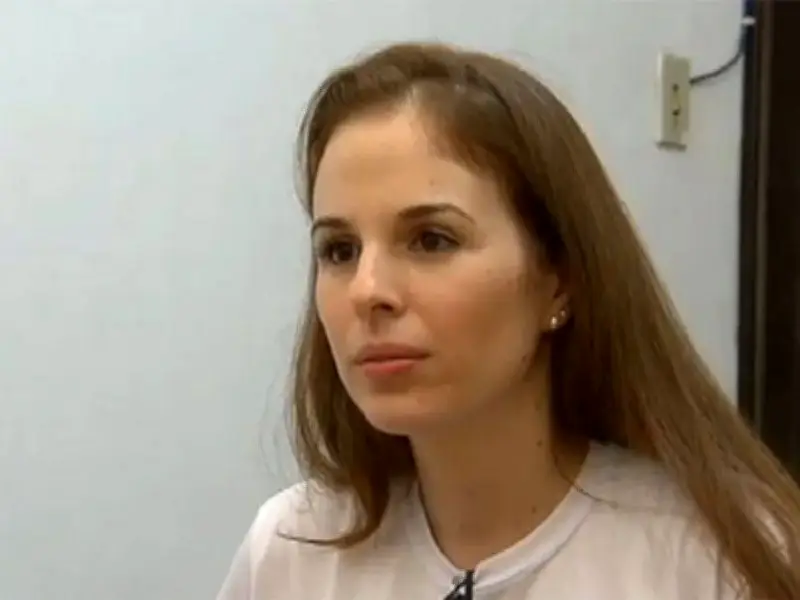
Suzane von Richthofen, one of South America's most infamous killers, has broken her decades-long silence on the crime that led to her conviction at age 19. In a new Netflix documentary, she spoke candidly about the events leading up to the murder of her parents, the fateful night itself, the police investigation, her imprisonment, and how her actions devastated her family.
The relationship that led to tragedy
Suzane was 15 when she met Daniel Cravinhos, her younger brother Andreas' aeromodelling instructor, who was three years her senior. The pair began an intense romance, despite the differences in their backgrounds. Suzane was the eldest daughter of distinguished engineer Manfred von Richthofen and his psychiatrist wife, Marisia, who raised their two children in an opulent mansion in one of São Paulo, Brazil's most exclusive neighbourhoods. The children attended elite private schools, were multilingual, and pursued costly hobbies funded by their parents, who, by Suzane's account, were attentive but lacked warmth.
Daniel, conversely, came from a working-class background and had taken the instructor position to support himself. In the documentary, The Unthinkable Daughter, Suzane reflects on their connection: "I always grew up in that life inside the house. Then Daniel arrived and started showing me things I didn't know, another world."
The relationship was embraced by the Cravinhos family, but the von Richthofens felt Suzane was squandering her time and money. "Saying Daniel's name [at home] was like declaring war. It turned every situation into an argument right away. That discouraged me from trying [to talk to my parents]. And then I started giving up," she explained. She recalled her mother's repeated warning: "She would repeat a phrase to me, millions of times the same phrase: 'He's going to drag you to rock bottom'. And I would say: 'No, I'm going to pull him out.' Then she would say: 'Impossible.'"
The night of the murder
By 2002, the couple had grown resentful of her parents' disapproval. Suzane recalls thinking life would be simpler if her parents "did not exist." They began plotting extreme measures, testing a firearm to see if gunshots could be heard outside the house before scrapping that plan due to the noise. They also discussed interfering with the brakes on Manfred's car or arsoning the family's country estate before settling on a direct assault inside the São Paulo mansion.
On Halloween night, 31st October 2002, Suzane arranged for 15-year-old Andreas to spend the evening at an internet café, ensuring her parents would be alone. She then disabled the property's security system and unlocked the doors, allowing Daniel and his elder brother, Cristian, to slip inside undetected. Daniel had crafted two iron bars specifically for the killing and brought towels to bludgeon and suffocate Manfred and Marisia as they slept. As the brothers repeatedly beat and disfigured her parents, Suzane sat on the living room sofa with her hands over her ears.
The trio then ransacked the library, scattered documents, and pocketed roughly $7,000 in cash to make the scene resemble a botched burglary. Immediately after the murders, Suzane and Daniel checked into a nearby motel to establish an alibi, while Cristian headed to a fast-food restaurant. Reflecting on that night, she recalled: "The tragedy was between us. The death of two people, my parents, was between us. We were no longer the same."
Investigation and conviction
Suzane and Daniel subsequently collected Andreas and returned home to "discover" the bodies before contacting the police. The case dominated national headlines due to the family's fortune and the children's apparent "luck" in being absent during the robbery. Detectives quickly spotted the absence of forced entry, and the pair appeared unusually affectionate towards one another while discussing the deaths.
The most damning evidence emerged when Cristian purchased a new motorcycle the day after the killings using American currency, which alerted shop staff, who contacted police. When interrogated, Cristian admitted to the crime, followed by Daniel and, finally, Suzane. Her legal team portrayed the crime as orchestrated by Daniel, and she maintains to this day that she felt isolated and under pressure: "He made me feel cornered. Either I lived with him, or I lived with my parents."
Suzane was handed a 39-year and six-month sentence, and the Cravinhos brothers received 38 years and six months for aggravated homicide. Under Brazil's progressive prison system, inmates can progress from closed to semi-open and open regimes depending on time served and good conduct. The Cravinhos brothers have been serving their sentences outside prison since 2018, and both hold jobs and reside in São Paulo.
Life after prison and lasting regret
Held in closed confinement for approximately two decades before transferring to an open regime in 2023, Suzane attended university, married, and gave birth to a son. In the documentary, she revealed her greatest regret: the impact the crime had on her brother. Andreas now lives a reclusive life on a rural property in the state of São Paulo and has maintained no contact with his sister since the early stages of her sentence. At 38, he shuns public appearances and has faced continuing personal and mental health challenges.
She said, "When my brother found out my parents were dead... I never forgot that moment. So many years have passed, and the scream of despair that my brother let out when the police officer said they were both dead echoed for years and echoes to this day in my head." She added that knowing the extent of his current suffering "destroys [her] every day."
Regarding her choice to speak openly, Suzane said: "I'm not here to be a saint, I'm not here to be a victim, that's not my role, but I'm not the monster people hear about." She concluded, "When I look at my son, I am certain that God has forgiven me." Beyond the 2026 documentary, media coverage of the case includes the film and TV series trilogy The Girl Who Killed Her Parents, the Prime Video prison drama Tremembé, and Ulisses Campbell's biography Suzane: Assassin and Manipulator.