The £437m London Museum opens this weekend at Smithfield Market, marking the culmination of a 10-year project that has transformed the historic site into one of Europe's biggest cultural developments.
The museum, which relocated from its previous inaccessible location at London Wall, now occupies two neighbouring buildings: the Victorian General Market and the 1960s Poultry Market, adjacent to the still operational Smithfield Meat Market. The General Market, originally opened in 1883 and designed by Sir Horace Jones, had been derelict for 30 years and in a dilapidated state.
Radical rethink of museum concept
Sharon Ament, the London Museum's director, said the move "is a chance to radically rethink what a museum can be in the 21st century: open, energetic and reflective of the people around it." The museum aims to be a living, breathing space, with events ranging from tea parties to club nights.
The renovation involved making the building structurally sound while preserving its heritage, working with craftspeople including stonemasons and heritage coppersmiths to restore the Phoenix iron columns and the dome ceiling rebuilt in the 1960s after the original was damaged by a V-2 rocket in the Second World War. The project also tackled asbestos, removed aerated concrete from the Poultry Market roofs, and replaced thousands of holes, bricks and girders.
Home to 7 million treasures
Central to the museum is its collection of 7 million objects, including a 1928 art deco Selfridges lift, a remnant of the fatberg that clogged a Whitechapel sewer in 2017, a rare Roman London wall painting dating from the mid 100s CE, and Banksy's Piranhas. Most of the collection is located in the atmospheric space below the main market, named Past Times, which sits at the level of London's Roman city.
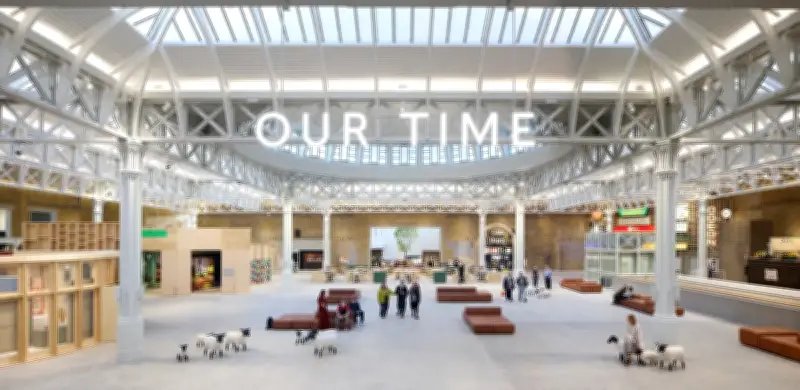
The main market trading floor has been renovated to create an immense, open, light-filled space called "Our Time", featuring iconic London memorabilia such as the laundrette sign from EastEnders. This area offers a central hub for events including dinner clubs, storytelling, weekly tea clubs and club nights.
Food and drink offerings
The site includes four diverse food spaces rooted in London's food culture: the main restaurant Clerks House beneath the restored dome, cocktail bar Bartholomew's, The Roost opening in early 2027, and the Temperance Cocoa Rooms, which will be open 24 hours Thursday-Sunday. The Temperance Cocoa Rooms, rediscovered during the restoration, was established in the late 19th century as part of the temperance movement, offering workers an alcohol-free option.
John Nugent, chief executive of Green & Fortune, which is operating the museum's food and drink offerings, said: "For a food business, you couldn't ask for a richer backdrop. This part of London has been associated with food and trading for centuries, so it would be a missed opportunity not to celebrate that."
Investment and impact
The project has been supported by major investment from City Hall and the City of London Corporation. The mayor's office pledged £95m in funding, and the City of London Corporation committed over £222m. The museum is predicted to deliver a potential £56m a year for the wider economy and create 2,000 new jobs and training opportunities.
Justine Simons, London's deputy mayor for culture and the creative industries, said: "Right in the heart of the city, it will reimagine Smithfield, not only as a place of finance and trade but also as a cultural district." The museum is projected to attract two million visitors a year.