In 1997, a group of students from the University of Dayton travelled to Croagh Patrick in County Mayo as part of a study abroad course on Irish literature. While there, their tour guide recounted a story: as St Patrick lay on his deathbed on 17 March AD 461, he supposedly asked those gathered to toast his heavenly journey with a 'wee drop of whiskey' to ease their pain. This tale suggests the saint may have unintentionally shaped how most of the world celebrates his feast day today: by drinking.
The Festival of St Patrick began in the 17th century as a religious and cultural commemoration of the bishop who brought Christianity to Ireland. In Ireland, the day still retains an important religious and cultural component, even as it has become an excuse to wear green and drink heavily elsewhere. Historical details about St Patrick’s life remain speculative; scholars struggle to separate fact from legend.
In his spiritual memoir, 'Confessio', St Patrick describes being brought to Ireland as a slave, escaping to Britain (probably Scotland), but then having a recurring dream in which the 'Voice of the Irish' called him back to baptise and minister to them. The Irish revere this account and feel gratitude for his commitment. His efforts to convert the Irish to Catholicism faced resistance from high kings and Druids, but he fused Irish culture into Christianity through symbols like the Celtic Cross and bonfires for Easter.
Centuries after his death, the Irish show gratitude by wearing a spray of shamrocks on 17 March, starting with mass, followed by a daylong feast, and prayer at night. Between 1820 and 1860, almost 2 million people left Ireland, many due to the potato famine, and more followed in the 20th century. Once settled, they found new ways to celebrate St Patrick’s Day and their Irish identity.
Irish-Americans transformed March 17 into a commercial enterprise. The mandatory 'wearin’ of the green' is a far cry from the original tradition of wearing shamrocks. Parades in New York and Boston, revelry, and green beer became common. Children in Ireland, however, know St Patrick as a miracle worker who drove snakes out of Ireland and used the shamrock to explain the Trinity. Adults keep the legends alive by following his footsteps around Ireland.
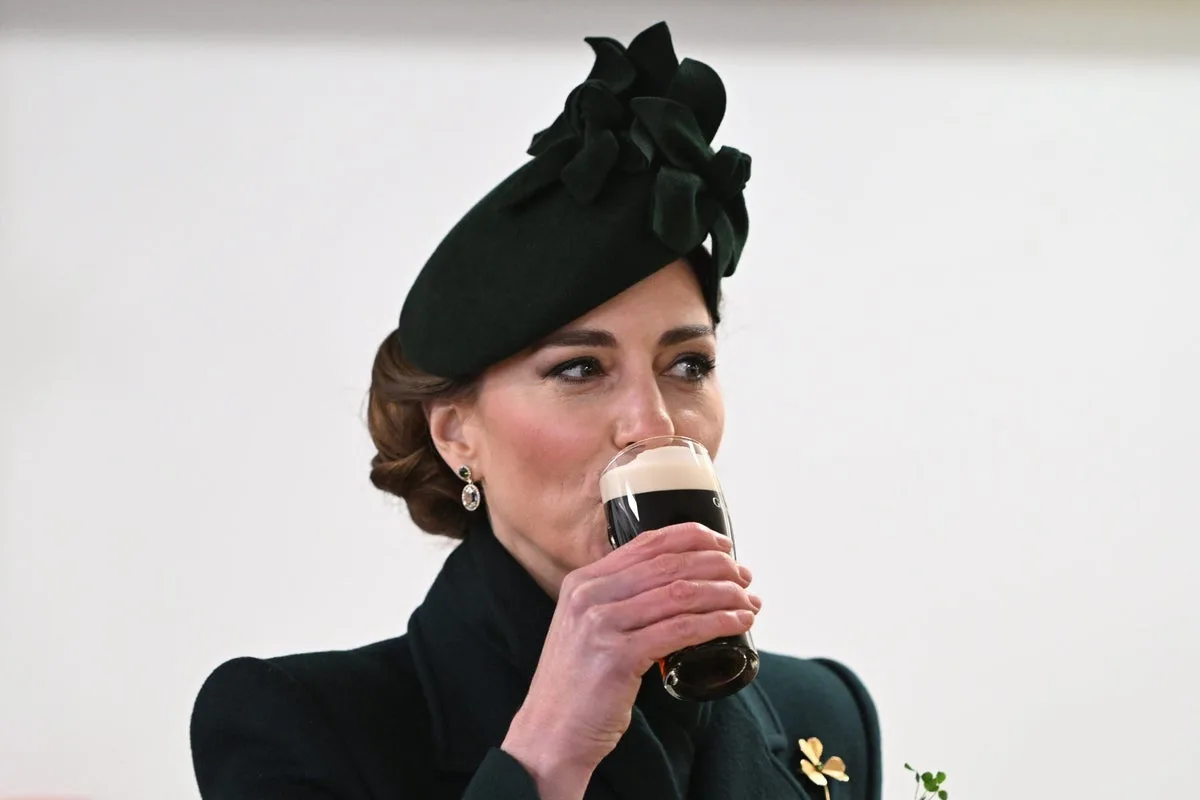
In America, the holy day is primarily a party. Americans have spent up to $6.16 billion celebrating, consuming 13 million pints of Guinness. Some parts of the country even hold a pre-celebration on 17 September, calling it 'Halfway to St Patrick’s Day'.