Queen Elizabeth II's Fashion: A Secret Weapon of Diplomatic Power and Style
Queen Elizabeth II's astonishing collection of custom-made clothes and accessories served a far more powerful purpose than merely enhancing the monarch's appearance. During her remarkable reign, she accumulated what is now regarded as one of the most significant and largest-surviving wardrobe collections in history, telling a story not just of personal style but of the evolution of British fashion and diplomatic influence.
A Lifetime of Thoughtful Style Choices
The Royal Collection Trust has chosen the late monarch's style as the focus of its major exhibition to mark the centenary of her birth. Queen Elizabeth II: Her Life In Style at The King's Gallery, Buckingham Palace, showcases hundreds of items of clothing and accessories, alongside sketches, letters, and handwritten notes to her favourite designers. Caroline de Guitaut, Surveyor of The King's Works of Art at Royal Collection Trust, describes the collection as "extraordinary," highlighting how it explores the Queen's personal relationships with British couture designers and her use of fashion as diplomatic soft power.
"Clothing has an immediate connection with people, so seeing those incredible pieces that she wore on all sorts of different occasions evokes memories from right across her life," de Guitaut explains. The collection also demonstrates how her wardrobe offered "substance as well as style," with fabric choices to prevent creasing, weighted pieces, and designs free of extraneous details that could hinder handshakes or carriage exits.

Influence on Global Fashion and Design
While the Queen's aesthetic, particularly in her later years, sometimes faced criticism—with one journalist in 2002 noting she "seems to revel in her frumpiness"—her influence on global fashion is undeniable. De Guitaut, author of Queen Elizabeth II: Fashion and Style, points out that her off-duty looks, such as headscarves, tweed jackets, tartan skirts, hacking jackets, and jodhpurs, have "almost transcended fashion."
\nThis influence is evident in designs like Gucci's Resort 2017 collection by Alessandro Michele, which featured nods to the Queen, including a model wearing a headscarf and glasses. Interest in her fashion began early, with her and Princess Margaret inspiring British households to seek floral Liberty-print dresses, similar to those later worn by Princess Charlotte, and boosting sales of sewing patterns.
Collaborations with Couture Designers
The Queen's association with couture designers started in childhood. At eight, she wore an Edward Molyneux silver lamé and tulle bridesmaid dress, and a year later, a Norman Hartnell design. Hartnell became one of her most trusted designers, creating her wedding dress in 1947 and her coronation gown in 1953, after she requested more colour in the embroidery. He also designed iconic looks like The Flowers of the Fields of France gown for a 1957 state visit to Paris.
Other key designers included Sir Hardy Amies, who provided designs for tours like her West Germany visit in the mid-1960s, and Edward Rayne, who co-designed her Coronation gold leather court shoes. Despite their fame, documentation shows the Queen was deeply involved in her sartorial style, with sketches bearing her handwritten notes. "She was very good at decision-making and being straightforward in her wishes," de Guitaut notes. "She understood that clothing had a certain power, and that being visible was important."
Symbolism and British Craftsmanship
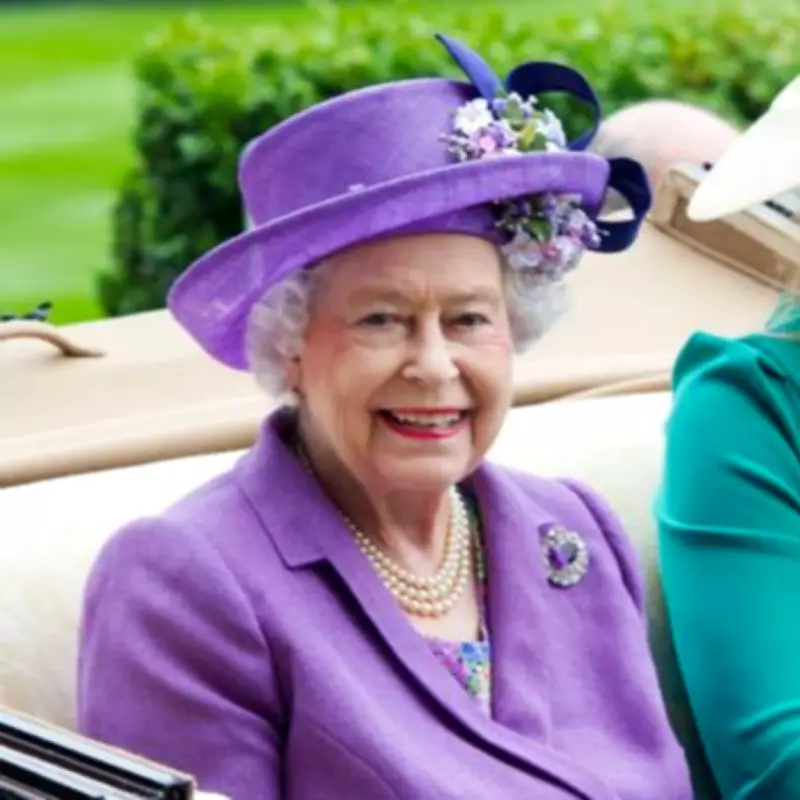
One of her most recognisable styles was the strong, single block of colour in coat dresses and hats, chosen to ensure visibility in crowds—aligning with her "We have to be seen to be believed" philosophy. "All those thousands of people who turned out to see her might have been a few hundred feet away, but if she was wearing bright green or yellow they would see her and they would feel that they’d had a connection," de Guitaut says.

The Queen championed British tailoring and textiles, working with individual button makers, pattern cutters, milliners, embroiderers, and seamstresses. Her wardrobe became a "masterclass in symbolism, tailoring and British craftsmanship," promoting British design globally. For example, during her 1954 Australia tour, British designers were featured in major department stores there.
Fashion as Diplomatic Messaging
In her later years, much of her wardrobe was created by Angela Kelly, her personal assistant and Senior Dresser. Kelly designed the evening gown with 2,000 hand-stitched silk shamrocks for the 2011 state banquet in Ireland, a prime example of fashion as diplomatic soft power. De Guitaut highlights subtler instances, such as the Queen adapting to Middle Eastern customs by wearing covered, fashionable attire to show respect for local culture.
"It’s a form of messaging, in a very beautiful and subtle way, delivered through clothing," de Guitaut concludes. "She wanted to signal in whatever setting she found herself in that she was paying respect and acknowledging a country’s history and culture." This strategic use of fashion underscores how the Queen's wardrobe was not just about style, but a powerful tool for connection and diplomacy.