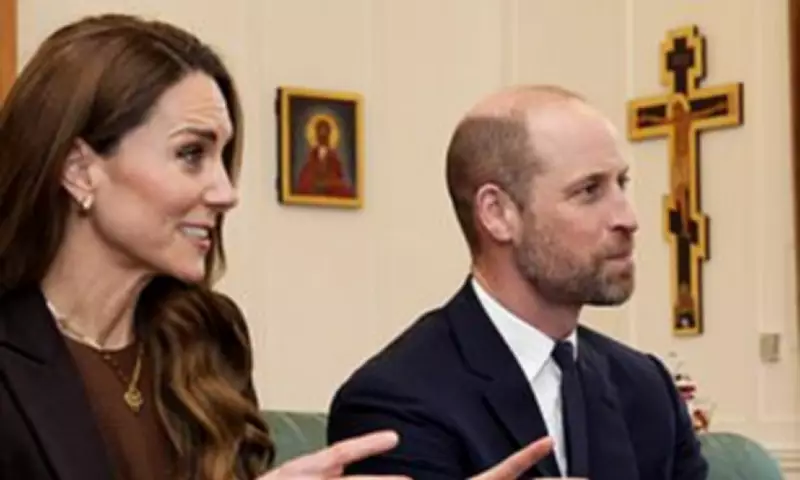
Prince William's Faith Declaration Eases Church of England Concerns
In 1994, the Church of England experienced significant trepidation when Prince Charles, in an ITV documentary, expressed his desire to be a 'defender of faith' alongside the traditional title 'Defender of the Faith'. Clergy nervously speculated how far King Charles III might push this vision upon his accession.
Three decades later, the establishment's concern has shifted dramatically. Until recently, the primary worry within Anglican circles has been whether the current Prince of Wales gives any thought to the church at all. Yesterday's affirmation that a religious flame does indeed burn within Prince William has therefore prompted a collective sigh of relief across the Church hierarchy.
Unequivocal Confirmation of Belief
When the Daily Mail directly asked whether Prince William believes in God, Kensington Palace responded unequivocally last night: 'Of course.' The very necessity of this question reflects mounting concerns that Prince William lacks the overt enthusiasm for the church demonstrated by both his father and his late grandmother, Queen Elizabeth II.

These concerns prompted an unusual briefing from Kensington Palace to The Sunday Times. A senior aide explained: 'The Prince of Wales's commitment to the Church of England is sometimes quieter than people expect, and for that reason it is not always fully understood.' The aide emphasized that William's connection to the Church, and to the sense of duty accompanying it, runs profoundly deep.
Strategic Timing Ahead of Historic Ceremony
This intervention comes strategically ahead of this week's ceremony at Canterbury Cathedral, where Prince William will represent King Charles at the enthronement of the new Archbishop of Canterbury, Dame Sarah Mullally. The Prince's team describes this as 'an opportunity to be very clear in people's minds of where he stands.'
Prince William's position is summarized as: 'I might not be at church every day but I believe in it, I want to support it.' However, belief in the institutional Church of England represents one aspect, while personal faith in the Almighty constitutes another dimension entirely.
Drawing a Line in the Sand
As an intensely private individual, Prince William prefers to keep his faith personal, much like most contemporary Anglicans. Nonetheless, these latest statements carry significant weight and provide encouragement to church leaders. The aide explained to The Sunday Times that the Prince aims to draw 'a line in the sand,' emphasizing that 'It's really important' questions regarding his commitment to the Church are 'cleared up.'
These questions have circulated since they were raised two years ago in Robert Hardman's book, Charles III: The Inside Story, and subsequently in the Daily Mail. At that time, Hardman wrote that Prince William was, according to a senior aide, 'not instinctively comfortable in a faith environment.' Like many lukewarm Anglicans, he reportedly preferred attending church only on high days and holidays, describing him as 'a modern young man' who 'gets embarrassed by certain aspects of ceremonial and religion.'
Continuity and Preparation for Future Role
Having spoken to the same sources yesterday, Hardman confirms this fundamental position remains unchanged. Prince William has not experienced a dramatic conversion akin to St Paul on the road to Damascus. However, his latest statement, delivered ahead of this week's important moment for the Church of England, demonstrates two crucial developments.
First, he seeks to reassure doubters that he fully comprehends the role and importance of the Church within the constitutional framework. Second, this move indicates he is advancing his preparations for eventually ascending the Throne. While Prince William has no desire to shoulder his destiny prematurely, he demonstrates clear-headed realism by seeking to develop rapport with the new Archbishop 'in my own way.'
A Kensington Palace spokesman confirmed yesterday: 'Both the Prince and Princess had a very nice conversation with the new Archbishop and are looking forward to working with her.'

Historic Milestone and Future Implications
Wednesday's enthronement of the first female archbishop after 105 consecutive male predecessors represents a momentous milestone in Canterbury's 1,429-year history. One day, this incumbent will anoint and crown William V, guiding him through his coronation vows. That he will undertake these vows with some measure of faith provides essential reassurance. To approach this sacred duty without any faith whatsoever would present a constitutional and spiritual problem of unprecedented magnitude for the Church of England.