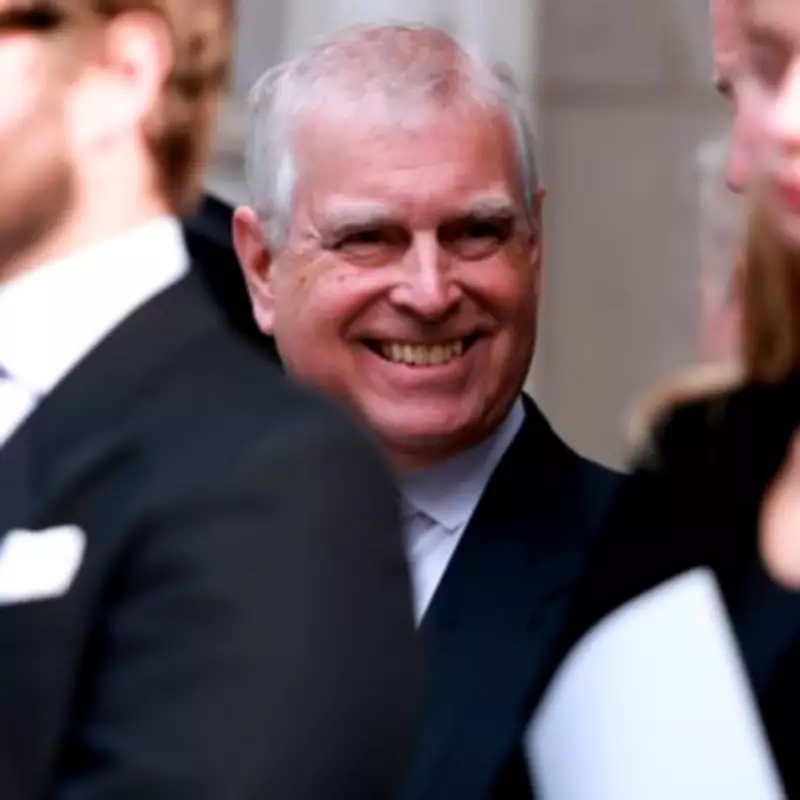
Prince Andrew's Secret Request to Visit 1980 Iranian Embassy Siege Revealed
Newly uncovered historical accounts have revealed an extraordinary request made by Prince Andrew during the tense 1980 Iranian Embassy siege in London. The former prince, then known as Andrew Mountbatten-Windsor, was just 20 years old and serving as a trainee helicopter pilot in the Royal Navy when he watched the dramatic six-day hostage crisis unfold on television.
The Unusual Request During Critical Negotiations
On the fifth day of the siege, as Scotland Yard was engaged in delicate negotiations with six heavily armed gunmen holding 26 hostages, Inspector Peter Prentice of the Royal Protection Unit received an unusual message. Prince Andrew, who was then second in line to the throne, had expressed his desire to visit the scene of the unfolding drama at Princes Gate in London.
According to author Ben Macintyre's book 'The Siege', Prentice explained that the young royal "would like to come to lunch" at the location where police had established 'Zulu control' to negotiate with the hostage-takers. This request came at a particularly critical moment, as the captors had just killed one hostage and dumped his body outside the embassy, intensifying the already volatile situation.

Police Rejection and Royal Persistence
John Dellow, the Scotland Yard commander overseeing the police operation, immediately denied the request "on the grounds of safety." He escalated the matter to then-Commissioner David McNee, but Prince Andrew made it clear he wasn't interested in meeting with senior police officials. He wanted to be "where the action was," according to historical accounts.
Remarkably, the determined prince didn't accept this initial refusal. Just one hour after his original request was denied, he sent another message through channels. "Prince Andrew had not given up," Macintyre recounts in his book. "It was suggested on his behalf that he could attend incognito." The young royal proposed visiting the siege location in disguise to avoid detection and potential security risks.
Police Response and Final Outcome
The police response to this suggestion was unequivocal. Senior officers described the idea as 'absurd, an unnecessary distraction and pointless' during what was already an extremely delicate and dangerous operation. Dellow sent back what amounted to "a two fingered salute to the Palace," according to historical accounts.
The official response stated that 'HRH would be informed as soon as the operation was complete so that he could attend if he so wished....one hour after its conclusion.' This effectively postponed any potential royal visit until after the crisis had been resolved.
The Siege's Dramatic Conclusion
The tense hostage situation ultimately ended when the SAS stormed the building in a dramatic 11-minute operation that was broadcast live to millions of television viewers worldwide. The elite military unit's intervention left five gunmen dead, though tragically, the Iranian dissident group had killed two hostages before the SAS assault.
Prince Andrew did eventually visit the scene, arriving at 19:55 on the sixth day of the siege, after the SAS operation had concluded. Prime Minister Margaret Thatcher, accompanied by her husband Denis, met with the SAS rescuers shortly after the operation. One Cabinet official present described the atmosphere as having "air thick with testosterone," noting that "most of them appeared to have slightly ginger hair and moustaches and bottles of beer in their hands."
This newly revealed episode provides fascinating insight into the young Prince Andrew's character during a period of national crisis, showing both his curiosity about military and security operations and the challenges faced by police when dealing with royal requests during emergency situations.