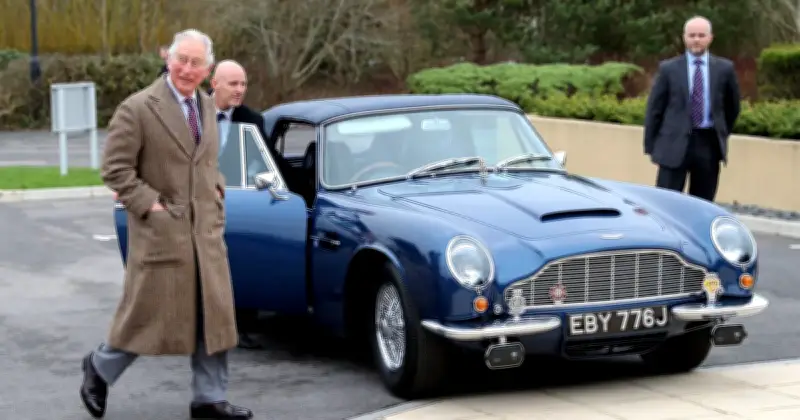
King Charles caused a 'big hoo-ha' after issuing strict instructions to a staff member who drove his one-of-a-kind Aston Martin DB6 MkII Volante, according to former royal butler Grant Harrold. The car, which runs on bioethanol made from surplus English white wine and whey from cheese production, is the King's pride and joy.
The King's Unique Aston Martin
His Majesty's Aston Martin DB6 MkII Volante in Seychelles Blue was a 21st birthday present. In 2008, he had it modified to run on sustainable bioethanol produced by Gloucestershire-based company Green Fuels, working with Aston Martin heritage specialist RS Williams Ltd. The King told the BBC in 2021: 'I've got electric cars now but it's been so difficult. My old Aston Martin, which I've had for 51 years, runs on – can you believe this – surplus English white wine, and whey from the cheese process.'
Protective Over the Car
Grant Harrold, speaking on behalf of Select Car Leasing, revealed that the King is intensely protective of the motor. He never let his sons William and Harry drive it, and only loaned it once – to William and Kate on their wedding day. Harrold recalled: 'He's very, very protective of that car. He never let anyone else drive it. It was a big issue as I remember both William and Harry wanting to drive it, but he wouldn't let them.'
The 'Big Hoo-Ha' Incident
Harrold described an incident where a chef had to drive the car back from the airport: 'It was a massive honour, but it caused a big hoo-ha. I remember him giving him strict instructions about how slow to drive it and what to do.' The King used to drive the car around Tetbury with the roof down, often surprising onlookers who would see him driving normally and waving.
Criticism of the Biofuel Solution
While the King's commitment to the environment is long-standing, some critics have dismissed the biofuel modification as a boutique solution. Greg Archer, UK director of T&E, told The Guardian: 'Prince Charles's quaint solution to decarbonise his Aston Martin using a high blend of bioethanol made from cheese and wine wastes should not be mistaken for a serious solution to decarbonise vehicles. On a large scale, biofuels do more harm than good, driving deforestation and land use change that worsens the climate crisis.' Dr Chris Malins, a consultant on alternative fuels policy and sustainability, added that the modification could not work on a wider scale.