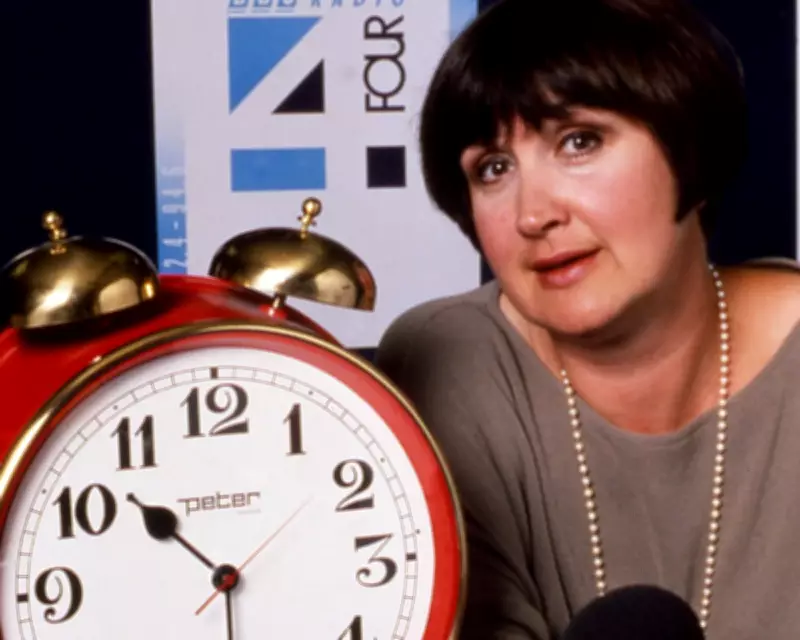
Jenni Murray: The Tenacious Voice That Redefined Woman's Hour
The broadcasting world mourns the loss of Jenni Murray, the iconic presenter of BBC Radio 4's Woman's Hour, who has died at the age of 75. Murray, who hosted the programme from 1987, leaves behind a legacy of transforming what was once a traditional afternoon show into a dynamic morning institution that tackled everything from domestic abuse to hydrangeas with equal seriousness.
From Today Programme to Woman's Hour
Before taking the helm at Woman's Hour, Murray cut her teeth as a presenter on the Today programme. She joined the BBC in Bristol in 1973, working as a TV reporter and presenter for South Today, bringing solid news credentials to her later role. However, the 1980s Today programme was notoriously sexist, with male presenters handling politics while women were relegated to lighter topics. This restrictive format proved too small for Murray's talents.
Woman's Hour, by contrast, was completely reshaped in her image. Under her leadership, the programme discarded preconceptions about tone, embracing both serious political discourse and lighter cultural conversations. Murray could seamlessly transition from tearing a strip off a politician to discussing gardening tips, then launching into a campaign against domestic abuse, all within a few minutes of airtime.

The Voice That Filled Kitchens
When Woman's Hour moved from afternoon to morning slots in the early 1990s, Murray's warmth became a daily fixture in kitchens across Britain. Her voice, often described as mellifluous and rounded, was frequently misunderstood as an elocution triumph. In reality, when she joined the BBC, the main barrier to entry was not sounding posh enough. Broadcasters were expected to speak with received pronunciation regardless of their background, and Murray, whose father was a civil engineer and mother a civil servant, was certainly not from aristocratic stock.
Her broadcasting style married natural warmth with sharp wit and beadiness. Listeners knew they would never be bored. Murray would often reminisce about her political interviews, noting that even her so-called failures remained remarkably listenable.
Fearless Interviewer and Feminist Icon
Murray's interviewing technique was both fearless and insightful. When she spoke to Margaret Thatcher after the former prime minister left office, she asked directly whether sexism in public life had ever bothered her, rattling off examples like Alan Clark's comments about her ankles or François Mitterrand's remark that she had the eyes of Caligula and lips of Marilyn Monroe. Murray later recalled that Thatcher looked at her without speaking, apparently genuinely shocked by these revelations.
Her unabashed probing of Hillary Clinton yielded what was probably the most human-sounding interview the former first lady had ever given. Murray asked directly about Bill Clinton's infidelity, prompting Hillary to reflect that marriage was about friendship rather than necessarily about sex. While not groundbreaking, the statement felt truthful for that particular couple.
Despite her confidence, Murray wasn't immune to nerves. Years later, she still remembered her terror at interviewing an 81-year-old Bette Davis.
Championing New Feminists
Murray demonstrated instinctive female solidarity and kept a keen eye on young feminists coming up behind her. A 2013 episode featuring Caroline Criado-Perez (then campaigning for women on banknotes), Laura Bates (founder of the Everyday Sexism project), and chef Allegra McEvedy (pondering feminist approaches to hangover foods) was typical of Murray's programming. It distilled her acuity and determination to discuss what mattered with people making a difference.
Personal Battles and Audience Connection
In 2006, Murray was diagnosed with breast cancer. She hated discussing it, finding the topic boring, yet felt compelled to be open with her audience. In a Radio Times interview, she explained, "I couldn't just disappear to have a mastectomy. You develop a closeness to your audience." With Murray, this connection was always a two-way street.

Her legacy extends beyond broadcasting to her role as a feminist trailblazer who redefined what women's programming could be. Jenni Murray balanced personal openness with rigorous journalism, creating that incredibly fine balance that made her voice indispensable to British radio.