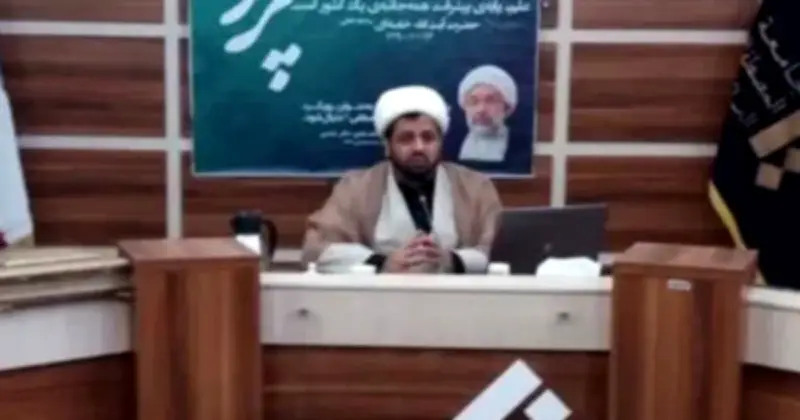
Dr Aoun Ali Jarvi, the imam of Glasgow's Al-Mahdi Islamic Centre, was photographed weeping and paying respects before the coffin of Iran's supreme leader Ayatollah Ali Khamenei at a ceremony in Tehran on July 3, 2026. Khamenei was killed in an Israeli strike on his compound four months earlier.
Ceremony Details and Attendees
The funeral took place at Tehran's Grand Mosalla mosque. No Western leaders were invited. International dignitaries from Russia, Pakistan, and Kazakhstan attended. Jarvi was seen in the formal line of foreign dignitaries, which a Middle Eastern politics expert described as indicating a level of connection to the Iranian state beyond ordinary religious sympathy.
Background of Al-Mahdi Islamic Centre
The Al-Mahdi Islamic Centre, established in 1986, is a Shia Jafari mosque. It has previously displayed Iranian flags and images of Ayatollah Khomeini, who issued a death sentence for author Salman Rushdie, and Khamenei, who praised Hamas after the October 7 attack on Israel. The centre is linked to the London-based Islamic Centre of England, which was temporarily closed after hosting a vigil for Qasem Soleimani.
Political Reaction
Russell Findlay, leader of the Scottish Conservatives, condemned Jarvi's attendance, stating: "It is reprehensible for anyone to weep for a man who denied the people of Iran basic freedoms, crushed women's rights and killed untold numbers of his own people." He urged UK authorities to intervene. Prime Minister Sir Keir Starmer announced on July 13 that the UK would ban support for Iran's Islamic Revolutionary Guard Corps.
Expert Analysis
A Middle Eastern politics expert, speaking anonymously, told The Times: "This strongly suggests recognised access and a level of connection to the Iranian state, and the office of the supreme leader, which goes far beyond ordinary religious sympathy." The centre's constitution endorses velayat-e faqih, the theory that transfers all political and religious authority to Shia clergy.