The Global Impact of a Single Photograph
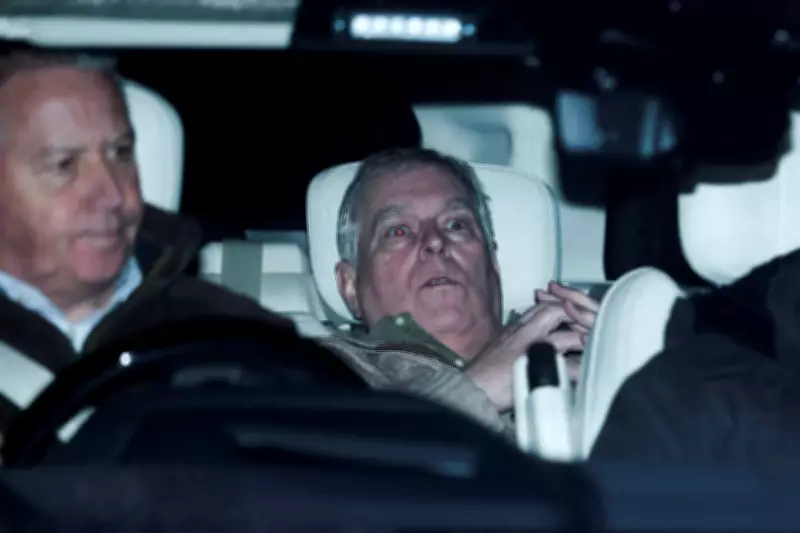
A paparazzi-style image of the former prince, Andrew Mountbatten-Windsor, slumped in the back of a car, made front pages across the globe, ricocheting through media outlets worldwide. This striking photograph, captured by Reuters photojournalist Phil Noble, has become the defining visual of the story, sparking widespread discussion and reproduction.
Behind the Lens: Phil Noble's Gruelling Stakeout
For over ten hours after news broke of Andrew Mountbatten-Windsor's unprecedented arrest by detectives, there was total silence from police and the former royal himself. Then, at 7pm, reports emerged that he had been released from a police station in Norfolk, accompanied by the now-iconic image. Phil Noble, who took the picture, described it as "a little bit surreal" and a "pinch me" moment, attributing his success to the "photo gods" being on his side.
When news of the arrest broke, Noble immediately jumped into his car and travelled six hours from his home in Manchester to Norfolk. With 20 potential police stations where Mountbatten-Windsor could have been held, a local tipoff led him to the historic market town of Aylsham. After hours of waiting, he nearly packed up to head to a local hotel, but was called back moments later when Mountbatten-Windsor's cars arrived.

The Technical Challenges of Capturing the Shot
Capturing a well-exposed, sharp image from a moving vehicle in complete darkness is akin to winning the lottery, as Noble explained. He shot six frames, with two blank, two showing police, one out of focus, and the final frame being well-composed, sharp, clean, and well-exposed. This frame has since become the global face of the story.
Noble faced numerous obstacles, including reflective glass that often prevents cameras from focusing, and the need for sufficient light exposure. High-speed flash units are typically used to create light in such conditions. Timing was critical, with fractions of a second to hold down the trigger and hope for a fast enough shutter speed, all while avoiding being hit by the car. "You can plan and use your experience, but still everything needs to align," said Noble, noting that car shots involve "more luck than judgment."
Ingenuity and Patience in Photojournalism
Some photojournalists, like Australia's Martin Keep of AFP, argue that ingenuity plays a vital role. Keep famously created his own camera rig with additional lights and lens hoods to capture the only image of Australian Erin Patterson arriving at court during her trial for murder, despite a tinted, fast-moving police van.
Patience is another crucial factor, with hours or even days spent staring at the same spot, waiting for the next big moment. In an age of AI imagery, such real-life captures hold immense value. Noble reflected, "It was a proper old school news day." He added, "It's a man shot at night through the back of a windscreen. Is that the best photo I've ever taken? No. Is it up there as one of the most important? One hundred per cent."
He concluded by emphasising the unpredictable nature of news photography: "When you work in news, it's not an exact science. The best photos aren't always the most newsworthy."