Willie Colón, Pioneering Architect of Urban Salsa Music, Passes Away at 75
Willie Colón, the Grammy-nominated architect of urban salsa music and a longtime social activist, died on Saturday. He was 75 years old.
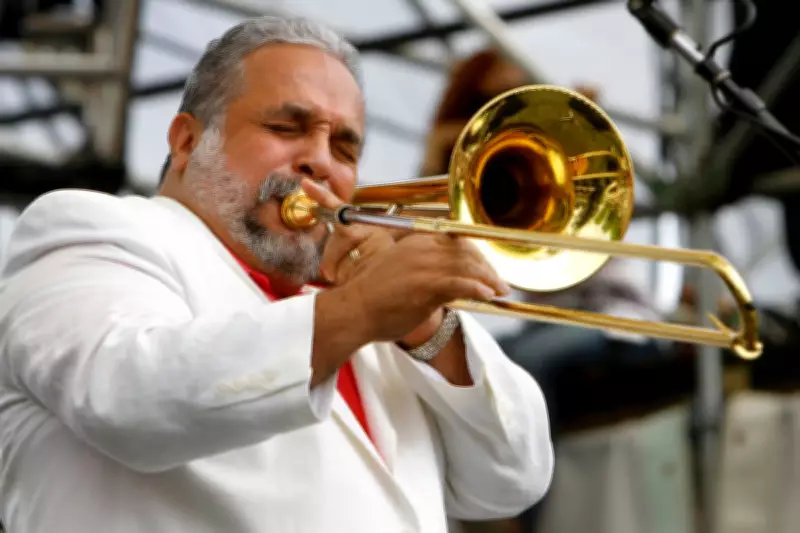
Over a career spanning decades, the trombonist, composer, arranger, and singer produced more than 40 albums that sold over 30 million copies globally. He collaborated with a diverse array of artists, including the Fania All Stars, David Byrne, and Celia Cruz.
Iconic Collaborations and Social Impact
His celebrated partnership with Rubén Blades, “Siembra,” became one of the bestselling salsa albums in history, with the duo renowned for addressing social issues through their music.

Colón's family and manager confirmed his death via social media posts. “Willie didn't just change salsa; he expanded it, politicized it, clothed it in urban chronicles, and took it to stages where it hadn't been heard before,” manager Pietro Carlos wrote. “His trombone was the voice of the people, an echo of the Caribbean in New York, a bridge between two cultures.”
Nominated for 10 Grammys and one Latin Grammy, Colón made famous songs such as “El gran varón,” “Sin poderte hablar,” “Casanova,” “Amor verdad,” and “Oh, qué será.”
Blades expressed his condolences on social platform X, stating he confirmed “what I was reluctant to believe.”
Early Life and Musical Journey
Born in New York’s Bronx borough, Colón was raised by his grandmother and aunt, who introduced him to traditional Puerto Rican music and Latin American rhythms like Cuban son and tango from a young age. At 11, he began exploring music, starting with flute, then bugle, trumpet, and finally trombone, which he mastered in the emerging salsa genre.
His interest in trombone sparked after hearing Barry Rogers play on Mon Rivera’s song “Dolores.” “It sounded like an elephant, a lion ... an animal. Something so different that, as soon as I heard it, I said to myself: ‘I want to play that instrument,’” he recalled in a 2011 interview.
At 17, he joined the group of artists that formed Fania Records, led by Jerry Masucci and Johnny Pacheco, which was instrumental in developing the “salsa” sound in New York’s Latin community.
Colón’s signature style fused jazz, rock, funk, soul, and R&B with traditional Latin rhythms like Cuban son, cha-cha-cha, mambo, and guaracha, infused with Puerto Rican sounds such as jíbara, bomba, and plena. In 2004, the Latin Recording Academy awarded him a special Grammy for his career contributions.
Activism and Political Involvement
As a community leader, Colón advocated for civil rights in the United States, participating in organizations like the Hispanic Arts Association, the Latino Commission on AIDS, and the Congressional Hispanic Caucus Institute.
In 1991, he received the Chubb fellowship from Yale University, a public service honor previously awarded to figures like John F. Kennedy and Ronald Reagan. Politically, he served as special assistant to New York’s first Black mayor, David Dinkins, and later advised Mayor Michael Bloomberg.
However, his own political campaigns were unsuccessful, including a 1994 Democratic primary challenge and a 2001 bid for New York’s public advocate. He supported Hillary Clinton in 2008 but voted for Donald Trump in 2016.
Colón had public disputes, such as a lawsuit against Blades over a 2003 concert and calling former Venezuelan president Hugo Chávez “rotten” on social media.
Legacy in Film and Television
He also acted in films like “Vigilante,” “The Last Fight,” and “It Could Happen to You,” and appeared on TV shows including “Miami Vice.” More recently, he featured in Bad Bunny’s music video for “NuevaYol.”
Willie Colón is survived by his wife and four sons.