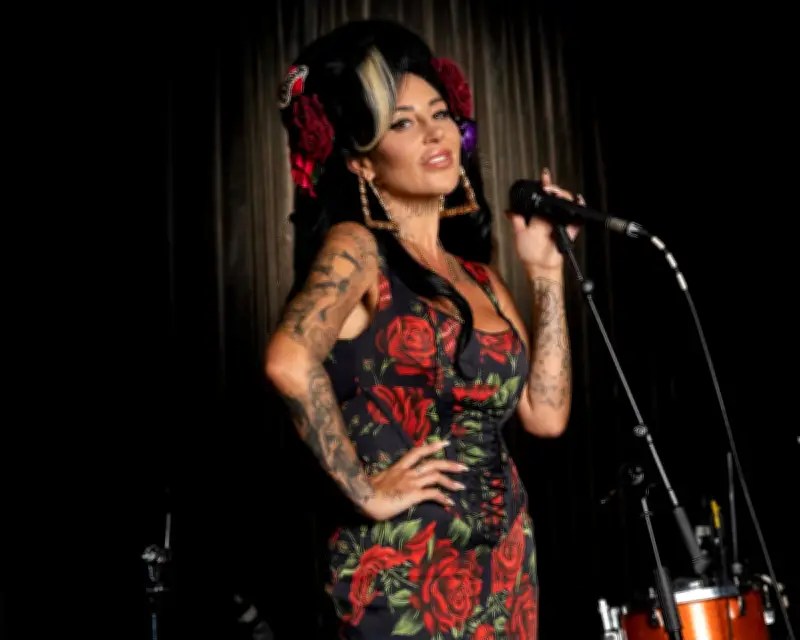
At Replika festival in Derbyshire, Amy Winehouse asks for water and Robbie Williams fetches it. The Beastie Boys pose for selfies, Fred Durst grooves to Diana Ross covering Al Green, and shirtless teens mosh to Korn while a woman knits nearby. James Brown and Prince are the same artist in different clothes. This festival won a Guinness world record for the biggest tribute festival, with 108 acts performing over a weekend. Acts included Catfishing the Bottlemen, Pearl Scam, Wrong Jovi and Iffy Clyro.
Summer of Tribute Festivals
The UK is flooded with tribute events this summer: Fake-Fest, Tribfest, Glastonbudget, Festwich, Tidal Gathering, Could Be Real and many more. Venues nationwide have tribute acts filling their calendars. Dave Bevan, managing director of Alive Network Entertainment Agency, which represents 234 tribute acts, estimates there are between 3,000 and 5,000 such outfits in the UK.
The reason for their success is simple: seeing original artists is often too expensive, especially during a cost of living crisis. These gigs offer cheap live music with familiar songs. Replika charges £100 for a weekend ticket. Organiser James Dean says: "Our festival is targeted at low- to middle-income families who have very little disposable income. Compare that with the costs of going to Wembley Stadium for a single concert." Festival-goers echo this: "It's cheap, local and a laugh."

Financial Success for Tributers
Dan Budd, a Robbie Williams tribute for 14 years, is "disarmingly good on stage" with the same Stoke accent and real matching tattoos. "I don't think I've ever been busier in terms of bookings," he says. "I haven't got a free Saturday night until September 2027." Dean says top acts earn £10,000-£15,000 per show. Budd won't specify figures but says: "Put it this way, I'm 36 and mortgage-free."
Nadine l'Amour, performing as Amy Winehouse under the name the Madnezz of Amy, is also thriving. She first performed as Winehouse in December 2024 and quit her teaching job by April 2025 to do it full-time. She replicated Winehouse's tattoos years before becoming a tribute. "There are 14- and 15-year-old girls singing every single word," she says. "I have young people saying: 'I never got to see Amy, but watching you on stage, I feel like that's the closest thing I'll ever get.'"
Boosting Venues and Local Economy
According to the charity Music Venue Trust (MVT), at a time when half of UK grassroots music venues make no profit, tribute artists help keep the sector afloat. Nathan Clark, owner of the Brudenell Social Club in Leeds, says: "There is an elitist attitude about them, but these acts really do keep parts of the live music infrastructure moving." Despite his venue's reputation for cutting-edge music, tribute bands play a significant role. "Not every gig has to be about discovering the future," he says. "The key is balance: tribute bands should support original music, not replace it."
No hard data exists on the precise financial impact. MVT chief executive Mark Davyd guesses tribute acts make up about 25-30% of all bookings in independent venues. The Night Time Industries Association says there is no authoritative number, but a spokesperson says tribute acts contribute "many millions of pounds each year" to live music. Dean's independent survey of Replika's economic impact over 10 years, including local spending, came to about £8.5m. He estimates the overall figure could be hundreds of millions across the same period.
Emotional Toll and Dedication
This huge sector is often overlooked as feeble or regressive. "People, especially in the mainstream music industry, look at us as nonstarters," says Dean. "We're not really taken seriously." But tribute acts have evolved beyond dodgy Elvis impersonators. Dean notes Take That tributes who sing better than Robbie Williams and Gary Barlow; Clark points out Graham Sampson of the Smyths (a Smiths tribute) can hold a note better than Morrissey.

Such dedication can take an emotional toll. "Four or five years into it, I had a bit of a breakdown," says Budd. "I couldn't keep up with being one person in my private life and then going into Robbie mode and then having to switch it off again. It was like a split personality." He now performs different sets each night and approaches it as Dan singing in Williams's style. "As I've matured, I go on stage as Dan and I sing the songs in his style and manner," he says.
For L'Amour, loving the act makes it more than a gig. "There are a couple of songs that send me back to a time in my life that was quite dark," she says. "Back to Black puts a very big lump in my throat when I sing that. It's not only remembering my pain, but also the pain that Amy felt." At Replika, she dedicated that song to a friend who died recently. "As hard as it is to sing, it's nice to dedicate that song to my friend who I lost to mental health," she says. "And that was also down to losing the person that she loved, and drinking and everything that was involved in that."
L'Amour says she could only ever do Winehouse because of the material's significance. "This is more than sticking on eyeliner, backcombing the beehive and putting on really expensive, uncomfortable shoes," she says. "It's a feeling. That gut-wrenching first love that kicks you in the stomach; having your heart broken beyond repair. But then being able to pour that out to the audience and feeling that love come back. It's way more than a tribute for me."
Domino Effect on Industry
Tribute acts also create employment. "It may not always be treated as culturally prestigious but it creates employment," Clark says. "It drives paying musicians, designers, promoters, venues." He points to the Smyths having a four-night run at his venue. "What original bands at this grassroots level can do four nights and sell them out?" he asks. "Very few. Those four shows allow us to take the risk on booking something else."
Tribute bands also bring "exponentially higher" bar revenue for venues, according to Davyd, as gigs are often on weekends and attended by groups. Clark agrees: "A tribute show is often more of a social night out: people are relaxed, they know the songs, they sing together … it's like a celebration. For independent venues, that matters. Bar income is a major part of how grassroots venues survive."
Davyd notes that tribute acts "fill up the programme" in smaller towns "where there is an absence of touring acts". This is a mixed blessing: they allow live music in ignored places, but may make it harder for original acts. "Any experience with live music is really important for social interaction, community cohesion and a whole bunch of reasons," he says. "But we really need to be concerned about generating the next wave of great British talent. I would prefer there was more space for that. Tribute bands are an important part of the grassroots sector but we wouldn't like them to become the sole reason venues are open."
At Replika, these bands are vehicles for nostalgia and a gateway to music. Children in battle jackets navigate their first mosh pit as a fake Limp Bizkit turns a tent into bouncing bodies. The turntablist, adrenaline pumping, shouts to his parents: "They keep telling me to get a real job – but look at me now!"