Queer line dancing is experiencing a surge in popularity, with dedicated nights drawing crowds in London and The Cactus Club reporting roughly 50% growth year on year since 2022.
Peter Flockhart, co-founder and longtime main instructor of The Cactus Club, an institution set up in 1993 to bring line dancing to the LGBTQIA+ community, still hosts regular nights at the iconic gay pub Two Brewers in Clapham.
Why is queer line dancing so popular right now?
Peter attributes much of this growth to music icons such as Beyoncé, Chappell Roan, and Lil Nas X, all of whom have a big queer following, embracing country music in recent years. Beyoncé's album Cowboy Carter had a massive cultural impact in the US, with tracks such as 'Texas Hold Em' inspiring clubs, teachers, and novices to create their own line dancing choreography. During a number of her area shows, Beyoncé even incorporated the viral line dance 'Boots on the Ground', created by choreographer Tre Little, in her performance.

But it's much more than the music attracting people to the dance floor. Peter tells Metro that in the 90s, he saw line dancing clubs crop up as communities found ways to gather — and make contact with each other — after the HIV/Aids crisis of the 80s. 'I think now, what we're seeing is a repeat of that, post-Covid. People are desperate to go out and socialise, to find people and be close again,' he shares.
With queer people often pushed to the fringe of society, these spaces become sacred. In many ways, it's less about the activity itself and more about the act of being physically present in a room where you immediately feel safe and supported.
Community-making beyond the dance floor
Dr Yen Nee Wong, a queer feminist researcher and sociology lecturer at the University of Leeds, thinks that line dancing speaks to the LGBTQIA+ community's desire for connection. Yen describes how, in the 90s, as queer visibility began to grow, line dancing offered a way to bring people together in a space beyond the usual drinking and clubbing scene. 'It's about community-making beyond the dance floor,' they share.
Laurie K-A, founder of STRUT and line dancing icon, has been running regular queer line dancing nights in London over the past year, having first discovered their love for the social dance during a trip to LA at the end of 2023. Since their first official STRUT night in June 2025, they've hosted a lesson at Reading festival, held multiple sold out themed nights, and been invited onstage at a CMAT gig to dance with the crowd.
In Laurie's opinion, people are craving, now more than ever, this primal communal energy that is created by things like dance, music, singing, and just being in a space together. 'I think what we're seeing across all forms of culture is a yearning to return to that stuff – whether it's gardening, crafts, knitting, or line dancing'.
What's a night of queer line dancing actually like?
There are around three regular queer-specific line dancing nights held in London, with tickets typically costing between £9 and £12. Events teach routines set to everyone from Charli XCX and Britney Spears to Olivia Dean and Kesha.
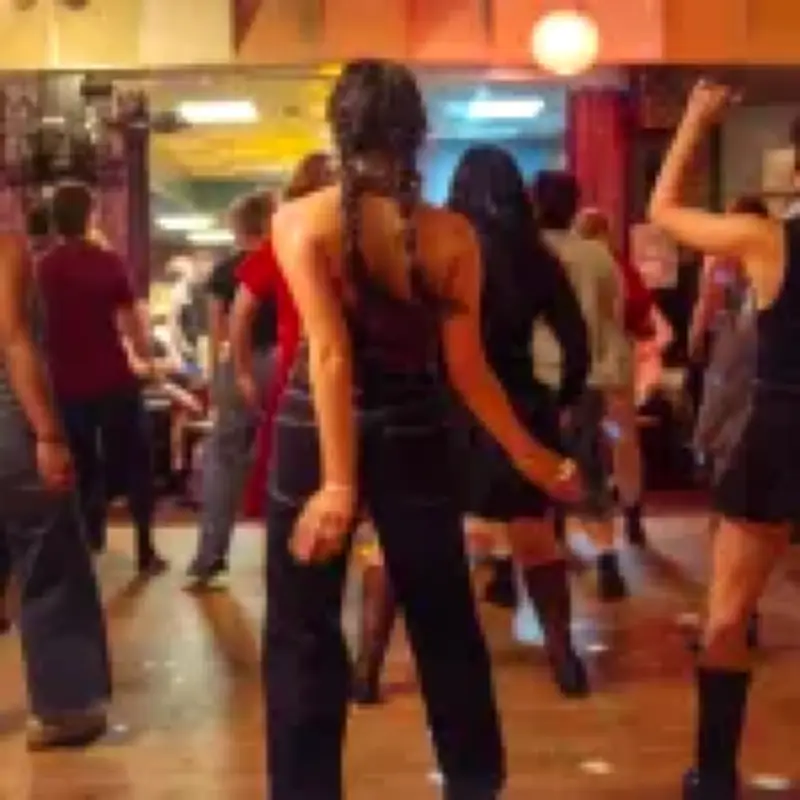
A night hosted by Queer Line Dance Club at MOTH Club in Hackney Central filled up quickly, with almost 80% of attendees being newbies. Everyone was eager to mingle, share booths, and chat. There was no one sexuality, race, or gender expression, and no-one had the same outfit on or the same kind of shoes.
The instructor Sinead led the class through beginner level routines. Key first moves include the grapevine (where you weave sideways), the shuffle (a triple step forward), a jazz box (a four-count cross and back pattern), a pivot turn (a half-turn on the balls of your feet), and a rock step (shifting your weight back and forth).
Being in these spaces together, Laurie explains, feels truly healing. There's a 'magic energy' to them that's hard to put into words. Feeling alone in a city is something we can all relate to, and nights like these remind you that you don't have to be. These inclusive spaces are so important for the LGBTQIA+ community. But really, who couldn't benefit from a Tuesday night in a village hall, surrounded by people who just want to have a good time?