The 1931 film Frankenstein, now 95 years old, remains one of the most recognisable classics of horror cinema. Its imagery—Boris Karloff's towering figure with a squared-off head, neck bolts, and heavy leaden shoes—and its iconic sounds, from thunderclaps to Colin Clive's cry of “It's alive!”—still send shivers down spines. However, the film has long lacked one element: a continuous musical soundtrack. The original had dialogue but no music.
A long-awaited score
In 2001, American composer Michael Shapiro wrote a full-length score for the film. He will conduct it alongside the movie for the first time in London next month at Cadogan Hall with the Royal Philharmonic Orchestra. “It becomes one artistic expression, one artistic experience,” he says. “The film and the music, together, and the audience forgets that I am there.” Shapiro notes that his music emphasises what is already on screen: “Suddenly the film jumps out in a way it never did before.”
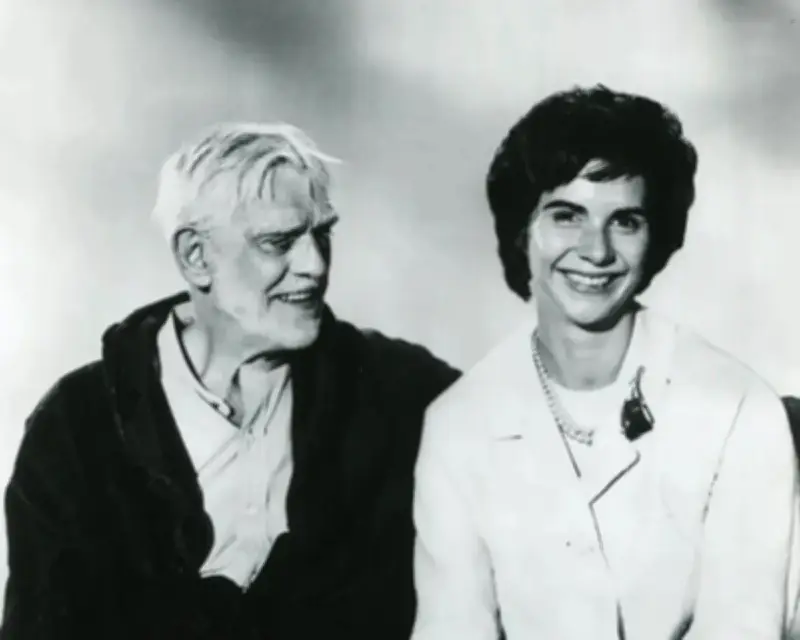
Karloff's daughter, Sara Karloff, born in 1938, will also be in London to share memories of her father. She first saw Frankenstein at age 19, after her strict girls' school banned scary movies. Watching it alone on TV, she recalls: “It was a rather strange way for my father's daughter to see his famous film for the first time. By that time I'd heard so much about it. I watched it rather studiously and understood why it was so popular and so important a film. But I was not scared by it – I enjoyed it immensely.”
A British-made classic
The film, based on Mary Shelley's novel, follows scientist Henry Frankenstein and his hunchbacked assistant as they rob graves to build a human. The creature receives the brain of a criminal and, after escaping, cannot control his impulses. One famous scene, where the monster meets a little girl by a lake, remains bold and shocking. Karloff said her father believed children understood the film better than adults, seeing the monster as an innocent victim. “Adults were kind of horrified by the film and horrified by that scene, but children seemed to understand it,” she says. Seven-year-old Marilyn Harris, who played Little Maria, “really liked my father and wanted to go everywhere with him. She wanted to ride in the car with him, and she always wanted to hold hands with him. She was not the least bit frightened.”
Shapiro was one such child. At nine, he wrote Karloff a fan letter (“Dear Mr Karloff. … I think you're a thriller”) and received a response with an autograph and a picture. “I'm crazy about the film,” says Shapiro, “mostly because of Boris Karloff's acting.” He adds: “You can put that into the music – as the film progresses, as he shows that, the music changes with him.”
Frankenstein was the second film in Universal's horror series, following Dracula (1931), and was largely made by British talent. Karloff, born William Henry Pratt in Dulwich in 1887, lived in London until his early adulthood, starting his acting career in Canada in 1911, where he adopted his pseudonym. He worked in manual labour and stage roles before entering Hollywood films in the late 1910s. Frankenstein made him a star at 44. “My father said Frankenstein was his 81st film, and hardly anybody saw the first 80,” recalls Karloff. He eventually made 167 films, including many monster pictures and the 1968 thriller Targets, directed by Peter Bogdanovich, which his daughter cites as her favourite because “it really reflects my father's feelings that the real horror is on the street, not up on the screen”.
Legacy and timeliness
Karloff returned to the UK in the 1950s, living near Cadogan Hall in Chelsea and in Hampshire. “He was mad about cricket,” says Sara Karloff. “He thought he'd died and gone to heaven when he got to go to a cricket match and have cucumber sandwiches and a pint of beer.” The Boris Karloff Foundation now supports young people in the performing arts and cricket in the UK.
Director James Whale, also British, had moved from Broadway to Hollywood after success with Journey's End in 1928. Clive, who plays Doctor Frankenstein, was born in France to English parents and educated in the UK. The cast included several other Britons, and editor Maurice Pivar hailed from Manchester. Whale advised Clive before filming: “Although it is largely an English cast, I do not want too much English accent about it … it is well to talk to as many Americans as you can to get that looseness, instead of what Americans think of as English tightness, in speech.”
British critics were largely horrified, with reports of faints and walkouts. At the New York premiere, critic Mordaunt Hall believed audiences laughed “to cover their true feelings”, but he praised the film as “a morbid, gruesome affair, but it is something to keep the spectator awake, for during its most spine-chilling periods it exacts attention”.
Sara Karloff says her father never saw it as a horror movie. “He felt that the films he did were more terrifying than horrific – that horror films, as they came along, dumped blood and guts right in the lap of the viewer, and terror films made the viewer use his own imagination to finish the scene.” She calls it “a thoughtful film” that “asks many questions. Who really is the perpetrator, and who really is the victim? Who instigates the brutality first?” In 2026, as debates over technology's limits continue, Frankenstein remains timely. “It's a masterpiece of humanity,” says Shapiro. “That's why it's lasted. That's why it inspired me to write the music.”
Frankenstein screens with the Royal Philharmonic Orchestra at Cadogan Hall, London, on 25 October.