Julia Bradbury's Antarctic Journey: Tears, Triumph and TV After Cancer
Julia Bradbury's Emotional Antarctic Return After Cancer

Julia Bradbury's Antarctic Journey: Tears, Triumph and TV After Cancer

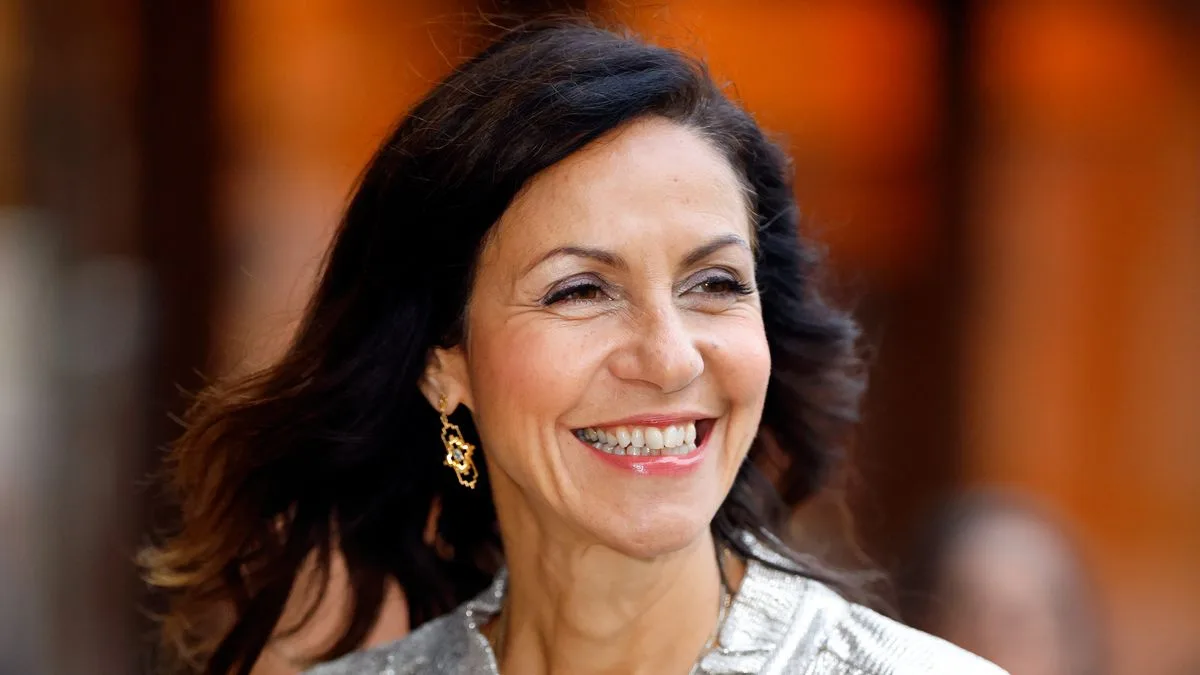
Ask Julia Bradbury about the short walk she took in ungainly snow shoes through sub-zero temperatures, and she will tell you it fundamentally changed her life. At Paradise Harbour, on the western tip of Antarctica, the ultra-fit television presenter completed a mini hill hike, pitched her tent, and then sat down in the snow to let the breathtaking scenery fully soak in.

'That's when the tears started to roll down my face,' she reveals. 'After a breast cancer diagnosis and mastectomy in 2021, I didn't think I'd ever be brave enough to leave the safety of my home and family to do something like this again.'

Overcoming Physical and Emotional Hurdles

'I was so weak physically, and so emotionally raw, that the idea of testing myself, of making this kind of TV show and being so far away from my partner and our children seemed impossible,' Bradbury continues. 'To achieve it five years after cancer felt like a pivotal point in my recovery, proof I could return to the adventures that I love.'

Wide Pickt banner — collaborative shopping lists app for Telegram, phone mockup with grocery list

The journalist and presenter, now 55, is fronting the upcoming ITV series Julia Bradbury's Wonders Of The Frozen South. In recent years, she has faced significant challenges, including her breast cancer diagnosis and subsequent mastectomy in 2021.

The emotional moment was so intense that her production team asked if they should stop the cameras. 'I said no, because it felt OK to tell the truth,' says Julia. 'The sky was pink in the Antarctic summer, there were icebergs on the horizon and a solitary humpback whale, idling about and blowing spouts.'

A Second Life After Cancer

'I was sitting there thinking, "When I'm old, this is something I want to tell my grandchildren about..." and that made me realise that I was living my second life, the one after cancer, to the full.'

Her new three-part ITV series is a joyous exploration of the world's last great wilderness. From the Falkland Island sheep shearers working to banging house music to the humpback whales with tail fin marks as individual as human fingerprints, Julia is bringing the bottom of the world closer to home.

Despite driving snow, brash ice (small chunks that clink around the bays of the Southern Ocean) and a wind chill that made Antarctica's summer temperature feel like -20°C, she was only thwarted by one thing. 'I love hugging trees and I went to Antarctica hoping to hug an iceberg. Actually I wanted to dive under one to see it in all its majesty but I was told, "No way, they're too unstable. They creak, they calve, they flip..."'

Capturing Unpredictable Moments

'As if on cue, while we were filming, this enormous chunk of ice plunged into the ocean right behind us. We could feel its wake juddering us as we started speeding off. It was one of those moments you don't expect to capture on camera.'

'We were lucky to have been there – and lucky to have been 30 seconds away in the right direction or we might have got a lot wetter. But what a privilege to be able to see that.'

She was, however, able to fulfil another ambition: following in the footsteps of the explorer Ernest Shackleton. Julia retraced the final hours of his 800-mile journey from Elephant Island, where his ship Endurance had been lost to the ice, to the Stromness whaling station on South Georgia in 1916.

'Shackleton and his men had been on a lifeboat for days with no shelter and terrible clothing, not the Gore-Tex jacket and heated mittens I take for granted. They landed on South Georgia without a map and navigated over a mountain range hoping to find rescue.'

Historical Connections and Modern Adventures

'We all know the history of their heroism, there's an air of romance and adventure about it, but I don't think any of us can imagine what they must have gone through. Seeing the whaling station as they would have seen it more than a century ago, the same Southern Ocean views, the same frozen landscapes, isn't something I'll ever forget.'

Pickt after-article banner — collaborative shopping lists app with family illustration

Julia boarded the ship MS Fram in Punta Arenas, Chile, then set course for some of the world's most treacherous waters. Her first stop was the Falkland Islands, where she tried sheep shearing ('I doubt any of my fleeces will be making their way to market!') and fell in love with the rockhopper penguins, whose tiny size belies their ability to leap 1.8m in one bound.

'Penguins are often thought to be monogamous but I'm here to tell you that's not strictly true, there's a lot of flirting, cheating, penguin divorce...'

Environmental Awareness and Wildlife Encounters

Sailing on to South Georgia, she passed A23a, once the world's biggest iceberg, roughly twice the size of London. Her destination was the Grytviken whaling station, which processed more than 175,000 whales during its 60-year life (it closed in the 1960s).

'Whales are a critical part of the Antarctic ecosystem because they hold carbon, they're living carbon sinks. We need them the way we need the Amazon rainforest,' says Julia. 'My hope by filming in Grytviken, where they were once dispatched at the rate of 25 a day, is to highlight the need to protect them now.'

Finally, Julia reached Antarctica itself. To protect the pristine land and its wildlife, she and her team had to take stringent bio-security measures – cleaning boot treads with safety pins, hoovering backpacks, picking mud, seeds and crumbs off Velcro fastenings – before they could disembark.

Personal Transformation Through Nature

Julia was able to get close to four-tonne elephant seals and visit a 100,000-strong colony of king penguins. She saw a rare albatross, the great sea birds that can go for years without resting on dry land, and a forest of giant kelp so big it's visible from space.

'These are the kinds of things I wanted to show in all their beauty and complexity,' she says. 'I was trying to convey my own sense of awe and wonder, and how much we need Antarctica, because of the role it will play in our planet's future.'

'What I hadn't expected was for it to have such a huge impact on me personally, in my life after cancer, that I'd come home with a new sense of what I can do in years to come.'

Julia Bradbury's Wonders Of The Frozen South airs Sunday 15 February at 12.30pm on ITV1 and STV, and will be available to stream on ITVX and STV Player.