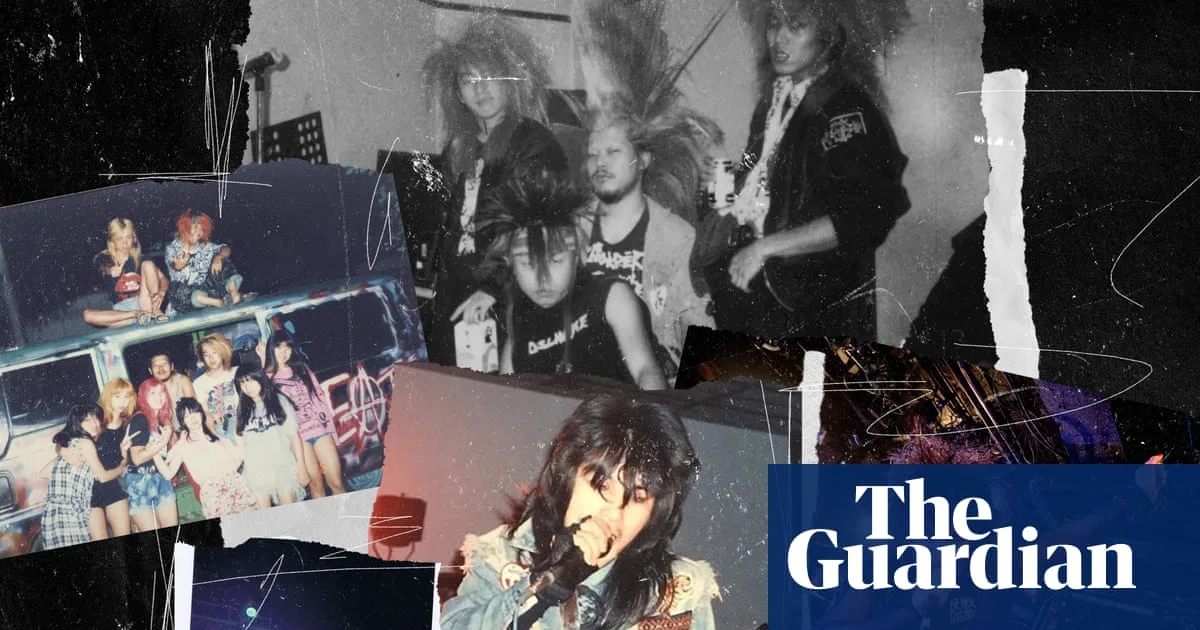
Forty-five years after punk's initial explosion, hardcore punk is enjoying a mainstream resurgence thanks to bands like Turnstile, Speed and Knocked Loose. But for those longing for the genre's original underdog spirit, a new wave of reissues from Japan's early hardcore scene offers a glimpse into a far more volatile era.
In 1980s Japan, being a punk meant facing intense social pressure to conform. 'We were subjected to discriminatory treatment just for looking different,' recalls Ishiya, frontman of Death Side, one of the scene's linchpin acts. 'On trains people avoided us, and when we looked for work, we were screened out. We were treated like enemies of society.'
The violence at gigs was extreme. 'At every gig, someone would be beaten bloody, and you never knew when it might be your turn,' says Ishiya. 'That tension was something you could never experience in ordinary life – it was thrilling.'

Among the foundational acts were Lip Cream, whose bassist Minoru Ogawa formed the band on a whim after being asked to contribute tracks to a compilation. 'I just made something up on the spot: 'We'll do it! We've actually got a new band!'' he says. 'I randomly said: 'We're called Lip Cream.''
The Nurse, one of the world's first all-female hardcore bands, also emerged from this scene. Singer Neko, who started the band aged 16, faced family opposition. 'My family was against me playing punk music,' she says. 'I'd go to gigs at Tsubaki House in Shinjuku, and it caused problems when I'd stay out late.'
For Ishiya, hardcore punk was a perfect outlet. 'It was the feeling of: 'I want to do something myself.' A punk band was something anyone could do,' he says. 'Hardcore punk was perfect for expressing the hopeless anger of my teenage years.'