The Edinburgh International Festival's concert performance of Richard Strauss's Elektra at the Usher Hall delivered mythological horror that even Christopher Nolan's The Odyssey, with its content warning for "strong violence and intense mythological horror", could not match. Strauss produced his version nearly 120 years earlier, confining his special effects to a 111-piece orchestra.
The composer adds heckelphones, basset horns and Wagner tubas to an already outsized band, making staging Elektra unfeasible for all but the best-resourced companies. Yet the extraordinary colours he draws from the orchestra and the storytelling he entrusts to it make concert performances particularly rewarding.
Exceptional clarity from the BBCSSO
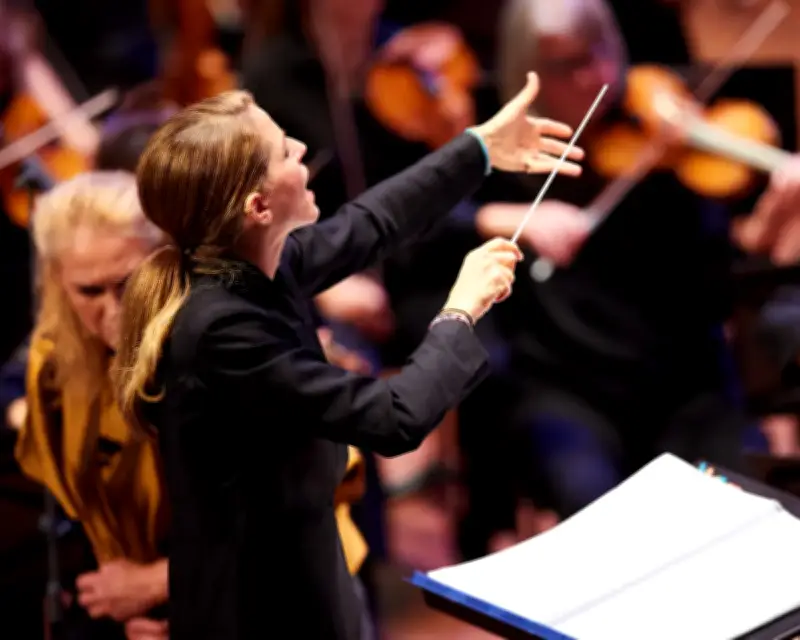
The BBC Scottish Symphony Orchestra played Strauss's most dissonant score with relish, responsive to Karina Canellakis's efficient, economical gestures. Brutal climaxes were suitably overwhelming, but equally striking was the refined string sound in occasional moments of repose. Clarity was exceptional, as whips crackled, flutes fluttered and trombones groaned; balance almost always excellent.

Superb singing in every role
All the roles were superbly sung, even the tiniest. Lea Shaw and Emma Morwood were outstanding among the maidservants who launch the action; Lee Bisset, a notable Brunnhilde, shone as their Overseer. Men often receive short shrift in Strauss: here it's more than an hour before one is heard. But Günther Groissböck's resonant bass made Oreste's nobility obvious from the first bar, even if Elektra took longer to cotton on, and tenor John Daszak introduced a note of camp entirely in keeping with the text's contemptuous depiction of Aegisthus.
Three women dominate the psychodrama
The evening was dominated, however, by outstanding performances in the three female roles at the heart of the psychodrama. Karen Cargill compellingly charted Klytämnestra's breakdown, snarling and sneering without ever compromising vocal beauty. Vida Miknevičiūtė produced the concert's most radiant singing in her touching portrayal of Chrysothemis, a woman who longs only for the normality of family life. In the notoriously demanding title role, meanwhile, Ingela Brimberg combined seemingly tireless vocal powers with attentiveness to every textual nuance.
Everything was as impressively acted as it was sung: devising mise-en-scene without directorial input, singers deployed the small playing space with imagination and eloquence, highlighting the story's horrors with a focus that even the most elaborate staging – or Hollywood movie – would struggle to match.