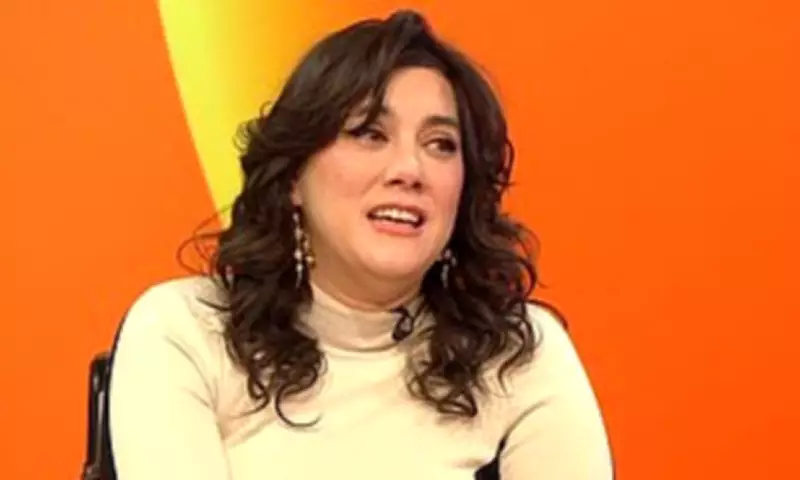
In a deeply personal and revealing interview on BBC Breakfast, actress and writer Kyla Harris opened up about a traumatic moment from her teenage years that shaped her perspective on disability. Harris, who appeared on the programme to discuss the second series of her show We Might Regret This, shared with presenters Jon Kay and Sally Nugent the heartbreaking aftermath of an accident that left her wheelchair-bound for life at just 15 years old.
A Devastating Prognosis
Kyla Harris recounted the immediate aftermath of her accident, describing a scene in the hospital with her mother. "When I had my accident, when I was 15 years old, my mum was with me and this doctor came in," she explained. "He said to me and my mother, very tragically, with such gloom and doom, 'She'll never walk again.'"
The young teenager's response was one of utter despair. "My immediate response was: 'Well then, I want to die,'" Harris revealed. "And for a 15-year-old to kind of say that about themselves... I never met someone who was a wheelchair user before. What happened is I didn't, I just kept on living, every single day."

Questioning Internalised Narratives
Harris reflected on how her perspective has evolved over time. "Every single day has brought me to here," she continued. "To me, I kind of questioned why I thought that when I first became disabled. What was it that made me feel that about myself? I guess I just realised that the only thing I knew about disabilities was from the media."
This realisation has become a driving force behind her creative work. "That's why [co-creator and co-writer] Lee and I are doing this," Harris stated emphatically. "We want to change that narrative. So that a doctor will go into someone's life in the hospital, who has been newly injured or become newly disabled and say, 'Your life might not be what you want it to be, but it's going to be amazing.'"
We Might Regret This: A New Perspective
The series We Might Regret This follows Freya, a Canadian tetraplegic woman in her thirties who moves to London to be with her partner Abe, played by Darren Boyd. The ensemble cast includes Elena Saurel, Sally Philips, Edward Bluemel, Aasiya Shah and Emma Sidi among others.
Though fictional, the show draws inspiration from real experiences shared between Harris and co-writer Lee Getty. Their collaboration began decades ago when Getty worked as Harris's personal assistant, a role they now describe as a "total risk" that ultimately forged a powerful creative partnership.
Audience Reception and Critical Praise
Viewers have responded enthusiastically to the series since its debut, with some hailing it as "the BBC's smartest, sharpest sitcom since Fleabag." One social media user praised: "It's about adult friendships, romance and it's done with a disabled lens. I'm so freaking happy to see this on screen."
Another commented: "Interesting show! There are some great well developed characters in it and I like how disability is incidental to the story and not the starting end of each plot point." A third viewer expressed similar sentiments: "You have no idea how long I waited for a story like that... with disability representation and romance."
Transforming Disability Representation
In previous interviews promoting the series, Harris has elaborated on her mission to change how disability is portrayed in media. "So much of what we see on screen about disability is made by non-disabled people," she explained. "They're often stories of tragedy or inspiration and really shape how people view disability - both for non-disabled people and how disabled people internalise stories about themselves."
Harris highlighted the significant underrepresentation that persists in the industry. "As disabled people are the most underrepresented group in front of and behind the screen, we really want to contribute to changing how people currently define disability and the disabled experience."
Through her personal journey from that devastating hospital moment to creating groundbreaking television, Kyla Harris represents a powerful voice advocating for more authentic and nuanced portrayals of disability in mainstream media.