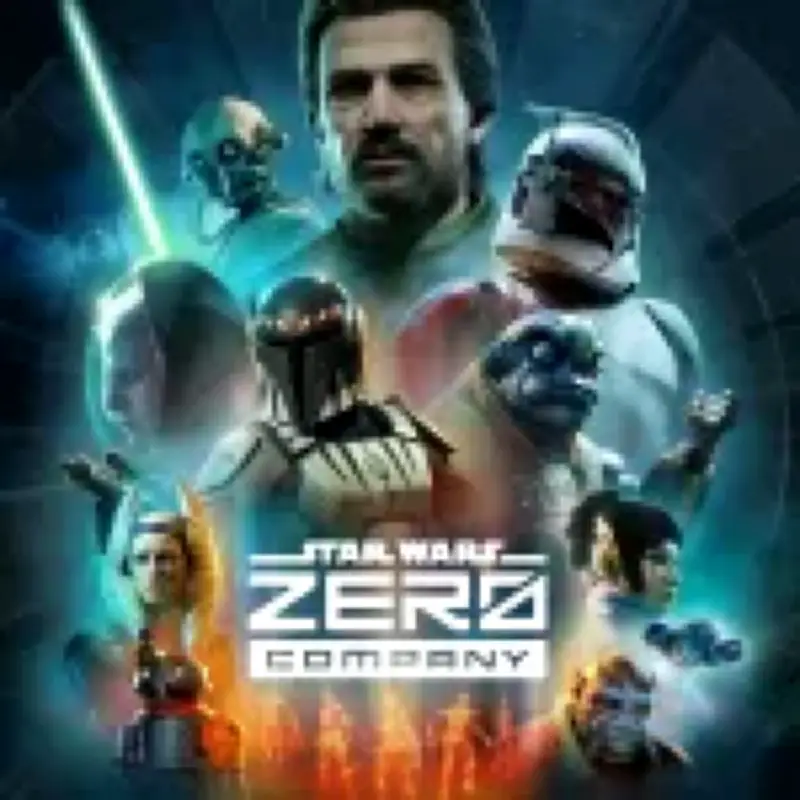
Star Wars Zero Company, from many of the same developers behind the classic XCOM series, is the best Star Wars strategy game ever, with a surprisingly effective mix of open-ended tactics and linear storytelling. The game is set towards the end of the Clone Wars and casts the player as the leader of a mercenary band not aligned with either side. In debt to the Hutts at the start, the player soon becomes aware of a Separatist adjacent group called the Infinite Coil, whose strange abilities are going under the radar because of the war. The Republic gives a cash injection to help deal with them, and the central plot becomes fighting the Coil and a mind-altering plague they are propagating.
A New Take on XCOM
Zero Company is not just a reskin of XCOM, but a different game with different priorities, integrating a scripted storyline into a genre known for freeform structure. The game incorporates elements from the animated show, with nods to Star Wars Jedi: Fallen Order, but is not an endless stream of fan references. The player starts with a small team but can recruit more, including main story characters with their own sub-plots and generic, randomised characters who have distinct personalities. An excellent script by one of the Star Wars Jedi writers makes all the characters endearing, with effective plot twists and plenty of sassy humour.
Every time a mission is completed and the player returns to base, they can chat with crew members who always have something new to say, similar to the approach in Marvel’s Midnight Suns and Mass Effect, but here the chatter can be ignored if desired. Characters have unique skills, from Jae’s ability to automatically finish off enemies low on health to Trick’s talent for reviving himself. Character class abilities can be switched at base, allowing for a huge amount of customisation.

Combat and Strategy
The basics are straightforward for newbies, with an evolutionary connection to Japanese games like Final Fantasy Tactics, except here the team takes all their goes first and then the enemy team. Each character starts each turn with three action points (AP) used to move, fire, or use items. Many characters can generate extra AP and give it to others, with astromechs especially useful for this. Overwatch is defined via a vision cone whose size the player controls, with wider coverage lowering potential accuracy.
The central combat system plays very much like XCOM, but is set apart by unique characters and the fun of creating chained attacks. Hitting each other up with extra AP is vital, but there are always multiple opportunities for team combos, where another character will fire on the same enemy. This increases characters’ bonds with each other, leading to permanent buffs to their stats. Anyone can die permanently but it is relatively difficult compared to XCOM, as they have to run out of health three times in a mission. The two higher difficulty levels are trickier, but there is a lower setting for those not used to turn-based strategy games.
Characters and Authenticity
In one memorable mission, the player controls Anakin Skywalker, who one-shots absolutely everyone, an amusing contrast to the more cerebral Jedi Tel-Rea. The Star Wars authenticity is very impressive, but one glaring fault is that so little use is made of iconic Star Wars aliens, with all enemies being humanoids with minor eccentricities like horns or brightly coloured skin. The Coil soldiers all wear the same mask, and their leader is strangely underwritten, but they make for interesting opponents, as every time one is killed they pass on their resonance to the nearest ally, giving them increasingly powerful abilities.
There were some minor technical problems during the review period, with the camera getting confused during finishing moves or when moving between vertical levels, and some long pauses when the console is thinking about its moves, but a day one patch is promised. The graphics are very impressive for a strategy game, with cinematic cut scenes and third person, over-the-shoulder intros to some key story missions.

Zero Company is not quite up to the perfection of XCOM 2, as its meta strategy level element is much more simplified, with no R&D or base-building element. These are not really flaws, as the game is trying to do something different. There’s no post-game experience after the 30+ hour campaign, but a New Game+ opens up, giving an excuse to focus on characters not used the first time round. Zero Company would almost certainly never have been made if it didn’t have the Star Wars licence attached, showing how using an existing franchise can allow more niche games to attract larger budgets and enrich the IP itself.