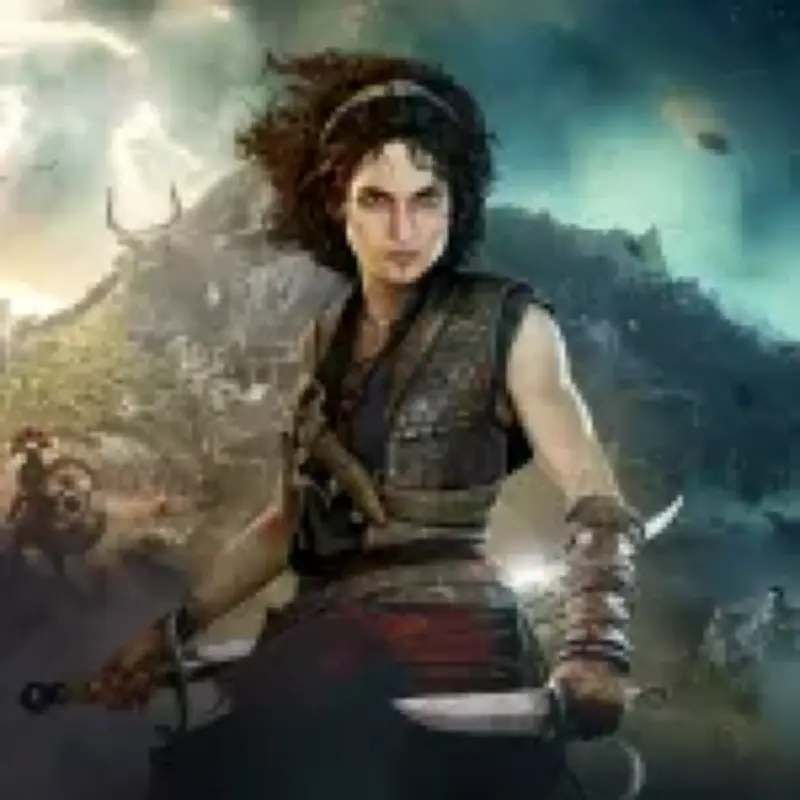
Resonance: A Plague Tale Legacy, the latest entry in the A Plague Tale series, is a prequel set 15 years before the original game, with almost no connection to previous titles. Despite this, its more action-oriented approach may make it the best entry in the franchise so far.
Combat-focused prequel
The first two Plague Tale games followed a girl leading her younger brother through disease-ridden medieval Europe, escaping rat tsunamis via stealth and panicked running. In Resonance, the only shared character appears as a cameo in the epilogue, making this an almost entirely separate experience. What the games share is purely stylistic: all are third-person action role-playing games exploring themes of threat and vulnerability through stealth and chase sequences.
Legacy, however, is considerably more combat-oriented. Its heroine, Sophia, is a grown woman trained to handle weapons as ably as her male peers. Parrying is central to fights, with last-moment blocks stunning antagonists. Sophia can also kick to break guards, knock back shielded enemies, and use a grapple hook to drag lighter foes closer. This toolkit is introduced over several hours, allowing players to learn each move before adding complexity.

Resonance points, earned from larger battles and found in environments, can be used to buy and upgrade skills such as picking up throwables, a double kick, and an extra dodge, each with an optional second mastery level. Battles grow more interesting as encounters involve larger numbers of aggressors, balanced by an expanding set of special moves. Increasingly taxing fights demand intentional strikes and blocks, with tactically leaving cannon fodder alive to top up health bars.
The creature and its mechanics
Resonance retains the classic Plague Tale chase sequences, but instead of a flood of man-eating rats, players flee from ‘the creature’. In many underground areas, unless creeping, Sophia leaves glowing blue footprints. These are useful for tracking a sidekick but also help the creature sniff her out. Moving like an animated column of smoke, the creature extends its body, exhales briefly to give a moment to find cover, then inhales and launches at any sparkly blue iridescence in its line of sight. If Sophia is in the open, the same sparkly powder flows from her, leading to instant devouring.
Fortunately, the creature is terrified of bright illumination, so pools of lantern light become safe zones, often coinciding with checkpoints. Broken lanterns also provide protection but are extinguished by the creature’s inhalation phase, making their safety fleeting. Developer Asobo Studio applies these systems with great aplomb, with initial setups teaching the ropes and subsequent encounters increasing complexity. Structured stealth areas sometimes give way to all-out chases, forcing Sophia to leap gaps, squeeze through cracks, and swing across chasms while the creature snaps at her heels.
Story, visuals, and polish
The story centres on a retelling of the myth of King Minos and the Minotaur, with tweaks. Sophia has had supernatural visions since childhood, leading her to the island where the legend was born. Many seek treasure; she seeks answers, reliving the adventures of Theseus and Ariadne through her visions. The voice acting, especially Sophia’s, is exceptional, with cries of grief, pain, and rage that are distressingly authentic, making her journey emotionally involving.
Visuals start with bucolic, sun-baked, over-saturated scenery resembling a moving painting, then shift to darker, more angular horror elements in the closing hours. Puzzles are all based on beams of light but are inventive in application, with add-ons to a special sphere Sophia carries preventing staleness. Some puzzles are straightforward; others require head-scratching and experimentation, though each has a set of three hints and a final prompt.
The level of polish is consistently impressive. Despite a playthrough lasting just under 17 hours—which did not reveal all weapons or most collectibles—there were no technical imperfections or crashes. The scenery looks spectacular, facial animations are lifelike, and the action remains fast and sharp. This comes from the same developer as the technical miracle of Microsoft Flight Simulator 2024’s PlayStation VR2 incarnation.

Resonance: A Plague Tale Legacy is a great game, with high production values complementing well-designed fight mechanics, an accomplished art department, and unusually well-cast voice talent. In terms of variety, pacing, and difficulty, it is perfectly pitched, making it an easy recommendation for fans of action role-playing games.