The screenwriter and a star of the brutal Yorkshire crime trilogy Red Riding have revealed how the series was made, including the challenges of adapting David Peace's experimental novels and the gruelling conditions on set.
Adapting David Peace's novels
Tony Grisoni, the screenwriter, said he was first approached in 2006 by producer Andrew Eaton, who asked if he was interested in adapting David Peace's quartet of novels. Reading the first book, 1974, drew him in and repelled him at the same time. He described it as "strong meat, full of anger and injustice," anchored in reality, particularly the Peter Sutcliffe and Stefan Kiszko cases, but heightened and stylised. Peace called it "fiction torn from the facts."
Grisoni admitted he was "scared stiff" because the novels were so experimental but desperately wanted to do it, even though adapting all four would mean waving goodbye to several years of his life. The books span a decade with a huge cast of characters, so he condensed a lot.

A different director for each film
Eaton wanted a different director and format for each film, giving each its own reference points. Grisoni thought about Chinatown a lot with 1974, with design and costumes all smoky and brown, like the 70s. The cast went for the material big time, with David Morrissey doing his research and Sean Harris being method. The story is masculine but they wanted strong female characters too, including Maxine Peake and Rebecca Hall. Grisoni kept the most horrendous violence off-screen, noting that violence you imagine is much worse than anything you'll see.
The police interrogation scenes, where they torture suspects, are terrifying and deliberately so. Stefan Kiszko, on whom Daniel Mays's character is based, was released in 1992 and died 18 months later, having been wrongly imprisoned for 16 years. Grisoni said the corruption and brutality in Red Riding are bleak, but so is the real world, with headlines during writing full of cases like Stephen Lawrence, Madeleine McCann, Natascha Kampusch, Shannon Matthews, and Josef Fritzl.
Yorkshire dark, not noir
Grisoni was warned that Sutcliffe was litigious, so he used what Sutcliffe actually said in his police interview. Red Riding was compared to James Ellroy and described as Yorkshire noir, which Grisoni said is spot-on, although Peace said it was a pity they used a French word, preferring Yorkshire dark. Grisoni added some redemption at the end because he needed to save somebody and finish on a note of love.
The team made 1974, 1980, and 1983 but, for budgetary reasons, not 1977, which broke Grisoni's heart. It was always intended as a quartet, so it felt like vandalism. He holds out hope that they'll get to do the missing fourth. The films got a theatrical release in the US, screened back-to-back, and a cult audience went for it. Critic David Thomson called it "better than The Godfather," and Nic Pizzolatto said it influenced True Detective. People are still discovering it, often saying: "But you seem like quite a nice guy!"
Mark Addy's experience
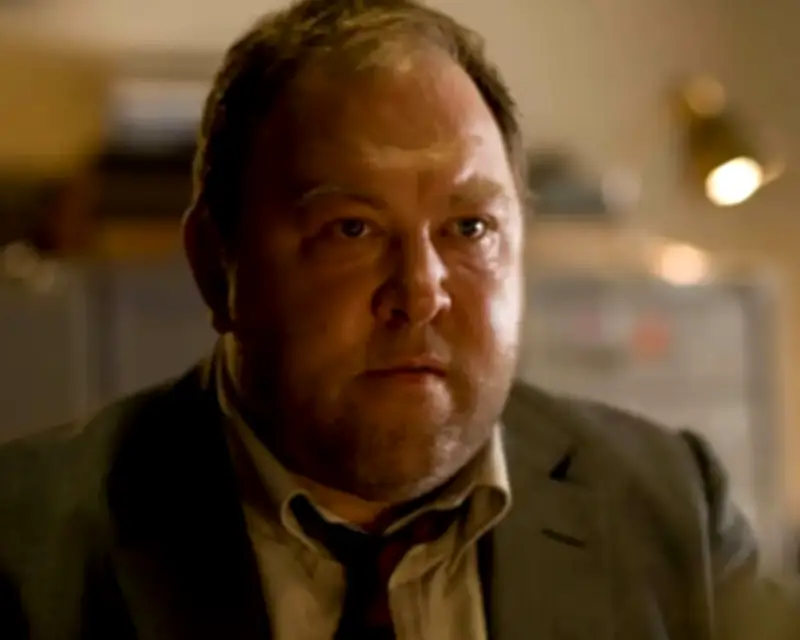
Mark Addy, who played lawyer John Piggott, said his agent sent him the scripts but warned there was no money in it. After reading halfway through the first episode, he phoned back and asked who else was attached. Told it was Sean Bean, David Morrissey, Paddy Considine, Peter Mullan, and Maxine Peake, he said: "Put my name on the list please." The scripts were so well-written, it was a no-brainer.
Everyone was on Equity minimum, there were no trailers, not even a green room area. It was a tremendous experience to have a cast of that calibre throwing their all into something that wasn't going to buy them more than a pair of shoes. Peace's books, dense with detail and putting you inside the mind of each character, were a major resource for building Piggott, a washed-up solicitor. In one scene, he flashes back to finding his father's body, with a camera rig strapped on Addy so viewers see it through Piggott's eyes. He becomes the unlikely hero, despite being a dope-smoking, heavy-drinking loser, taking on the might of the crooked West Yorkshire police and partly succeeding.

Piggott is a shoddy, unkempt idiot who sleeps in his suit and at one point eats a raw Findus Crispy Pancake, but he saves the girl at the end, carrying her out of a mineshaft in his arms like a Bruce Willis action hero. Shooting scenes in the underground paedophile's lair was grim, with a room containing a dentist's chair, mattresses on the floor, and a child's shoe. Addy said you needed a shower at the end of the day.
Addy grew up in York during the 1970s and vividly remembers the Ripper era, cycling back from his then-girlfriend's house in the pitch black, with tension on the streets palpable. Everyone felt Sutcliffe's elusiveness and how the police were overwhelmed. The show is hardly a tourist advert for Yorkshire, with set dressing including a burnt-out car on the grass verge and an upturned shopping trolley. Locals would ask: "Can't you put a nice floral arrangement there instead?"
Addy called Red Riding an extraordinary achievement with three different directors and formats, hard to fault. It had ripple effects on his career: Ridley Scott, starting work on Robin Hood with Russell Crowe, was given a Red Riding DVD by the casting director because it had so many British actors. He watched it one weekend and, on Monday morning, phoned to acquire the US rights, then cast Addy as Friar Tuck. The Red Riding Trilogy is available to stream on Amazon's Studiocanal Presents channel.