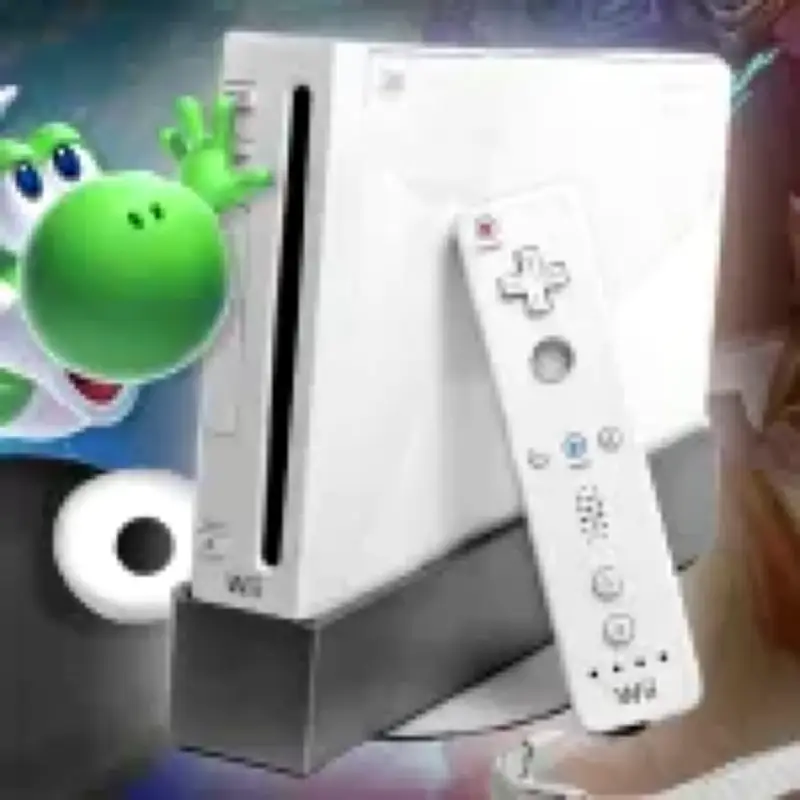
The Nintendo Wii, which launched in the US on November 19, 2006, celebrates its 20th anniversary, marking two decades since a console that sold 101.63 million units and fundamentally reshaped Nintendo's approach to hardware design. Its influence remains visible today in the Nintendo Switch, which carries forward the motion controls and broad-audience strategy that the Wii pioneered.
The Wii arrived in the UK on December 8, 2006, nearly three weeks after its US debut. While the GameCube is remembered fondly by many, it was far from the success Nintendo sought. It was outdone by the original Xbox and especially the PlayStation 2, with a weak launch line-up, limited third-party support, and a perception that Nintendo was only for children contributing to its struggles.
From GameCube Failure to Motion-Control Revolution
Rather than compete for the hardcore gamer crowd, Nintendo opted to appeal to a broader audience, including families and those who did not typically play games. This decision was motivated by the success of the Nintendo DS handheld and its dual screens. The idea led to a very simple controller, one that even a grandparent could understand, resulting in the Wii Remote with its motion controls and minimal buttons.
Initially codenamed Revolution, the console was named Wii because it sounds like the word 'we', emphasising that the console is for everyone. Despite mockery of the name and doubts about its prospects, the Wii became the must-have Christmas present in 2006, with supply struggling to meet demand. Wii Sports, included with the console, demonstrated how the console could serve casual audiences, while the launch title The Legend Of Zelda: Twilight Princess went on to become the best-selling Zelda game ever until Breath Of The Wild 11 years later.
Impact on Nintendo and the Industry
The Wii's success prompted Sony and Microsoft to implement motion controls of their own, with the PlayStation Move and the hands-free Kinect, though neither matched the Wii's popularity and both have long since been abandoned. For Nintendo, the Wii cemented that the company needed a one-of-a-kind hook rather than progressively more powerful consoles. The subsequent results were mixed, with the Nintendo 3DS being decently successful but the Wii U a complete bust due to poor marketing, a lack of technological upgrade, missing online features, and its chunky GamePad controller.
Nintendo bounced back with the home console/handheld hybrid Switch, which retained motion controls for its Joy-Cons, explicitly designed as a more compact version of the Wii Remote. The Switch also kept the strategy of appealing to a wide audience, becoming the go-to console for families with games like Super Mario Party Jamboree, Nintendo Switch Sports, and Ring Fit Adventure. It has found even greater success than the Wii, becoming Nintendo's best-selling console and the second-best-selling console of all time.
The Best Wii Games That Still Hold Up
Looking back at the Wii's library, several titles remain standout experiences. Zack & Wiki: Quest For Barbaros' Treasure was a Capcom oddity and one of the Wii's best exclusives, thanks to its inventive puzzles and quirky presentation. World Of Goo, a physics-based puzzle game distributed through WiiWare, saw a Switch port and even got a sequel. Donkey Kong Country Returns is a great continuation of the original 2D platformers by Rare, with superb controls despite frustratingly challenging moments.
Metroid Prime: Trilogy offered the best way to enjoy all three entries, with Metroid Prime remaining a perfect video game and its sequels being top-quality follow-ups. WarioWare: Smooth Moves is the quintessential WarioWare game, best experienced in multiplayer as players make silly poses to clear its quick-fire microgames. Xenoblade Chronicles was a technical marvel with a fantasy world set atop the corpses of two titanic creatures, and has since become a core property for Nintendo.
Super Smash Bros. Brawl was the most jam-packed entry in the series at that point, with 39 playable fighters, 41 stages, and a wealth of unlockables, while its inclusion of third-party characters like Solid Snake and Sonic the Hedgehog were monumental reveals. Mario Kart Wii debuted Moo Moo Meadows, introduced bikes as a new vehicle type, and offered solid online multiplayer, sitting at 37.38 million sales. Both Wii Zelda games, Twilight Princess and Skyward Sword, are great adventures, with the latter making plenty of use of motion controls.
Wii Sports and Wii Sports Resort were championed for bringing families together and getting players active, with Wii Sports being one of the best killer apps for any console. Finally, both Super Mario Galaxy games are considered the best 3D Mario platformers Nintendo has ever made, with Super Mario Galaxy 2 edging out the first thanks to a better array of power-ups and a genuinely challenging post-game. These games aren't just some of Nintendo's best work but two of the best video games ever made.