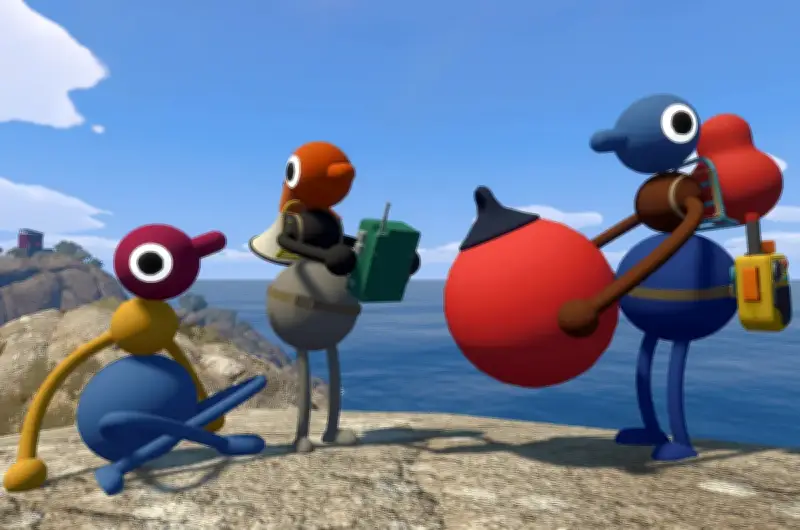
Big Walk, the new game from Australian studio House House, creators of the hit Untitled Goose Game, has been an immediate success with more than 1 million downloads in the first week of release.
In Big Walk, players' only goal is to go on a walk through sprawling bushland, solving puzzles with friends. The game's design centres on a proximity voice chat, allowing clear communication with those nearby but cutting off when separated.
Development and Inspiration
House House designer Nico Disseldorp said the game began during Covid lockdowns when the team started playing games online with international friends. That group was the first to test an early version of Big Walk. "One of the first things we did was just go on a walk, from one side of this map to the other," Disseldorp said. "And it had this really interesting feeling of wanting to pay attention to each other, to look out for each other, make sure no one got left behind."

A turning point came when sound designer Em Halberstadt suggested bringing on audio programmer Nicholas Zhang. The two had a "level of ambition" that became integral to the game.
World and Setting
The world of Big Walk is modelled on Wilsons Promontory, a few hours south of Melbourne. The team initially considered the Faroe Islands in the North Atlantic as a setting but were drawn closer to home. "Because of its geography, it has that kind of isolated video game level feeling that we needed," said Jake Strasser, who worked alongside Kalonica Quigley to design the game's landscape. "And it's just so beautiful and has all this magical, rich source material to it."
The team spent time on Wilsons Promontory during development, staying in a cabin at Tidal River. They brainstormed in the mornings and went on walks in the afternoon, with Strasser and Quigley taking reference photos of plants and the sound team doing field recordings.
Gameplay and Reception
The puzzles in Big Walk, dotted in neon buildings across the map, force players to think about communication. Often the ability to talk is removed, requiring alternative ways to progress. The reward for completing each puzzle is a red bulbous object, which players have referred to as peanuts or gourds. Disseldorp said, "We have our own words for what they're called, but it's no more or less important than what any other group calls them. So much of the game is about creating your own lexicon for the world."
Disseldorp described the feeling before release: "A month before the game came out, I had the feeling like 'this is our private little space that we've built for ourselves', and we've been playing in it for six years. And I don't want to let a bunch of strangers in. They'll get their muddy feet all over the carpet."
Since release, reception has been overwhelmingly positive. "Some of the stories we've heard are punch-in-the-gut beautiful," Strasser said. "I've cried over emails of brothers feeling connected with each other in a new way; cousins who've never met reaching out across a family feud; people who just experienced massive loss playing together and finding joy."