Patrice Désilets, creative director behind the original Assassin's Creed and Prince Of Persia: The Sands Of Time, is finally releasing 1666: Amsterdam, an IP he has been trying to develop for 16 years. The game enters early access on August 25.
Origins and evolution of 1666: Amsterdam
1666: Amsterdam began at THQ Montreal in 2010 but was suspended after Ubisoft acquired the studio and fired Désilets. A lawsuit over the rights was settled in 2016, with Désilets winning the IP. Development was further delayed by the pandemic. It is the second title from his studio, Panache Digital Games, following 2019's Ancestors: The Humankind Odyssey.
Désilets says the game is "totally different" from the original concept. "The only thing between the two that remains is 1999 and 1666, and Amsterdam. But it wasn't a witch. It was [originally] my game after Assassin's Creed. Now it's my game after Ancestors: The Humankind Odyssey."

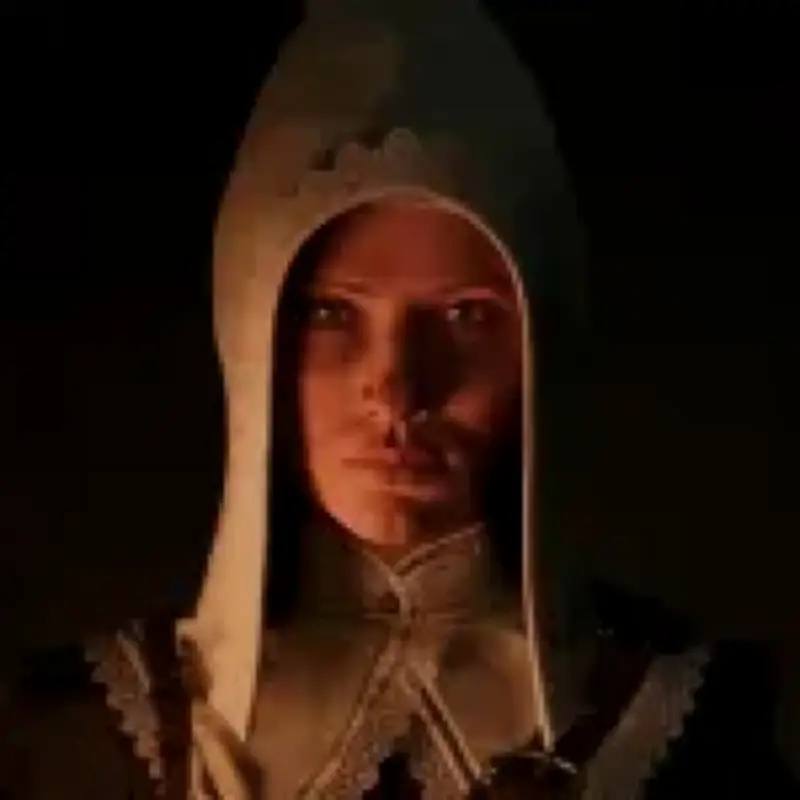
The witch element came when he returned to the project in 2020. "[The game] is about the devil but I didn't want to *be* the devil. But what would represent a cool character in the devil universe? Ah, the witches. Quickly [I said], 'let's do to the witches what I did to the assassins'; to have a witch as a main character that's badass in the style of games that I make."
Motivation and narrative devices
Désilets' motivation stems from a sense of commitment after winning the rights. "I got the rights to a game that people know about. Even though it's not that big yet, people knew about the game. So I have the rights to a thing people know about, that's big in our day and age." He also notes, "I've got a business to run at the end of the day. So I have an IP, and having an IP creates a jumpstart."
On the multiple timelines motif, he says it's a fun narrative device. "I feel [time] is also something that as humans we cannot control yet. It's the only thing we don't control and it drives us crazy. Time moves forward, and the rest we control as much as we can. So playing with it in a game – even though it's linear and it's not like you're controlling time in the game – this idea of going to the past and the future, it's a fantasy for humans."
He traces this back to 1999's Hype: The Time Quest, noting, "There were four time periods and the main quest of the character; he was thrown back into the past and he had to find a way to come back to his own time." He laughs, "I was 23 at the time and now I'm f***ing 52 and I'm still doing games with multiple time periods, and characters with brooms, or knights, jumping around, using magic. I've been doing the same game for 30 years now."
Early access and generative AI
On early access, Désilets explains it's a narrative-driven game with a toy component. "The narrative will be pretty much on us. And eventually we'll come up with big updates of the narrative, new missions. But then on the toy level of things – the mechanics, the systems – we're going to finish our game together." He notes the average early access period is one year, so it will likely be at least that long.
Regarding generative AI, Désilets says, "We use it in development and in the final product we'll make sure everything that's in the game has been retouched by a human." He cites the speed of iteration as a benefit but acknowledges ethical concerns. "I get the ethical aspect of it also, that's why I asked my team, 'OK that's it'. [When] we're all by ourselves because we need to see stuff quickly, [it's] OK-ish. But now, no, we stop. I kinda went like, 'No more prompts'."
Relationship with Assassin's Creed and Prince Of Persia
Désilets feels separated from Assassin's Creed. He played Assassin's Creed 3 in 2012 for two hours and stopped. "I understand [it], and then I see the matrix. So I said 'enough', and after that, I didn't want to. So I don't want to answer your question. I'm protecting myself from it, because somehow if I say it's good or not, that'll change the perception of the people on the game."
On the cancelled Prince Of Persia remake, he was never consulted. "No, no. Ubisoft don't talk to me." He adds, "We got into a fight, Ubisoft and I, so no. Nobody's asking me anything about Assassin's Creed at Ubisoft either. Never."

He reflects on the industry: "In a big, big studio – because I've been there – it becomes more politics than game creation... In a smaller team, I know everyone on my team. I know everyone. I know their girlfriend, boyfriend, their kids, their dogs." He also notes the pandemic's impact: "We were in full conception [on 1666: Amsterdam] in Covid. We were two months in. We started in January and boom, in March, everybody home. That was so tough... For a full year. That's why it took us six [years], it could have been made in five."
On history as a theme, he says it was conscious. "Why I like history is that it's a fantasy world for us... It's as strange to us as a totally invented world." He cites his grandmother's life as an example: "At first there was no f***ing phones. She comes from a little town in Quebec and there were maybe two cars. And at the end, she was writing to me on Facebook."